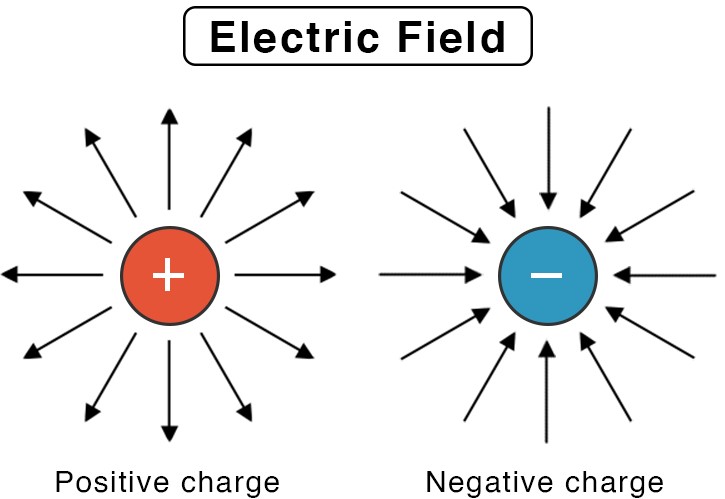
When a charged body is kept at some place, a region surrounding this body comes under stress and strain. According to Coulomb’s Law, if a charge (positive or negative) is brought into this stressed region, a force of repulsion or attraction is experienced by it. This stressed region around a charged body is called electric field.
Thus, a region or space around a charged body in which a charge experiences a force of attraction or repulsion is called an electric field or electrostatic field.
If electric field is the force acting on a unit positive charge, then mathematically,

SI unit of electric field is newton per coulomb (N/C)
Equation (3.5) can also be written as
 = q0
= q0
Both the electric field ( ) and force ( ) are the vector quantities
3.4.1 Electric Lines of Force2
The path traced by a unit positive charge when placed in an electric field is called electric line of force. The electric field around a charged body is represented by imaginary lines called electric lines of force (see Fig. 3.3). The direction of these lines of force at any point is determined by the direction along which a unit positive charge placed at that point would move or tend to move. According to this convention, the electric lines of force are supposed to originate at the surface of a positively charged body and terminate at the surface of a negatively charged body, as shown in Figure 3.4.
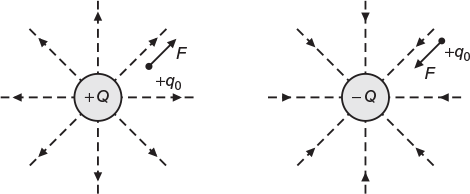
Fig. 3.3 Representation of electric lines of force
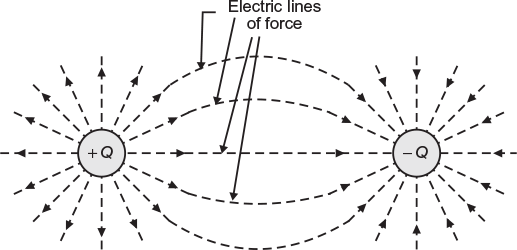
Fig. 3.4 Electric field produced by opposite charges
Properties of electric lines of force
Following are the important properties of electric lines of force:
- Electric lines of force emanate from the positively charged body and terminate at the negatively charged body (see Fig. 3.4).
- Electric lines of force emanate or terminate on the charged body surface normally.
- Two electric lines of force never intersect each other.
- The electric lines of force in the same direction always repel each other (see Fig. 3.5), whereas the electric lines of force in opposite direction attract each other. This is property due to which similar charges repel each other and the dissimilar charges attract each other.
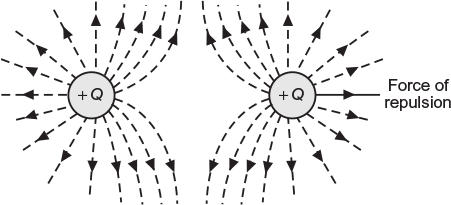 Fig. 3.5 Electric field produced by similar charges
 - The tendency of electric lines of force is to take an easy path.
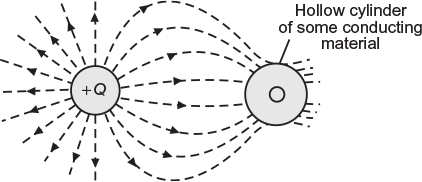
Fig. 3.6 Effect of conducting body when placed in an electric field
When a hollow cylinder of some conducting material is placed near a charged body, as shown in Figure 3.6, the electric lines of force try to pass through the conducting material and not through the hollow space. It is because conduction material provides an easy path for the electric lines of force.
Leave a Reply