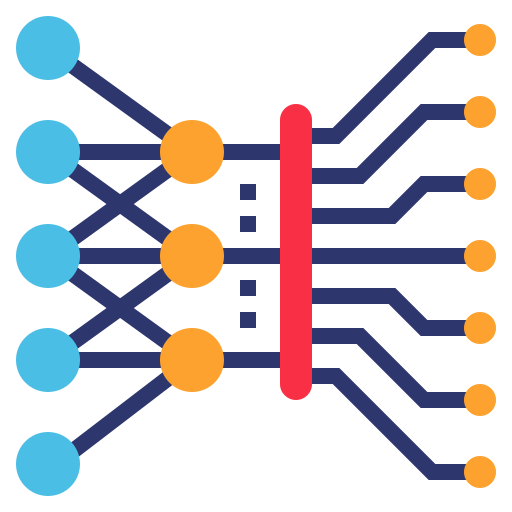
With so much money and resources being devoted to deep learning, there has been a surge in innovations. It seems that every day there is something amazing that is being announced.
Then what are some of the applications? Where has deep learning proven to be a game changer? Let’s take a look at some that cover areas like healthcare, energy, and even earthquakes
Use Case: Detecting Alzheimer’s Disease
Despite decades of research, a cure for Alzheimer’s disease remains elusive. Although, scientists have developed drugs that have slowed down the progression of the disease.
In light of this, early diagnosis is critical—and deep learning can potentially be a big help. Researchers at the UCSF Department of Radiology and Biomedical Imaging have used this technology to analyze brain screens—from the Alzheimer’s Disease Neuroimaging Initiative public dataset—and to detect changes in the levels of glucose.
The result: The model can diagnose Alzheimer’s disease up to six years before a clinical diagnosis. One of the tests showed a 92% accuracy rate, and another was 98%.
Now this is still in the beginning phases—and there will need to be more datasets analyzed. But so far, the results are very encouraging.
According to Dr. Jae Ho Sohn, who authored the study:
This is an ideal application of deep learning because it is particularly strong at finding very subtle but diffuse processes. Human radiologists are really strong at identifying tiny focal finding like a brain tumor, but we struggle at detecting more slow, global changes. Given the strength of deep learning in this type of application, especially compared to humans, it seemed like a natural application.20
Use Case: Energy
Because of its massive data center infrastructure, Google is one of the largest consumers of energy. Even a small improvement in efficiency can lead to a sizeable impact on the bottom line. But there could also be the benefits of less carbon emissions.
To help with these goals, Google’s DeepMind unit has been applying deep learning, which has involved better management of wind power. Even though this is a clean source of energy, it can be tough to use because of the changes in weather.
But DeepMind’s deep learning algorithms have been critical. Applied to 700 megawatts of wind power in the United States, they were able to make accurate forecasts for output with a lead time of 36 hours.
According to DeepMind’s blog:
This is important, because energy sources that can be scheduled (i.e. can deliver a set amount of electricity at a set time) are often more valuable to the grid…To date, machine learning has boosted the value of our wind energy by roughly 20 percent, compared to the baseline scenario of no time-based commitments to the grid.21
But of course, this deep learning system could be more than just about Google—it could have a wide-ranging impact on energy use across the world.
Use Case: Earthquakes
Earthquakes are extremely complicated to understand. They are also exceedingly difficult to predict. You need to evaluate faults, rock formations and deformations, electromagnetic activity, and changes in the groundwater. Hey, there is even evidence that animals have the ability to sense an earthquake!
But over the decades, scientists have collected huge amounts of data on this topic. In other words, this could be an application for deep learning, right?
Absolutely.
Seismologists at Caltech, which include Yisong Yue, Egill Hauksson, Zachary Ross, and Men-Andrin Meier, have been doing considerable research on this, using convolutional neural networks and recurrent neural networks. They are trying to build an effective early-warning system.
Here’s what Yue had to say:
AI can [analyze earthquakes] faster and more accurately than humans can, and even find patterns that would otherwise escape the human eye. Furthermore, the patterns we hope to extract are hard for rule-based systems to adequately capture, and so the advanced pattern-matching abilities of modern deep learning can offer superior performance than existing automated earthquake monitoring algorithms.22
But the key is improving data collection. This means more analysis of small earthquakes (in California, there is an average of 50 each day). The goal is to create an earthquake catalog that can lead to the creation of a virtual seismologist, who can make evaluations of an earthquake faster than a human. This could allow for faster lead times when an earthquake strikes, which may help to save lives and property.
Use Case: Radiology
PET scans and MRIs are amazing technology. But there are definitely downsides. A patient needs to stay within a confining tube for 30 minutes to an hour. This is uncomfortable and means being exposed to gadolinium, which has been shown to have harmful side effects.
Greg Zaharchuk and Enhao Gong, who met at Stanford, thought there could be a better way. Zaharchuk was an MD and PhD, with a specialization in radiology. He was also the doctoral advisor of Gong, who was an electrical engineering PhD in deep learning and medical image reconstruction.
In 2017, they co-founded Subtle Medical and hired some of the brightest imaging scientists, radiologists, and AI experts. Together, they set themselves to the challenge of improving PET scans and MRIs. Subtle Medical created a system that not only reduces the time for an MRI and PET scans by up to ten times, but the accuracy has been much higher. This was powered by high-end NVIDIA GPUs.
Then in December 2018, the system received FDA (Federal Drug Administration) 510(k) clearance and a CE mark approval for the European market.23 It was the first ever AI-based nuclear medical device to achieve both of these designations.
Subtle Medical has more plans to revolutionize the radiology business. As of 2019, it is developing SubtleMRTM, which will be even more powerful than the company’s current solution, and SubtleGADTM, which will reduce gadolinium dosages.24
Leave a Reply