
Though computer vision has emerged as one of the top fields of machine learning, there are several obstacles that makes it difficult to become a leading technology. Human vision is a complicated and highly effective system which is difficult to replicate through technology.
Given below are certain issues and challenges faced by computer vision algorithms. These are related to the nature of the data or the application to be created and its context. In this section, we will discuss these challenges to make the CV algorithms more robust and efficient.
- Real-time processing: Many applications demand the computer system to analyse images and quickly take action without any time delay. Such systems need to be very accurate. Achieving this level of accuracy with specified time constraints is not easy to achieve.
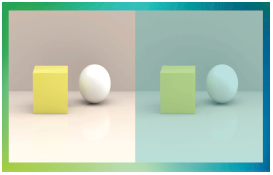 FIGURE 6.7 Color of the object changes when viewed in a different light
 - Limited resources: To successfully implement a computer vision algorithm, the computer system needs ample amount of memory, CPU and other computing resources.
- Different lighting: Computer vision algorithms collect knowledge about the real-world objects in different kinds of lighting. For example, a white object in red light may look red in the image. Correspondingly, a red object under a red lamp becomes almost invisible (refer Fig. 6.7).
- Noise: A noisy image or an image with incomplete/incorrect data makes it hard for computer vision to recognize objects. For example, when an image appears brighter or darker than they should be. Another example of noisy data could be images obtained from videocams on the road are much less effective when it is raining or snowing outside.
- Unfamiliar angles: An image must be fed in the system from several angles. Otherwise, a computer won’t be able to recognize it if the angle changes (refer Fig. 6.8).
 Credit: Susan Schmitz / ShutterstockFIGURE 6.8 Object viewed in different angles
 - Overlapping: When there are multiple objects on the image, they may overlap with each other and remain hidden, thereby making it difficult by machine to recognize them.
- Different types of objects: Objects belonging to the same category may look totally different as shown in Fig. 6.9. This makes it very difficult for machine to successfully recognize them.
- Fake similarity: Objects looking the same may actually belong to different categories. For example, samoyed puppies look similar to little polar bears in some pictures.
 Credit: creativesunday / ShutterstockFIGURE 6.9 Same object that looks different
 - Adversarial Attacks: An attacker can attack a machine learning model, to make the machine fail intentionally. These flawed models are difficult to identify and may affect the system adversely.
Leave a Reply