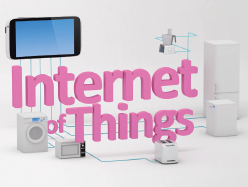
Although the concept was not named until 1999, the Internet of Things (IoT) has been in development for decades. IoT means a system of interrelated computing devices, machines, objects, animals or people that have unique identifiers for identification and also the ability to transfer data over a network without requiring human-to-human or human-to-computer interaction (as shown in Fig. 9.8).
Credit: 363868 / Shutterstock
FIGURE 9.8 Interconnected Things
If the thing, in the IoT, is a person, then he can have heart monitor implant; if it is an animal, it can have a biochip transponder, if it is an automobile, it can have sensors to generate alert alarms (e.g., when the pressure in a tyre is too low) and if it is any other natural or man-made object, then it is assigned an IP address and provided with the ability to transfer data over a network.
The huge availability of address space in IPv6 has led to the development of the IoT. With more IP addresses available, more devices can be connected to exchange information with each other.
Today, IoT is being widely used for precision agriculture, building management, healthcare, energy and transportation. The first Internet appliance was a Coke machine at Carnegie Melon University in the early 1980s when the programmers succeeded in connecting the machine over the Internet to check the status of the machine and determine the availability of a cold drink. This check helped them to save their time as they did not have to go to the machine to buy Coke when it was not available in the machine.
Later, other devices like cell phones, coffee makers, washing machines, headphones, lamps, wearable devices and almost anything you can think of could be connected. It is interesting to know that in 2022, the market for the IoT is expected to grow 18% to 14.4 billion active connections and by 2025, there will be approximately 27 billion connected IoT devices. So, we can conclude that, IoT is a giant network of connected ‘things’ (including people) which will have relationships between people-people, people-things and things-things.
In simple terminology, IoT is the concept of connecting any devices over the Internet.
9.2.1 Examples of Applications of IoT
Whenever we read about a new technology, the first question that comes to our mind is how is this technology going to help us? While with IoT, anything that can be connected, will be connected, but the question is why should we want these devices to be connected? There are many examples to justify the answers to these questions.
Case 1: Imagine you are going for meeting and your car tells you the best route to take. If there is a traffic jam, then your car sends a text message to the other party, notifying them that you will be late.
Case 2: Imagine that the moment your alarm rings to wake you, a message is sent to the coffee machine to start brewing coffee for you.
Case 3: The smart watch that your wear in office tells you when and where you were most active and productive.
Case 4: You have a self-driving car with complex sensors to detect objects in their path.
In 2019, IoT devices generated an estimated 18.3 zettabytes of data, which is expected to grow to 73.1 ZB by 2025.
Case 5: A smart football that can track how far and fast it is thrown and record those statistics via an app for future training purposes.
Case 6: You have a smart refrigerator that can text message you that milk packets are over in the fridge and you need to buy them before you come home. Or, your fridge checking the expiry date of an ice-cream and notifying you that you should not eat it now.
Case 7: Imagine that you have an AC installed in your home which is connected with your smartphone. On a very hot day, you can instruct your AC to start and set the room temperature to 18 degrees before you finally reach the house.
In an article, Ashton wrote that if computers knew everything about things (using data gathered by them) without any help from us, then we would be able to track and count everything. It would also reduce waste, loss and cost. We would know exactly when things need to be replaced, repaired or recalled, and whether they were fresh or past their best.
Credit: monicaodo. Shutterstock
In this way, IoT can help organizations save a lot of money through improved process efficiency, asset utilization and enhanced productivity. With improved tracking of objects using sensors and connectivity, companies can better analyse them and make smart decisions. For example, if you own a car manufacturing company, then you can know which accessories are the most popular by using sensors to detect which areas in the showroom are the most popular, and where customers linger longest. You can even use the available sales data to identify which components are selling fastest and then automatically align sales data with supply, so that popular items never go out of stock.
The information collected by IoT devices can be used to detect patterns, make recommendations, and detect possible problems before they occur.
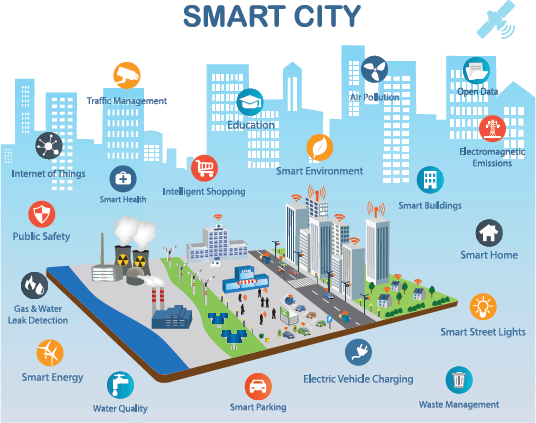
We have heard that the Indian government is working hard to develop smart cities. Do you know that smart cities use IoT for efficient utilization of resources? Figure 9.9 gives an overview of such a city. IoT has the potential to transform entire cities by solving real problems citizens which are faced by the people every day. With the proper connections and data, the IoT can solve traffic congestion issues and reduce noise, crime and pollution.
9.2.2 IoT Products
Big companies like Honeywell, Hitachi, GE, Cisco, AT&T, Apple, Google, IBM, Microsoft, Skyworks, Iridium Communications, Red Hat, Zebra Technologies, InterDigital are already playing in the market to realize the benefits of IoT. Given below are some examples.
Amazon Echo for Smart Home works through its voice assistant, Alexa. Users can talk to Alexa and give order to perform a variety of functions. For example, users can tell Alexa to play music, provide a weather report, get sports scores, order an Uber and do much more.
Fitbit One – Wearables tracks your steps, floors climbed, calories burned, and quality of sleep. The device wirelessly connects with computers and smartphones to transmit your fitness data in understandable charts to monitor your progress.
Barcelona – Smart Cities: The Barcelona city in Spain is one of the foremost smart cities in the world. It has implemented several IoT initiatives that have helped to enhance smart parking and the environment.
Amazon Web Services, Microsoft Azure, IBM’s Watson, Cisco IoT Cloud Connect, Salesforce IoT Cloud, Oracle Integrated Cloud and GE Predix are popular IoT platforms.
AT&T – Connected Car: AT&T added 1.3 million cars to its network in the second quarter of 2016. With this, the count of total number of connected cars rose to 9.5 million.
Thus, we see that IoT allows for virtually endless opportunities and challenges thereby making it a hot topic for research. According to a report, nearly $6 trillion will be spent on IoT solutions over the next five years.
9.2.3 Challenges
Security is the biggest issue that we often come across while talking about IoT. With billions of devices connected together, concerns of privacy and data sharing always haunt our minds.
In fact, the protection of sensitive data was ranked as the top concern among enterprises according to the 2016 Vormetric Data Threat Report. Hackers try to penetrate connected cars, critical infrastructure and even people’s homes. Therefore, the main focus of companies is to ensure security of all the data generated by these devices. Most IoT devices do not encrypt communications if the data is transferred over a local Wi-Fi network. If the Wi-Fi network is unsecured, then it opens the gates for security threats wide open.
IoT devices used on patients as wearable devices, if left unattended (with technical errors), can be life-threatening for patient.
Another issue with IoT is that massive amounts of data is being generated by these devices. So, companies need to figure out how they would store, monitor, analyse and deduce results from this vast amount of data that is continuously being generated.
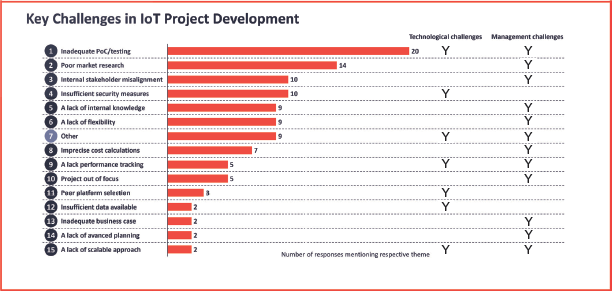
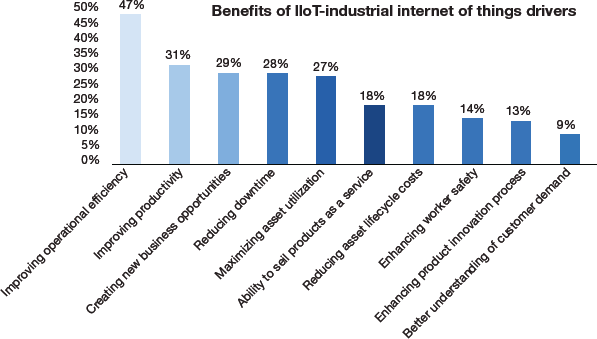
FIGURE 9.11 Key challenges in IOT project development
The graph in Fig. 9.11 shows top challenges in the world of IoT. Besides security, other key concerns are as follows.
- Scalability: When billions of Internet-enabled devices are connected, large volumes of data are generated that need to be processed. To process this huge data, devices need big data analytics and cloud storage for interpretation of useful data. Moreover, these systems need to be scalable to accommodate ever expanding data.
- Interoperability: Technological standards in most areas are still fragmented and need to be converged to establish a common framework and standard for the IoT devices.
- Lack of standardization: Since standardization process is still lacking, interoperability of IoT with legacy devices is critical which, in turn, prevent us to move towards the vision of truly connected interoperable smart objects.
- Lack of government support: Government and regulatory bodies like the FDA should set up regulations by forming a standard committee for safety and security of devices and people.
- IoT Malware and ransomware: Ransomware can lock out users from various devices and platforms and still use a user’s valuable data and information. For example, a hacker can hijack a computer camera and take pictures. He may also lock a device and then demand ransom to unlock it and return the data.
- Connectivity: Poor Internet connectivity is a challenge where IoT sensors are required to monitor process data and supply information.
- Lack of effective and informed government regulations: IoT is a fast-developing area of technology and many legislators are either not aware or do not fully understand the workings of IoT, so they are reluctant to create or enforce regulations.
- No privacy policies: There are no clear regulations for IoT devices on which information is private or public. For example, an IoT toy could collect information from a child without taking consent from the parents. The toy can then share that data with the manufacturer who could then share it with others. IoT devices should be updated regularly. Updates should be small. Also, IoT devices should be backward compatible with older devices.
- Bandwidth strain: As the number of IoT devices connected in a geographical area grows, more text/audio/video data will flow through those devices, thereby requiring higher bandwidth and placing strain on the server farms that process all that information.
- IoT professional skills gap: IoT suffers from a professional skills gap. The main reason behind this is that IoT is growing rapidly and many people are yet to develop a skillset working with this technology. As of now, a few IoT experts are working in the industry, training new people even more difficult. In a survey, it was found that 38% of respondents reported that they lack in-house expertise in IoT network management, while 27% were facing a dearth of in-house experience to deploy IoT.
CASE STUDY EXAMPLE
Several high-profile IoT security breaches have been reported till date. One example is the 2015 Jeep Cherokee hack, when two hackers remotely took control of a car using vulnerabilities in the entertainment system to access its dashboard functions. The hacker initiated a series of unexpected disturbances and finally disabled the brakes, causing the driver to swerve into a ditch.
Wireless IoT SIM cards should automatically update the system, removing the possibility of users not updating and leaving holes in system security.
CASE STUDY EXAMPLE
Inter-operability is a serious issue. Once it was seen that there was a problem when an insulin pump communicated only with a particular operating system. It makes the functionality unavailable for patients who may have a computer with a different operating system installed in it.
There are issues around the device’s wireless standard. For example, if it uses Bluetooth, then the device could inadvertently connect to the wrong nearby device.
CASE STUDY EXAMPLE
A manufacturing plant where a large number of precise, high-resolution pictures are sent to 3-D printers could slow down the servers or even cause them to crash if the demands are too great.
Similarly, in a hospital, connected video cameras transfer of thousands of high-resolution radiology images and hundreds of telehealth video calls going on in a single day could significantly overload a server farm.
However, despite all odds, IoT is being used by several industries including manufacturing, defence, transportation, banks, retail, oil & gas mining, health care, connected home, banks to name a few.
9.2.4 Sensors
A sensor is a device that detects and responds to some type of input that it receives from the physical environment. This input could be heat, light, motion, pressure, moisture or any other environmental phenomena. As the output, sensors usually generate a signal that is converted to human-readable form and then displayed at the sensor location or transmitted electronically over a network for reading or further processing.
For example, an oxygen sensor in a car’s emission control system detects the gasoline/oxygen ratio. If the mixture is not optimal, the balance is readjusted.
Another example is motion sensors in home security lights, automatic doors and bathroom fixtures that send out microwaves, ultrasonic waves or light waves and detect when the flow of energy is interrupted by something entering its path.
Vision and imaging sensors detect the presence of objects or colours within their fields of view. They display a visual image of whatever it detects.
Temperature sensors detect thermal parameters and provide signals to the inputs of control and display devices. They are used to measure the thermal characteristics of gases, liquids and solids in many industrial processes.
Radiation sensors sense the presence of alpha, beta or gamma particles and provide signals to counters and display devices. They are usually used for surveys and sample counting.
Proximity sensors detect the presence of nearby objects through non-contacting means within a range of up to several millimetres. They are used in manufacturing operations to detect the presence of parts and machine components.
Pressure sensors detect forces per unit area in gases or liquids and provide signals to the inputs of control and display devices.
Position sensors sense the positions of valves, doors, throttles, etc. and supply signals to the inputs of control or display devices.
Photoelectric sensors sense objects passing within their field of detection. They can even detect colour, cleanliness and location, if required. Photo sensors are commonly used in manufacturing and material handling automation. For example, they are used for counting, robotic picking and automatic doors and gates.
Particle sensors sense dust and other airborne particulates and supply signals to the inputs of control or display devices. Particle sensors are common in bin and baghouse monitoring.
Motion sensors sense the movement or stoppage of parts, people, etc. and supply signals to the inputs of control or display devices. They are usually used for detecting the stalling of conveyors or the seizing of bearings.
Metal detectors sense the presence of metal in a variety of situations ranging from packages to people.
Level sensors are used to determine the height of gases, liquids or solids in tanks or bins. The information is then passed as signals to the inputs of control or display devices.
Leak sensors are used to identify or monitor the unwanted discharge of liquids or gases. Some leak detectors are used to measure the effectiveness of the seals in vacuum packages.
Humidity sensors measure the amount of water in the air and convert these measurements into signals that can be used as inputs to control or display devices.
Gas and chemical sensors sense the presence and properties of various gases or chemicals and relay signals to the inputs of controllers or visual displays.
Force sensors measure various parameters related to forces such as weight, torque, load, etc. and provide signals to the inputs of control or display devices.
Flow sensors sense the movement of gases, liquids or solids and provide signals to the inputs of control or display devices. They are used extensively in the processing industries.
Flaw sensors detect inconsistencies on surfaces or in underlying materials such as welds. They are used in a variety of manufacturing processes.
Flame detectors sense the presence and quality of fire and provide signals to the inputs of control devices. They are used in many combustion control applications like burners.
Electrical sensors sense current, voltage, etc. and provide signals to the inputs of control devices or visual displays.
Contact sensors detect physical touch or contact between the sensor and the object being observed or monitored. They are often used in alarm systems to monitor doors, windows and other access points. For example, when a door or window is opened/closed, a magnetic switch provides an indication to the alarm control unit so that the status of that entry point is known. They are also used as proximity sensors in robotics applications and automated machinery.
Non-contact sensors do not require a physical touch between the sensor and the object being monitored in order to function. Radar guns used by law enforcement to monitor the speed of vehicles is an example of a non-contact sensor.
Speed sensors detect the speed of an object or a vehicle.
Ultrasonic sensors detect noise and measure the distance between two objects. For this, high-frequency sound waves generated by active ultrasonic sensors are received back by the ultrasonic sensor for evaluating the echo. Time delay between transmitting and receiving the echo is used to calculate the distance to an object. Passive ultrasonic sensors are used for detecting ultrasonic noise present under specific conditions.
Leave a Reply