
Why does this scheme work? It is possible to distinguish the syndromes,
which are orthogonal states, if we measure a suitable observable of which
they are eigenstates. It turns out that the bit-flip syndrome states |ψ
i
i are
eigenstates of the operators Z
1
Z
2
and Z
2
Z
3
with distinct sets of eigenvalues.
In other words, for
ˆ
O
I
= ⊗ Z ⊗ Z and
ˆ
O
II
= Z ⊗ Z ⊗ ,
ˆ
O|ψ
i
i = ±|ψ
i
i. (10.5)
You can easily check that each |ψ
i
i has a different set of eigenvalues for
ˆ
O
I
and
ˆ
O
II
(Table 10.2). These operators when acting on the full Hilbert space of
Quantum Error Correction 201
3-qubit states, do not change the subspaces containing the syndrome states.
This subspace is said to be invariant under the action of these operators,
which are therefore known as stabilizers. It is possible to understand why the
TABLE 10.2: Eigenvalues of stabilizers.
Error Syndrome Z
1
Z
2
Z
2
Z
3
|ψ
0
i +1 +1
X
1
|ψ
1
i +1 −1
X
2
|ψ
2
i −1 −1
X
3
|ψ
3
i −1 +1
ˆ
Os of Equation 10.5 are the stabilizers and how they distinguish between the
syndromes for single qubit-flip errors. The uncorrupted codeword state is un-
changed by the action of
ˆ
O. Each corrupted state is obtained by |ψ
i
i = X
i
|
˜
ψi,
and the operators Z
j
Z
k
either commute or anti-commute with X
i
, depend-
ing on whether i = j or k or not. It is a well-known concept in quantum
mechanics that operators that commute or anti-commute with a transforma-
tion operator are symmetries of the system: the states are left unchanged by
them. Therefore, the corrupted states can be distinguished by measuring
ˆ
O
I
and
ˆ
O
I
I, without disturbing the states. Measuring Z
i
Z
j
is like comparing the
values of the i
th
and j
th
qubits, giving +1 if they match and −1 if not. Recall
|ui
O
|0i
H
•
H
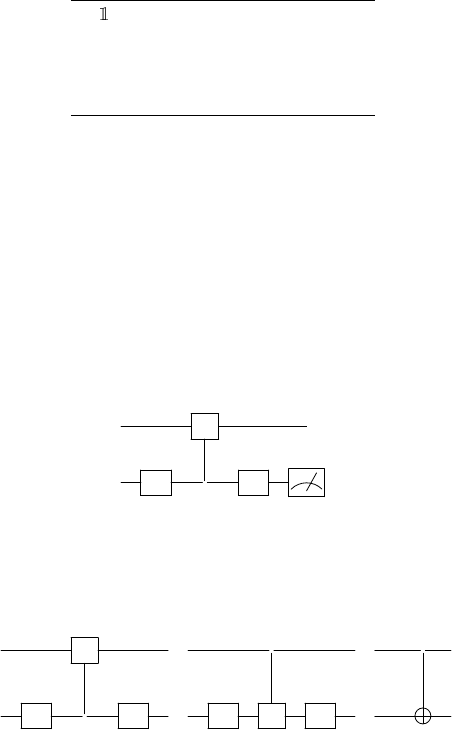
FIGURE 10.6: Circuit for measuring an operator
ˆ
O.
that measuring a unitary operator
ˆ
O having eigenvalues ±1 is achieved by the
circuit in Figure 10.6, with |ui an eigenstate of
ˆ
O.
Z
• •
≡ ≡
H
•
H H Z H
FIGURE 10.7: Circuit equivalences for measuring
ˆ
Z.
If we need to measure Z
1
Z
2
, since the C-Z gate is symmetric, we can
interchange the control and target qubits, and using X = HZH (see Fig-
ure 10.7) and H
2
= 1, we can get the syndrome measurement circuit given
by Figute 10.8. Check for yourself that each measurement in this process is
identical to that in Figure 10.4
Leave a Reply