
With different types of dependencies and value-based outcomes based on the kind of network effect involved in any particular case, the impact on how network effects are utilized by various sectors, has a profound impact on their growth. With social channels and networks being a key component of the growth and perpetuity of major digital marketing efforts, it is evident that these impacts need to be traced by marketers so that companies which have grown through positive network impacts are not hit by sudden negative network effects, which can take a huge toll on brand standing, imagery, and trust. Although these concepts look more related to product development, they are equally important for marketers as the overall value which a network derives from a product directly determines the lock-in period and impact of various regular and viral campaigns exposed to customers.
From Marketspaces to Marketplaces
With the development of network economies and the possibilities to build and propagate services online, traditional marketers have shifted their marketing and sales efforts from a marketplace to a marketspace model.
A marketplace (from its most generic definition) is a regular gathering of people for purchase and sale of provisions, livestock, and other goods. In other words, marketplace is the physical equivalent of what marketers term as the offline model where buyer and seller transactions occur in specific designated places without the use of any electronic communications or software. Over centuries, this has been the mainstay of business and commerce for all types of products and services.
The marketspace concept, on the other hand, is a recent one which involves information and communication-based electronic exchange environment, where goods and services instead of being sold only physically are marketed through an online space that facilitates bi-directional commerce (as also explained earlier through the concepts of interactive platforms in the second section of this chapter).
The role of the marketspace is to match buyers and sellers whose contexts have sufficient similarity; if the product being requested and offered has a high degree of match and the buyer and seller can come to an agreement on price, location, and timing, then a successful match can be made that will culminate in a transaction. Typical examples of these are Ebay, Amazon, and a multitude of other e-commerce sites which run on the marketspace model, where apart from their own products and brands being sold, they also act as a platform for other smaller and niche brands to sell at designated prices and deliver goods at their end. This helps bigger e-commerce sites manage warehousing and delivery at almost negligible costs and concentrate more on marketing and brand-building efforts.
The term marketspace was introduced by Jeffrey Rayport and John J. Sviokla in 1994 in their article “Managing in the Marketspace” that appeared in Harvard Business Review. In the article, the authors distinguished between electronic and conventional markets. In a marketspace, information and/or physical goods are exchanged, and transactions take place through computers and networks. The three most distinct concepts which define a marketplace transaction include:
- Content of the transaction
- Context in which the transaction takes place
- Infrastructure that enables the transaction to occur
In the Harvard Business Review article, Jeffery and John have shared multiple examples to explain how the value creation exercise differs between a marketplace and a marketspace. It shares that in a marketplace, the three differentiating concepts of content, context, and infrastructure are all combined as an entity to provide the experience, while in a marketspace the marketer can utilize and build upon each of the three components as unique differentiators by themselves which individually can build unique differences difficult to replicate otherwise.
With the concept of marketspace having moved ahead leaps and bounds with the growth of online and emerging digital concepts, the classification of uniqueness on the lines of content, context, and infrastructure still holds quite valid. If we take the mobile application as the latest example of the marketspace model, we realize that most firms and brands developing mobile applications for marketing are looking at digitized content as a differentiator, the availability of information, simple interface, and superior design as the context, and cloud-based mobile networks as providing uniqueness on the infrastructure plank.
These days, the concepts of the marketspace model have grown to such advanced levels that with social concepts like hashtags (#) in Twitter, marketers can break down and use each piece of intangible information or context related to a product as searchable metadata. Such hashtags, if searched in Twitter, would lead to thousands of relevant articles, real-time information, and commerce-led links through which customers these days can even place orders in their e-carts on e-commerce sites like Amazon and get their needs fulfilled through a connection of online networks—ideas which couldn’t even be thought of a few years back.
In the upcoming sections, there will be a mention of multiple such instances where content, context, and infrastructure play a vital role in differentiating a product, service, or a brand which would help extend the concept of marketspace even further. Ideally, companies with the right mix of marketplaces and marketspaces would be the ones to succeed the most and it is for digital marketing to take the lead and integrate the two, with the efforts surely being led by the marketspace models.
Changing Sales and Customer Service Patterns
With the impact of multiple forces on the way, customers are receiving information and conducting business through marketspaces and distinct shifts have occurred in the way sales and customer service are structured in the internet age. Typically, the role of sales, which was considered to be an activity related to pushing a product onto the target segment, has changed in many ways with the introduction and integration of digital marketing techniques.
Changing Sales Function in the Digital World
In the traditional sense, a job of a salesperson was quite clear. He had to collect a few product samples in the morning, move out to his designated territory, have a look at the list of retailers (in the case of B2B) or customer home addresses (in B2C), visit them, and showcase the power of their products and services. When radio, television, and out-of home portals started developing concept of marketing (which primarily was to entice the customer towards a certain brand), the sales function was supported by the instant connect which had already been developed between the customer and the brand.
With the onset of online marketing and the present digital era, the sales channel too has changed its ways with the following trends:
- Information accessible to customer: Earlier, sales used to rule and had an information arbitrage, knowledge of comparative prices, and a stranglehold of the supply chain in his area which was not available to the customer. But with the rise of multiple buying options on the internet and the amount of information available through websites, blogs, sales collateral, dedicated product portals, and social reviews, the job of a salesperson has become tougher in terms of being up-to-date on what his consumer might be knowing and to have clear differentiating points.
- Changing pattern of communication channels: While still a large part of the marketing budget flows through the traditional media channels like TV, newspaper, magazines, etc., the influencing channels at the end of the funnel are increasingly shifting online which makes it imperative for sales to follow its unique customer set on multiple digital channels and be able to put strong conversion techniques for those who already are brand champions and would be most willing to convert their interest into real sales.
- Deriving meaning and utilizing huge sets of customer data: Once sales has the requisite data from multiple marketing efforts both online and offline (along with CRM data of loyal customers), the most important task for them is to chaff out the true set of customers they should concentrate for their sales activities and the kind of sales communication to send out to those who may have visited the brand’s website, or looked at a product video, made a sales enquiry, or have even left the cart at the last step. It is a time where sales and marketing have to collaborate rapidly to convert a customer’s product search lest they lose out the opportunity to a more alert competitor.
- Knowledge of changing platforms and tools for sales: Earlier the job of a salesperson was more on managing the intangibles and personal influence, which now is changing rapidly. A mature and effective sales manager now has to reskill himself with the knowledge of the latest sales and marketing tools and technology available in the market and guide his/her sales-force teams accordingly. The biggest challenge is to know which technology is the best to deploy a willing customer to make the next sale.
With these trends, the sales function would do best not to put up an artificial face in front of the customer and understand that being transparent is the key to success in present times. They need to utilize story-telling elements, converse with content which is compelling and thoroughly analyzed, engage in a consultative, educational mode, and be available to service customer queries in a real-time mode to really convert deals they wish to. As shared earlier, it is the context which salespeople bring to the deal which will be the key differentiator between win or loss in these modern times.
Impact of digital on customer service patterns
Customer service is typically defined as a series of activities designed to enhance the level of customer satisfaction. The concept traditionally included services which were provided at the time of buying or after sales has taken place. But increasingly in today’s world with every competitor trying to snatch customers away and build their own communities, customer service elements have become equally crucial in the pre-buy “awareness” stage so that marketers are in constant loop of how they can provide customer satisfaction even in the early funnel stages.
The most pertinent example of this changing function is the support a customer might be expecting while he/she is searching for your product category. Suppose he/she clicked on a marketing newsletter where he got to know of your brand, or paid a visit to your website, or filled a form for an engaging video, or checked out your social page on Facebook. These would be signs of getting right into action to support his/her search process and maybe share a personal e-mail enquiring if he/she might need any assistance with the product, maybe even share some interesting trivia or trending news on core elements of your product. This is possible in the digital era and according to McKinsey (as shown in one of their surveys), a pure digital journey has the potential to drive higher customer satisfaction across all stages of the customer journey (see Fig. 2.3).
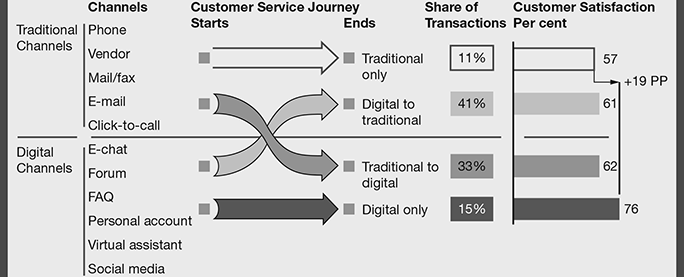
Figure 2.3 McKinsey’s e-Care Survey on Customer Satisfaction
The objective of the survey was to understand if digitization had any impact on providing higher customer care. McKinsey structured its e-Care Survey around 11 touchpoints grouped into two categories—traditional channels (such as phone, vendor, mail/fax, email, and click-to-call) and digital channels leveraging digital platforms (e.g., e-chat, forums, FAQs, personal accounts, virtual assistants, and social media).
The key differentiating factor for customer satisfaction was to understand service elements across the customer journey touchpoints from start to finish. There were four key journeys identified—traditional only, traditional to digital, digital to digital, and digital only. As is shown in the corresponding line graph, customer satisfaction was higher for digital only journey which is a clear indicator of the impact of digital.
In this first section of the chapter, we identified multiple factors which have and are continually impacting what was known as the traditional marketplace. In the next section, we would concentrate on the impending shifts in the value chain brought about by this changing landscape and how companies are revising their relationships with key stakeholders (suppliers/partners) to remain relevant to the customer and tweak or even in cases disrupt their business models accordingly.
Leave a Reply