
With an understanding of the value chain process steps for a generic journal publishing value chain, let us look at how multiple and digital expert functions help revise the value chain to create a completely refined and agile ‘Digitized Value Chain’ which opens up the possibility of creating newer digital marketing models (which we will cover in the next section).
Looking at Fig. 2.7, we can see the original journal value chain depicted in the same manner as in Fig. 2.6. The two new inner layers here pertain to:
- Oval layer: located next to the generic value chain, this layer contains ovals which stream out from the central expert function. The arrows moving out to each of the ovals are actually individual digital value elements which are associated with each process of the outer value chain and help reduce the transaction cost for that process step (the impact of each of these ovals is covered process by process in this section).
- Inner digitized value chain: the inner value chain processes, which have been reduced to just four steps instead of 10, (as was in the original chain), showcase how digital can help create a more agile value chain which has lesser friction than before, hence, provides more value creation possibilities both for the firm and the customer.
We will now go through each of the key process steps which we had drawn out in the generic value chain earlier to assess the impact of expert function ovals on each of them and also understand how some of the circled process activities in the original chain are disappearing (since they are not core to the firm), leading to a more compact inner digitized value chain.
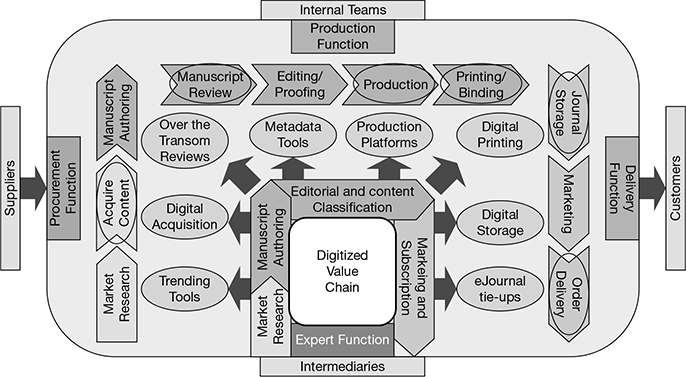
Figure 2.7 Digital Journal Publishing Chain
Let us discuss the impact on each of the 10 process steps.
- Process 1 Market research (retained): Since market research and estimation is a core activity for a journal, it has been retained as one of the four core steps of the digitized value chain. Here we see an oval on ‘Trending Tools’ which shows how multiple tools for gauging market trends (on useful and sellable titles) can help companies decide on which titles and authors to publish.
- Process 2 Acquire content (disappearing): The oval next to the Acquire Content stage, shows how the whole manuscript acquisition process is going digital, wherein digital tools are being deployed to manage the activities of submission, validity check, author rankings, title acquisition, and rejections.
- Process 3 Manuscript authoring (retained): This is a critical process which is the core competency for any publisher and needs to be retained in-house though several advanced tools have come up to support the authoring process in a digital manner (impact of which we would observe in the next chapter wherein new business models are being generated through content classification and metadata management).
- Process 4 Manuscript review (disappearing): This stage, which involves managing submission reviews and checking content in a detailed manner for context, accuracy, and relevance, is taken over by external experts which is referred to as ‘Over the Transom’ reviews, which help manage submissions on publisher’s site and save cost and time with their expertise in specific subjects and usage of multiple digitized tools.
- Process 5 Editing/proofing (retained): With editing and content proofing being critical steps in manuscript publishing, this process forms an integral part of the digitized value chain with an addition of content classification. The ability to classify content (as we would also see in the next section) with the use of metadata and classification tools has helped support the digitization process tremendously, in turn creating newer digital marketing models.
- Process 6, 7, 8 Production, printing, and storage (disappearing): With the advent of digital production and printing platforms and tools, and with the growth of digital storage, these three process activities (which are not core to the firm) are being combined and given off to expert intermediaries, hence, find no representation in the digitized value chain.
- Process 9, 10 Marketing (retained), delivery (disappearing): With marketing gaining prominence and search-based discovery getting more important than delivery of the journal itself, this function is retained in the revised value chain along with addition of subscription-based platforms and applications which are supporting most of the traditional marketing activities. Many firms rather than investing in fulfillment are tying up with multiple e-journal and vertical platforms which have more investments in developing customer facing tools for digital delivery.
With the concepts discussed in this section, we see the transformation of older value chains into digital chains supported by expert intermediaries. In the next section, we would look at how this digitally transformed value chain provides opportunities for firms to disaggregate and re-bundle their products and services and how in turn multiple digital marketing models are created to service these emerging consumer needs.
Leave a Reply