
In the first part on Introduction on Digital Marketing, we learnt about the evolution of internet technologies driving digital marketing, its value chain, and business models, along with the impact of consumer behavior on digital marketing.
This next part on Digital Marketing Strategy Development and the following two parts on Digital Marketing Planning and Set-up and Digital Marketing Implementation would focus on the implementation aspects of the ASCOR Digital Marketing Framework as shared in the end section of Chapter 1. The ASCOR Digital Marketing framework which forms the core for all digital marketing activities and implementations has five key phases, and this chapter would look at developing a basic understanding of the first phase which would help us build up our knowledge for the subsequent phases in the next chapters.
Marketing Strategy and its Digital Shifts
In Chapter 1 Section titled, ‘Digital Marketing Framework’, we had laid out the core elements of the ASCOR Digital Marketing Framework at a high level. Let us first establish the need for the framework, before we go further into the first phase and its elements.
Typically, any framework by design supports and helps build the core elements for any strategy implementation. In the case of marketing, the need for a well-developed and thought-out strategy becomes all the more crucial considering the multitude of channels through which customers can be influenced and the impact of changing consumption patterns. Be it traditional marketing or its present-day digital form, marketing heads of firms have always had limited budgets wherein they were expected to lay out a well-structured marketing plan to support and enhance sales and consumer-connect activities. In this section, we would look at the basics of marketing strategy and how marketing plans have been developed traditionally.
Marketing strategy, by definition, has the goal of increasing sales and achieving sustainable competitive advantage. Typically, this is differentiated from sales strategy as marketing aims at a ‘Pull Strategy’ wherein the intention is to create a strong positive disposition towards the brand through the use of regular marketing tactics, while sales strategies deal more with setting up plans to sell (and even exceed) targeted volumes of a product in a certain defined period.
Generally, marketing strategies are initiated as a part of the strategic planning for an organization which includes setting up the vision (long-term objective) and mission (shorter term tactical objectives) for each of the organization’s key product/service divisions. Peter Drucker, who is best known as the ‘founder of modern management’ shares that while developing the corporate strategy, each firm needs to ask and develop answers to questions like “What is our business? Who is the customer? What is the value to the customer? What should our business be?”, etc. The marketing process as defined by Philip Kotler (1999) includes:
- Analyzing marketing opportunities: According to Kotler, a marketer’s initial task is to identify potential long-run opportunities given the company’s market experience and core competencies.
- Developing marketing strategies: In this step, the marketer prepares a positioning strategy for each new and existing product based on its progress through the life cycle, makes decisions about product lines and branding, and designs and markets its services.
- Planning marketing programs: It involves transforming marketing strategy into marketing programs and making basic decisions on marketing expenditures, marketing mix, and allocation.
- The first decision is the level of marketing expenditures needed
- The second relates to dividing the total marketing budget among various tools in the marketing mix—Product, Price, Place, Promotion
- The third is how to allocate marketing budget to various products, channels, promotion media, and sales areas
- Managing the marketing effort: This stage involves organizing the firm’s marketing resources to implement and control the marketing plan through feedback and control.With a basic understanding of marketing strategy and planning process, we can now better appreciate the need for a structured digital marketing framework to understand and lay down in specific terms, the key objectives of digital marketing, the controls needed to execute it, and the processes to put in place to measure the outcome and refine original plans.
The ASCOR digital marketing framework has been developed specifically to guide practitioners of digital marketing to develop and manage it as a predictable process rather than view it as an art on which we have no control.
The key differences in marketing strategy/framework creation traditionally and with the advent of digital media include:
- Knowledge of customer preferences: With advanced analytics on consumer preferences and interactions with brands now available to marketers, it is easier to know and include value-drivers much earlier into the marketing planning process.
- Leveraging traditional brand presence: What traditional marketing lacked is the leverage it could obtain and pass on to other channels which were typically distinct in nature. With digital marketing, the right mix of influence can be gathered and built into digital marketing planning in a selective manner.
- Reactive to predictive approach: Traditional marketing plans like newspaper, radio, and television had no means to know individual segment-based consumption patterns and preferences. Data, though available, could not be used to develop predictive models of planning, which is much more possible now.
- Disintermediation of value chains/life cycles: With multiple intermediaries and new value-trapping entities in the fray, traditional value chains have been drastically altered, thus shifting the marketing objectives themselves which have to become more and more aligned directly to the consumer rather than leaving that job to intermediaries.
- Impact of prosumerization: Prosumerization involves emergence of low-overhead start-ups which are competing with capital intensive incumbents. With these new start-ups using technology to their advantage, more novel marketing techniques are being planned by traditional firms which involve lower budgets with higher customer impact.
- Brand to channel attribute alignment: An interesting aspect of digital marketing channels is the way brand attributes can be aligned to a particular marketing medium, making it much more impactful to spend larger marketing budgets on those and similar mediums rather than allocating them proportionately across a mix. A good example of this could be the way a professional camera brand can tie-up with a photo-sharing social site like Instagram and make use of the aesthetic and immersive elements of that single channel to sell its range of high-end cameras. Such media channels and brand alignments could not even be thought of earlier.
- Unique digital-connect concepts: With the proliferation of short-text messaging, and concepts like trending topics and viral marketing, it is now possible for new brands to build a name and brand presence in less time with unique marketing short bursts. Planning for these kinds of marketing tactics is emerging as a completely new area.
- Follow-the-customer model (attribution concepts): The most interesting change which marketing has brought about is the possibility to track each consumer’s purchase pattern on the internet and relate it to a particular influence, reason, or combination of events (attribution phenomenon). This not only helps the marketer to intervene and influence the consumer while he/she is purchasing actively but also makes pitches, provide discounts, etc., when they are plainly browsing, thus influencing them to a discovery-led purchase.
The Need for Digital Strategy
We now have an understanding of key differences and the specific impact brought about by digital channels and their influence on marketing strategies and planning. While developing a strategy framework for digital marketing one has to look into a whole set of unique elements. Also, equally pertinent is the fact that however much resources and attention firms across the globe pay to digital strategy, it still has to be aligned to and serve the needs of traditional marketing.
Let us see the scenarios below to understand how digital strategy supports and extends traditional marketing strategy (see Fig. 4.1).
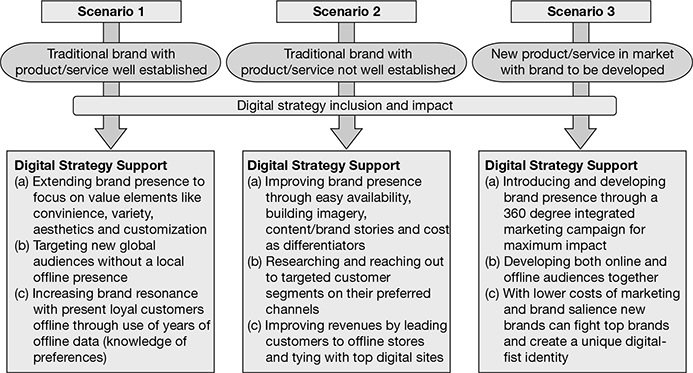
Figure 4.1 Scenarios for Digital Strategy Inclusion to Traditional Marketing
In Fig. 4.1, we have taken up three general scenarios to see how a thorough understanding and development of digital strategy can support marketers to enhance the output of their overall marketing spend.
- Scenario 1: A well-established brand with a product/service which is doing quite well with traditional marketing channels but can leverage digital for further brand impact, enhanced revenues, and a global reach. There is also a good possibility for the brand to test niche and premium products with its audience segments, which it might not normally be able to accomplish because of the high costs of traditional marketing channels like television and print advertising.
- Scenario 2: A brand which has been present offline for a long time, but is more of a contender and might not be doing that well as compared to competition in its category. This brand can make use of digital platforms to create a strong identity among certain identified target groups and can also leverage digital partners and channels to improve sales and online presence.
- Scenario 3: Takes a look at how a new product/service can avail of a digital-first strategy to launch itself in the market. Typically, new product developments are riskier and brands these days are utilizing social and owned media platforms to gather responses to their launches, introducing themselves with more willing audiences (the influencer group) to get their feedback and improvize products before a big-bang launch.
With the above examples, it is evident that not only is digital strategy crucial for marketers going forward, they would need a thorough framework to structure their approach and make sure they are moving in a well laid-out fashion to achieve their traditional as well as digital objectives.
The Assessment Phase Elements
With an introduction already made to the ASCOR Digital Marketing Framework (Chapter 1), in this section, we would start with elaboration of its first phase—The Assessment Phase. Before we start to dwell deeper we are sharing below the ASCOR framework base diagram (Fig. 4.2) for a recap of what we understood in Chapter 1.
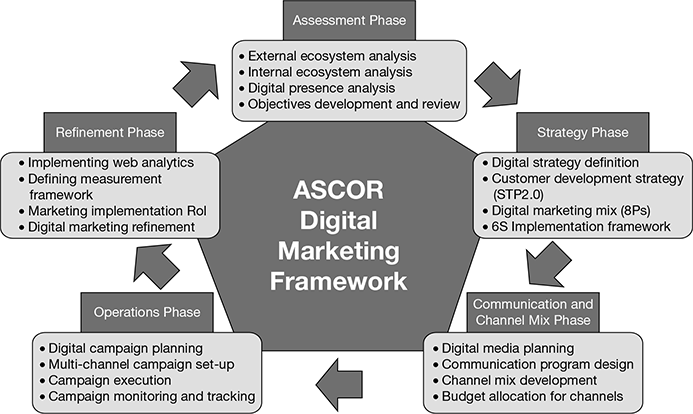
Figure 4.2 ASCOR Digital Marketing Framework
Understanding the Assessment Phase
The assessment phase is the first of the five phases of ASCOR Digital Marketing Framework and also the starting point for any digital marketing plan. It involves an initial analysis of the internal and external environment to define and develop digital marketing objectives for the firm or individual.
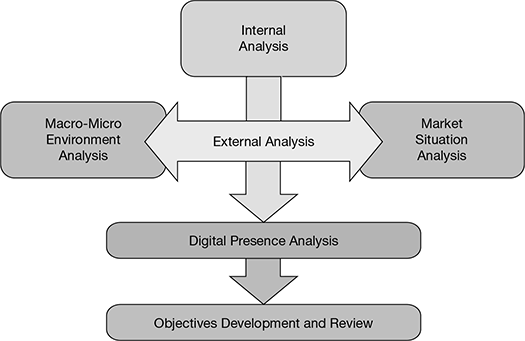
Figure 4.3 Key Assessment Phase Elements
The assessment phase can be divided into four key elements (See Fig. 4.3) based on the nature and interaction of all forces impacting digital marketing objectives development:
- External analysis: Includes the analysis of macro-micro environment (entities which surround and influence the firm, its products, operations, and opportunities) and market situation analysis (referring to market and competition analysis, specific to the industry where the firm and its product are operating).
- Internal analysis: Involves an analysis of factors which are internal to a company and within their control to influence their goal setting and create successful and realistic digital marketing objectives. It includes four main analysis areas—offerings mix, marketing mix, resources mix, and competencies mix.
- Digital presence analysis: It is a 2 × 2 matrix which helps firms identify their present digital state through a combined analysis of external and internal factors.
- Objectives development and review: Involves setting high-level digital marketing objectives based upon the specific digital state in which the firm is present. The review stage consists of activities that involves monitoring, evaluating, and controlling marketing activities continuously.
Leave a Reply