
The terms macro and micro environments are classic marketing environment terminologies used to bunch and analyze key factors that impact a firm’s ability to build and maintain a profitable business and relationship with customers. A macro environment, by definition, includes variables and factors outside the business which have a positive or negative influence on the growth and continued existence of the business (Le Roux et al.1999). The four key elements of macro environment (also termed as PEST) include political, economic, socio-cultural, and technological factors (see Fig. 4.4). Apart from these, researches have included other allied elements too like legal, demographic, and even natural forces as a part of macro environments. The four key elements of macro environment and their impact are described below.
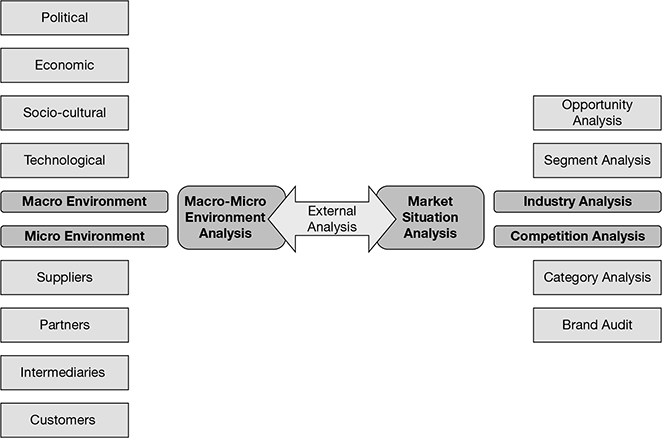
Figure 4.4 Elaborating External Analysis Elements
- Political: The most pertinent example of political forces and world events impacting and propelling the growth of one of the top personal marketing firms is that of Twitter. Twitter, which began as a short form (micro) publishing site (aimed at consumers and organizations who are allowed to share 140 character-only messages), got a big boost when protesters and political activists started using the platform to share views and opinions to mobilize political events and even liberation movements in certain cases.The example goes on to showcase how political events in any country or region impact the business environment which is so crucial for any firm to incubate and propagate. Around the world there have been multiple cases wherein business-friendly leaders and regimes have led to the creation of an entrepreneurial environment which has rapidly fueled the growth of firms. A related example in the Indian context was the rise of Special Economic Zones (SEZ) in India during the time Information Technology (IT) software outsourcing (as a concept) was on the rise; a time when a political will to set-up SEZs (and promote entrepreneurs take up land and build establishments at much cheaper prices) helped mushroom multiple organizations in a short period.
- Economic: Typically, key indicators like economic growth rate, per capita income, interest rates, inflation have impacted a firm’s growth in a particular country or region. With increasing globalization, impact of FDI (Foreign Direct Investment), presence of Venture Capitalists, and with the recent phenomenon of Seed Accelerators and Hackathons (technology/coding events), there has been a surge of interest and support for technology companies where initial funding is crucial for incubation and growth. A large part of the e-commerce growth story in India has also been attributed to these developments and the presence of a sound financial ecosystem.
- Socio-cultural: This factor deals with the social and cultural values, morals, ethics, and to say the least, the overall structure and thought on which society runs and does commerce. As shared in Chapter 3 on consumer behavior and its impact on marketing, it becomes crucial for marketers to not only have a strong understanding of the cultural factors that affect their buying behavior but also understand which concepts customers would most easily adopt and the ones that need a lot of effort towards brand building and customer conditioning.
- Technological: With technology playing a crucial role in advancing marketing in the digital era, this is one of the most important macro factors (along with customer data availability) for marketers these days. It is crucial not only to have knowledge of key technology and automation tools which drive and impact marketing but to also keep up with the changing trends of each of the digital marketing elements like search algorithms, advertising technologies, launch of new operating systems, cloud platforms, competitive mobile app features, etc. Only through an integrated use of technology with other marketing elements can a firm hope to succeed digitally these days.
With an understanding of key macro environment factors, let us look at the major micro environment impact factors now. Micro environment factors include those entities which directly impact the firm and its growth prospects and are closer to the company’s ecosystem than the macro factors. If we recollect, similar factors have also been covered at length in Chapter 1, section titled Digital: the Next Wave of Marketing, wherein we studied the Stakeholder-Based Digital Transformation Model. Let us have a look at them.
- Suppliers: The definition of suppliers in the digital context is quite different from its traditional manufacturing definition wherein suppliers provided raw materials and the firm would have to go through the whole process of procurement, warehousing, production, delivery, and marketing. With digital products and market ecosystem (as also shared through the Journal Publishing extended example in Chapter 2), the definition of suppliers has altered dramatically. If information becomes the final product/service, the nature of information aggregation, conversion and sales can be a much simplified process wherein the only value a firm adds is enhancing or providing structure to a suppliers’ content and sell it to a pre-built audience online. Through technology we see the lines between supplier, producer, and seller diminish and marketers make use of these changing trends to create high-value customized products.
- Partners: Typically, partners were firms which tied up with each other to make use of the specific strengths of each of them. The definition though remains the same, the nature of such partnerships has changed in that nowadays it is not the production or delivery expertise which might be shared but more often companies are co-creating go-to-market (GTM) plans by pooling in resources and most importantly customer data. There is also a big trend of data management companies which are aggregating and providing third-party data to firms on key potential customers (who might have an interest in a brand online but have still not converted).
- Intermediaries: This third category of players differ from partners as they are firms which run independently but provide value-differentiation and reduce transaction costs (market friction elements as also discussed in Chapter 2 on value chain models) for firms across any vertical. The best example is of a large number of logistics and last-mile fulfillment companies which have sprung up in India in the past two years to cater to the explosive growth witnessed by larger e-commerce companies like Flipkart and Amazon.
- Customers: Finally, we come to the most crucial of the micro environment elements which are the customers themselves. As shared in detail in Chapter 3 also, identification of correct customer segments and building relation with those segments through multiple channels, platforms, and activities will be the key to any successful digital marketing implementation. Customer interactions and the awareness of the most effective touch-points enhancing those interactions are thus the key to any firm’s digital growth story.
Leave a Reply