
With an understanding of the external and internal analysis components and their impact on the overall market and growth assessment, let us see how to conduct a digital presence analysis and define key digital marketing objectives through the Objectives Planning exercise.
Digital Presence Analysis
The external and internal analysis conducted in the last first two parts of this chapter is to support a company with all the necessary data points towards developing the right digital marketing objectives to serve the business needs and goals of the firm. For any large and established firm, these days, it’s almost a foregone conclusion that they have to be present on key digital platforms not just for sales growth but also to keep up with emerging competition across the globe. But for a large set of companies which are small to medium businesses and even for individual, government, NGO segments, they might still be in the contemplation stage of the kind of digital presence that is required for them to be competitive and how much of their budgets should be allocated to each digital marketing activity.
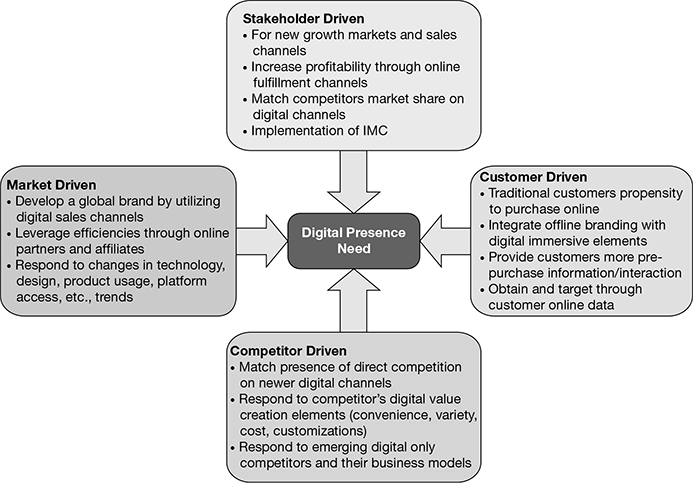
Figure 4.7 The Need for Digital Presence
Fig. 4.7 showcases the four key drivers for any firm to consider its presence on digital platforms.
- Stakeholder-driven needs: It includes factors which are business/stakeholder-driven which necessitates a firm to move its product portfolio online.
- New growth markets and sales channels: Firms, year-on-year have pressures to meet increasing sales and other financial targets and also to move into newer growth markets.
- Increasing profitability through online fulfillment channels: With the help of digital fulfillment channels and reduction of intermediaries in the value chain, firms can reduce costs by shifting some percentage of their portfolio online.
- Matching competitor’s market share on digital channels: Many a times, a stakeholder urges to match a rising competitor’s growth; this results in the firm’s move to develop newer digital channels.
- Implementation of IMC: With the growing need to utilize each key marketing channel for its benefit, presence on digital channels become imperative from an IMC (Integrated Marketing Communication) standpoint.
- Market-driven needs:As discussed in the last part on ‘External Analysis’ components, the external or market environment has a huge role to play in driving firms online. Key market-driven factors include:
- Developing a global brand by utilizing digital sales channels: With mature economies stagnating, there is a need for marketers to develop a global brand for higher sales and visibility through digital channel implementation.
- Leveraging efficiencies through online partners and affiliates: Through online partner and affiliate integration, many traditional companies have been able to leverage digital growth, without setting up their operations online.
- Responding to changes in technology, design, product usage, platform access, etc. trends: There are multiple other market-driven trends related to improved technologies, design implementations, product usage, new platform development trends, which necessitate the shift to digital channels.
- Customer-driven needs: The most immediate and relevant trends driving brands online are posed by customers themselves in the way their consumption patterns evolve. Key trends which are impacting firms in this area include:
- Traditional customer’s propensity to purchase online: With most loyal customers who used to buy through traditional channels slowly embracing the digital revolution, it is important for brands to develop an integrated marketing strategy.
- Integrating offline branding with digital immersive elements: A lot of brand marketers understand the need to make use of the unique immersive elements which digital channels offer to traditional brands.
- Obtaining and targeting through customer online data: Marketers these days cannot miss the opportunities of obtaining deep personal data through all digital channels, integrating them and utilizing those online personas productively.
- Competitor-driven needs: Finally, it is competition too which drives brands to move towards digital channels. Key competitive factors include:
- Matching presence of direct competition on newer digital channels: With direct competitors moving online it becomes imperative for all types of companies to be present online for growth and mindshare capture.
- Responding to competitor’s digital value creation elements (convenience, variety, cost, customization): As discussed in Chapter 2 section on Digital Value Elements, companies need to map and respond to new values being created by competition which in an integrated manner provides unique differentiation to customers.
- Responding to emerging digital only competitors and their business models: A new crop of digital intermediaries and apps is replacing a company’s marketplace position and being digital is the only way firms can counter their moves and develop their present business models to suit digital channels.
Apart from the factors shared here, there are traditional firms which have already proactively placed themselves on the digital landscape to protect their market share and also leverage incremental revenues in the process. These companies have already analyzed the benefits of being digital and also reaped major benefits in terms of initial recall, better knowhow of digital technologies, stronger partnerships, and enhanced branding which is also impacting traditional sales objectives.
In the next section, we have shared a DPA (Digital Presence Analysis) Matrix which helps companies assess the extent of their digital presence to decide which digital marketing objectives they need to create and ensure that they develop related marketing strategies to implement and achieve those objectives.
Digital Presence Analysis Matrix
Before we discuss the topic of Digital Marketing Objectives creation, it is important for us to know how companies can decide the kind of objectives they should formulate which, in turn, depends on their extent of digital presence.
Digital presence is defined as the relative extent to which a company is present on digital channels in comparison to direct competition, based on comparison of key competitive factors. The data for such comparitive factors would typically be derived from a mix of external and internal factors (data points collected during the internal and external assessment stages described in the first two parts of this chapter).
Given below are some of the general factors which can be compared by a firm to its competition (similar to the VRIN framework shared in the earlier section) to judge their digital presence (see Fig. 4.8). It has to be noted that the comparison is a subjective one for the firm, as they would need to decide which key competitors would they want to compare themselves against, the chosen factors for comparison, and the veracity/validity of the data researched.
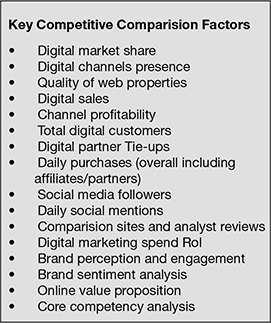
Figure 4.8 Competitive Comparison Factors for Digital Presence
Post the analysis, once a firm has a broader assessment of where it stands in comparison to competition it would benefit from the DPA (Digital Presence Analysis) Matrix which is introduced next. This matrix would help provide the base for developing Digital Marketing objectives in the next section of this chapter.
The Digital Presence Analysis is a 2 × 2 matrix, which has been developed across two axes—Extent of Digital Presence and Market Standing wrt (with respect to) Competition. It has been developed with the earlier competitive comparison as the base and introduces four key states (in the form of matrices and a fifth state related to a new launch) through which the extent of digital presence of a firm can be established and used for digital marketing applications.
In the DPA Matrix (see Fig. 4.9), the X Axis is the Extent of Digital Presence, beginning from the left corner and depicting firms which are only traditionally led and without any inroads onto digital channels. As we move to the right, the extent of digital presence in the firm is the strongest. We have to remember that this extent of digital presence is relative to a specific firm within a particular industry section in relation to its direct competition and is not in any way absolute in nature (since the purpose is a classification and not arriving at a specific digital presence percentage figure).
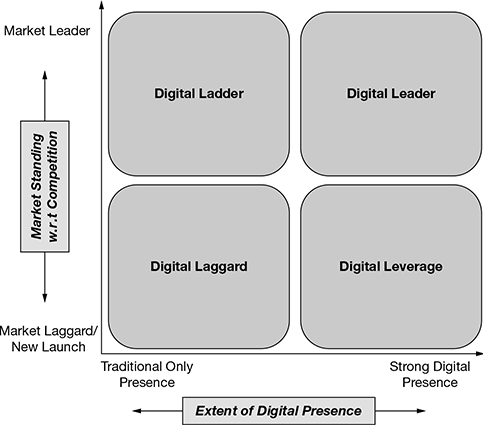
Figure 4.9 Digital Presence Analysis Matrix
In a similar manner, the Y axis is the firm’s Market Standing w.r.t. Competition, which on the bottom corner depicts a firm which is either a market laggard in its specific industry sector (with regards to direct competition) or is a newly launched company. As we move up on the Y axis, the highest point shows that the firm is a relative market leader in its particular segment with respect to its direct competition. As in the previous case, this is also absolute in nature.
Now let us understand the four key digital states which can also be called DLs (the initials of the fourth and the fifth one related to New Launch all begin by the letters D & L):
- Digital laggard: This is the first quadrant of the DPA Matrix (bottom-left) which relates to firms which have no or minimal digital presence and are lagging their respective market/industry segment wrt to direct competitors. The key characteristics of the digital laggard state is that the product/offerings mix for such firms mostly have an offline presence and the business/stakeholders have not made much (or half-hearted) efforts to be present on digital channels. This may or may not be the reason for them lagging wrt competition but surely these firms would need maximum planning and effort to start moving to digital platforms once they decide the need to do so.
- Digital ladder: The second quadrant of the DPA Matrix (top-left) would be the second state of the DPA matrix, wherein firms themselves are in a much better shape wrt competition (as they are market leaders across some key products), but they still do not have substantial digital presence. Since they typically would have a strong brand and a loyal customer set with good sales (as they are market leaders), it would be much easier for them (as compared to digital laggards) to start climbing the digital ladder, and in many ways for some products, they might already be present on digital platforms in a decent manner and can easily move up their digital presence with the investment potential and brand recall they presently possess.
- Digital leverage: This is the third quadrant of the DPA Matrix (bottom-right) and represents companies that have a strong digital presence (in comparison to competition in their sector) but are still lagging behind in terms of a market share. The key for them would be to utilize their digital might to grow it further and also leverage it to gain market share in the offline world to tackle completion in an integrated manner.
- Digital leader: The final quadrant (top-right) belongs to firms which are market leaders in their segments and have leveraged digital to the best possible extent. Typically, these are large conglomerates which have strong brand, investments, and digital acumen behind them, and it is always difficult for other firms to outsmart them.
With an understanding of the four key DLs, there is one more prominent DL which completes the DPA Matrix Analysis which is the digital launch. Digital launch would refer to any firm which is newly launched in its segment, and depending upon their management, prior digital expertise, and their entry segment, they might fall in any of the above four segments and the objectives and strategy development exercise for them depends on the quadrant in which they get launched. We would cover this category in the next section on objectives development.
Leave a Reply