
To understand and provide the context on the factors impacting a firm’s strategy development for digital platforms, we would use the same mix of Digital Presence Drivers—stakeholder, market, customer, and competitor.
In Fig. 5.1, the intent is to compare and contrast how sub-elements of each key external factor have been impacted by digital strategy and have changed over the years in a highly customer-driven direction.
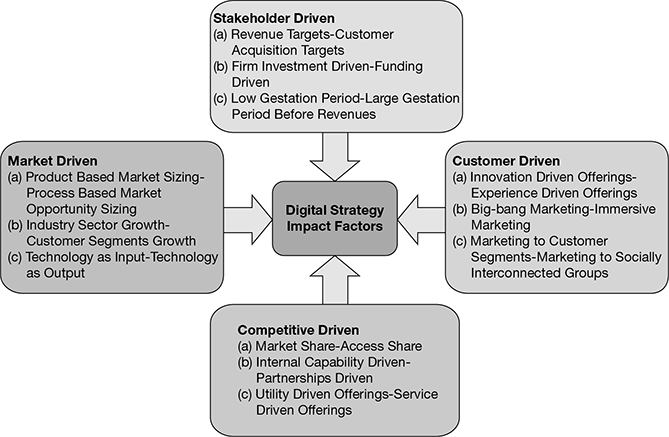
Figure 5.1 Digital Strategy Impact Factors
- Stakeholder-driven factors: It includes impact of factors which are most important to stakeholders and how they are being measured differently across digital businesses. Key example areas include:
- Revenue targets → Customer acquisition targets: For traditional businesses, it has always been revenue targets which held topmost importance, but with revenue on the digital front being directly related to how much is paid per prospect for acquisition (and the final revenue obtained per conversion), customer acquisition targets have become far more important to measure than just revenue.
- Firm investment driven → Funding driven: Even a decade ago, firms typically used to invest their cash surplus into newer investments, but now with the rise of low-cost cloud-based business models and much higher prevalence of investor-funded projects, the way business sustenance and growth is measured has altered in a big way.
- Low gestation period → Large gestation period before revenues: In continuation with the impact of funding, there is also a complete shift in the way new firms and their investor communities look at business returns. In earlier times, stakeholders offered low gestation periods for incubation and new products were expected to yield revenues much quicker as it was the firm’s own money at stake, but now we see examples of new-age digital firms like Facebook and Twitter which took a long time before they yielded any viable revenues.
- Market-driven factors: The overall structure of digital markets, its operations, and changing trends lend itself to factors which are quite unique to this space.
- Product-based market sizing → Process-based opportunity sizing: One of the bigger differences between how market opportunities are identified and developed in offline and digital mode is how a product starts to morph itself into service elements with newer digital offerings created by picking process-flow-related issues and converting the opportunities into service-oriented products. We would take a deeper look into this in the next two sections.
- Industry sector growth → Customer segments growth: Earlier marketers used to look at their presence across multiple industry segments and their market share and growth in them. This is now changing rapidly with firms following their consumer set and looking at how customer segments are shifting in relation to emerging market trends and preferences.
- Technology as input → Technology as output: One of the biggest shifts in building new opportunities is that in earlier times technology was being looked at as just an operational input for effectiveness, but now technology is at the core of all new competencies developed by firms.
- Customer-driven factors: With customers being the core driving factor for digital strategy, the key change elements for them include:
- Innovation-driven offerings → Experience-driven offerings: The emphasis on customer centricity was normally related to how much investment a firm could pump into its research and development (R&D) and the ability to develop innovative products. In the digital world though the major difference has been that consumers care much more about elements relating to their experience and touchpoints with products. For them incremental innovation marketed with unmatched experience (even developed at lower costs) could be a stand-out factor.
- Big–bang marketing → Immersive marketing: With the emerging interaction patterns of new Generation Y customers along with changes in the way consumers generally perceive marketing messages (with a bit of skepticism), we are in a world in which marketing has to interact in an immersive manner through not only multiple channels but also varied communication types like Brand Pages (on Facebook), Brand Values (through corporate blog), Brand Imagery (through Twitter posts), Brand Connect (through e-mail), and should relate at a much personal level than before.
- Marketing to customer segments → Marketing to socially interconnected groups: On the same lines as the factor shared earlier, marketers of the present times need to understand their consumers not just as a segment, but also as a socially active and interconnected group to which word-of-mouth matters much more than before. This is because of the democratic platforms being made available through technology and the openness of people to share their experiences and connect with others in public and private forums. Companies need to take care of this social aspect while still trying to market to a consumer individually.
- Competitor-driven factors: With a new breed of competitors, aggregators, value-chain-breaking intermediaries giving strong competition to traditional business structures, here are some key ways in which marketers should view their digital presence with respect to fancied and digital only competitors:
- Market share → Access share: Companies which are used to measuring only market share growth need to orient themselves to measure ’access share,’ which involves looking at the kind and number of consumers they have at hand across related segments in the digital world. This directly translates into a firm’s ‘Digital Clout’ which includes the ability to to target dynamic audiences in real time and know where they would likely be present and receive firm’s messages rather than look at static audience numbers as firms had been used to traditionally.
- Internal capability-driven → Partnerships-driven: The major force which firms need to harness on the digital platform is that of allied partners through both horizontal and vertical integration for their specific sets of products and services. With it being impossible to have a presence across multitude consumer interaction platforms, this will be the key differentiator for firms eyeing a digital platform.
- Utility-driven offerings → Service-driven offerings: As shared in the earlier part of this section on strategy orientation (changing from product to marketing focus), firms need to tie in the Digital Value Elements as discussed in Chapter 2, since it is service differentiation that will make a firm standout across digital competition and not just the given basic utility- driven features.
Leave a Reply