
As discussed in the last section, promotional channels are those which help marketers position and promote their products across customer funnel stages so that they finally purchase products on the aforementioned channels of purchase. This said, we should actually look at all of the channels of final purchase shared above as promotional channels since they too contribute to increasing awareness, generating interest, and managing engagement for a consumer to fulfill marketing objectives across the funnel.
Promotional channels form the core of digital marketing and the key types of channels and communication methods would be covered in detail in the next chapter. For the present section, we will make an introduction to some of the most important online promotion channels through the use of the key marketing funnel stages (as shared in the REAN Marketing Engagement Framework in Chapter 1). We would be covering here the key stages of Reach, Engage, and Activate, which include the most important promotional channels.
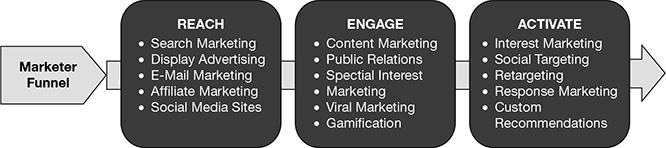
Figure 5.9 Promotional Channels across Key Marketing Funnel Stages
In Fig.5.9, we have divided the key promotional channels across three major marketing funnel stages of Reach, Engage, and Activate. We will have a quick look at major types of promotions covered across these channels and will cover key channels in depth later.
- Reach—As we have seen before, Reach involves the set of promotional activities to raise prospects’ attention to marketer’s brand product or service. Key promotional areas include:
- Search engine marketing: Part of intent-based marketing channels, it includes areas like search engine marketing/pay per click, search engine optimization.
- Display marketing: Classified as a part of brand marketing, it includes banner ads, sponsorships, rich media ads, video ads, among others.
- E-mail marketing: Forms a part of direct message marketing and includes personal messages shared via e-mail, sms, newsletters, etc.
- Affiliate marketing: Part of the partner marketing channel, it includes promotions shared as a part of affiliate sales efforts.
- Social media sites: Part of community-based marketing areas, it includes social media, collaboration, networking platforms.
- Engage: Involves the set of activities needed to engage prospects developed during the Reach stage. Key areas include:
- Content marketing: Includes all content and information-related areas through which marketers promote their products and services, as well as, web content development, blog management, native content, webinars, playbooks, etc.
- Public relations: Oriented typically towards media, key areas include newsletters, online magazines, link-building on sites, etc.
- Special interest marketing: Involves activities related to developing specialized content and building networks through vertical and special interest sites.
- Viral marketing: Refers to videos, social messages, articles on buzzing topics created as sharable content for people to share brand values in an entertaining manner.
- Gamification: Involves techniques in which brand marketing is done by deploying gaming in non-game contexts where users are given prizes, discounts, and coupons for engagement and product trials.
- Activate: Includes activities to convert leads and make prospects take other actions which marketers want them to. Key areas include:
- Interest-based marketing: Involves promotion to customers who have interacted with a product on any of the online sales channel through personal messaging or giving them offers/discounts/coupons for real-time conversions.
- Social targeting: Includes sharing targeted messages to leads on social platforms; for example, Twitter tying up with Amazon to support consumers buy a product on Amazon using a Twitter message.
- Retargeting: Involves all sets of promotional activities to re-target ads (images and content) specifically for products which they left abandoned in website carts.
- Response marketing: Covers all activities which help respond to specific consumer queries while prospects are at the last stage of buying. It includes automated chats, sending response mails/SMSes to queries, social media responses, etc.
- Custom recommendations: Involves sending direct promotions to consumers on related products/recommendations associated to what they have already bought.
With an understanding of the classic four Ps, we would now move to understand the set of extended 4Ps including People, Process, Programs, and Performance in the next section.
Developing the Extended Ps- People, Process, Programs, and Performance
With the growing proliferation of marketing channels, techniques and technologies being deployed, the 4Ps suggested by McCarthy have been added with four more Ps which should be considered by marketers while creating their marketing mix plans and strategies. Below, we would go through them in detail:
- People: Involves developing online teams with a mix of digital marketing expertise, technology know-how, multi-channel experience, knowledge of automation tools, and most of all, target customer insights. It also involves how to look at customers with all their human impulses and desires to know what would entice them most towards marketing efforts both on the content and creative side.
- Processes: Involves developing a rigorous process-driven marketing organization which lays down clear steps to understand and identify target customer clusters, develop thought-through and tightly integrated supplier-customer processes and manage campaigns as a series of processes with clearly aligned goals parallel to consumer funnel activities, with ways and means to refine them as needed.
- Programs: It is defined as the entire set of consumer-driven programs which are run in a holistic manner online and offline to meet a firm’s marketing objectives. It also includes all the multi-channel initiatives which are taken across traditional and new platforms to make sure that customers at all stages, be it targets, prospects, or leads are touched upon and impacted in a 360-degree manner.
- Performance: The final P relates to setting up systems and ways to measure performance and desired output at each stage of the marketing activity, through well-defined metrics and KPIs (Key Performance Indicators). Performance evaluation should touch all of the other Ps to continually refine the offering mix, related pricing offered, performance of various channels of purchase, and the extent of impact brought about by various promotional set-ups.
With a knowledge of these extended Ps, (specifically developed to cater to the changing demands of today’s digital marketing activities), we are now in a position to understand how the strategy for a Digital Marketing Program can be developed, how firms (depending upon the digital and Product Lifecycle stage they are in) can make use of the ‘6S Strategy Roadmap’ to plan their journey and successfully conduct digital marketing programs. In the next part, we shall look into all of these in more detail.
Leave a Reply