
Once a firm has done the groundwork for digital marketing strategy development, the last stage involves developing an implementation strategy for chosen customer segments and marketing mix to chart the strategy for firm’s digital growth. To develop this implementation strategy, we have developed a ‘6S Framework’ which has been developed using the ‘Digital Presence Analysis Matrix’ (discussed earlier Chapter 4) as its base.
To understand the key elements of the 6S Framework as developed in Fig. 5.12, we have taken the same X and Y axis in the matrix diagram as the ‘Digital Presence Analysis (DPA) Matrix.’ To recap the DPA, it is a matrix which talks about four digital states in which a firm can be present depending on the extent of its digital presence and its market standing with regards to competition in the same segment.
To develop the 6S implementation stages, as we can see in Fig. 5.12, the matrix has been divided into six distinct columns which represent the gradual journey of a firm which has no digital presence (as shown in extreme left through the DS1 Column) to the stage where it is present across multiple digital channels and platforms (shown as DS6 Column in Extreme Right). Each of these six digital implementation stages combined, form the 6S Framework. We have to note here that apart from DS1, all the other five progressive columns cut across at least two quadrants, which means that any particular stage covers all types of companies for that digital presence, be they a market laggard or market leader. We detail the 6S stages as follows:
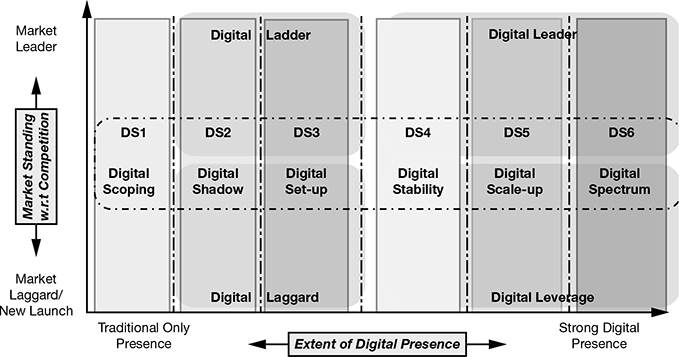
Figure 5.12 6S Digital Marketing Implementation Stages
- Stage DS1 (Digital Scoping): This stage includes firms which are purely traditional and have no presence at all on any digital channels. They essentially are either in a denial state or have been considering digital for some time, thus weighing their options to know how and which channels would be the best to engage for a start. Such type of firms typically include the SMB (small and medium business) segment or individuals who have not realized the power of the digital platform or are doing so well with their offline presence that they do not intend to go digital in the near future.
- Stage DS2 (Digital Shadow): This next stage is covered with companies which have taken their first steps towards being digital in the form of getting their names to be a part of product listing sites or placing basic information on their presence up on Google Maps/Places. They might also have created limited presence on earned media (social channels like Facebook or account on Twitter) which is almost like a shadow to their well-developed offline operations. Firms in this stage still have not realized the importance of developing owned media presence online.
- Stage DS3 (Digital Set-up): The third column represents firms which have definitely realized the importance of an online set-up to their offline operations and are willing to spend effort and budget in developing the appropriate channels to compete and climb the digital ladder. Firms here have developed their first websites (owned media presence) and would also have set-up campaigns through paid media channels (particularly SEM, Display). They would also have a stable Facebook page (might not be highly active) on which they would be sharing news about their operations and website to get more customers to know about them.
- Stage DS4 (Digital Stability): With this stage, we move on the quadrants which have strong digital presences. The digital stability column includes companies which already have a stable digital presence for some time now; have a well-functioning website and blog; presence across earned media channels (resulting in audience traction to website); are deploying paid marketing techniques; and even using concepts like SEO management, analytics-based optimization, etc., on a regular basis. Most of the large firms and almost all new digitally launched firms would definitely be in this stage.
- Stage DS5 (Digital Scale-up): The penultimate state involves firms scaling up rapidly to leverage digital across key strategic business areas and where online presence has become as crucial and advantageous for firms as physical presence and revenues. In this stage, firms have started to be present across new platforms like mobile and tablets, started developing native applications for the new platforms, begin to up-sell and cross-sell across a multi-channel environment, and are present across major earned and paid media channels (like native ads for Facebook news stream, etc.).
- Stage DS6 (Digital Spectrum): This last stage of the 6S Framework represents companies which are digital-first in nature and where most of the digital activities and campaigns are well orchestrated with clarity of desired outcomes. These companies can also be referred to be digital leaders and have covered the whole spectrum of advanced digital marketing activities like retargeting, content optimization, funnel-stage specific response marketing, analytics-driven customized recommendations, etc. The biggest players in this segment leverage digital in multiple ways to increase offline sales too.
With an understanding of the 6S Framework, let us see how firms can make use of the digital marketing implementation strategies depending upon the stage where they are present:
- With a knowledge of the stage in which the firm is present they can devise specific implementation strategies for their digital state depending upon their business objectives and the kind of digital leverage they need
- Helps know the type of channels and strategies firms can deploy for their set of chosen target audience clusters and help them understand and establish their need to be online and the extent to which they really need to invest for incremental RoI
- Provides insights on how they can model their marketing mix in the best possible manner to put forth offerings with the pricing structure and promotions specific to the digital stage where the firm’s products or services might be
- Helps firms map their competitor’s presence across these six stages to assess where they need to invest further or alter their digital marketing strategy to be present on platforms and embrace newer concepts and media presences in quick-time
For developing the 6S digital marketing implementation framework, there is one more key element which firms need to definitely look at to develop a successful digital marketing strategy roadmap. This is the presence of firms’ products across the PLC (product lifecycle stages) which determines whether the product is in its introductory stage, growth, or decline phase. This along-with factors like digital presence extent and product’s standing in the market (as discussed in the matrix above) provide the best direction to a firm on how they can develop strategies for each of their product categories and product lines specific to the target audience.
We would look at understanding the PLC concept and its key stages in the next section of this part, analysis of which is crucial for the firm to finalize its implementation strategy.
PLC Concept—Marketing across the Product Life Cycle
In this final section of the chapter, would understand a key concept related to Product development and used across multiple business and industry functions. Applied to the marketing context, it is also called product life cycle management and involves the process of managing the entire life cycle of a product from inception, through engineering design and manufacture, to service and disposal of manufactured products.
The importance of understanding PLC in the context of digital marketing involves marketers having a knowledge of the life cycle stage in which each of their products in the portfolio lie, so that they can develop specific implementation strategies in accordance with the 6S digital presence state as shared in the last section.
To get into more detail, let us first view the key phases of the PLC curve.
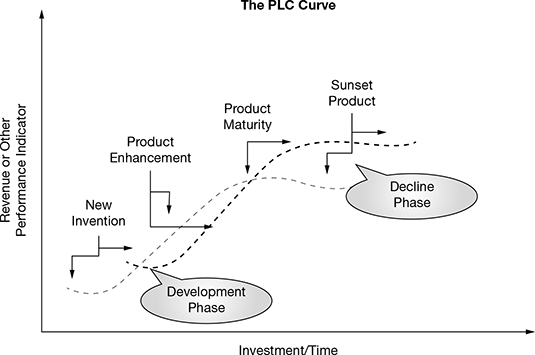
Figure 5.13 Understanding PLC Phases
Source: Captives in India, http://survey.nasscom.in, accessed in February 2017
In Fig. 5.13, the growth stages of any two generic products (two curves as shown) have been plotted across the axes of investment/time (key lifecycle stages can be extended with higher investments) and revenue growth (or other performance indicators like market share/profitability etc). We would detail out each of the four phases here:
- Product launch/development phase: Refers to the period when a new product is launched in the market or an old product is repositioned in the market with a new variant or completely new positioning to a similar or new audience segment.
- Product growth/enhancement phase: This is the stage where the product grows in stature and it’s in the most flourishing state. Most of the products typically touch their highest revenue and market share during this phase, although that can be prolonged to the next stage of product maturity too.
- Product maturity phase/decline phase: In this phase, the product starts to decline, its features are being perceived as generic, and there are other competitors which have arrived to take over the value function and develop compelling value propositions.
- Product sunset phase/termination phase: This last and final phase involves a gradual termination of the product wherein it is either pulled out of the portfolio or is put aside to market a similar brand in the portfolio which has attributes well suited to changing consumption patterns and tastes of the new target audience.
An understanding of the PLC stages helps marketers know where a particular product might lie in the present market environment and help the firm create relevant implementation strategies depending on their present state. Key examples of how PLC helps devise digital marketing implementation strategies across each of the four stages include:
- Development phase: For a product in the development or launch stage, firms need to invest a lot more in driving visibility and initial awareness. Digital channels like search, display, e-mail, and viral marketing could help drive and support offline initiatives. Firms here should put more efforts to developing paid and owned media.
- Enhancement phase: Products in the growth stage need to put more focus on earned media so that customers engage with the product at a deeper level and become loyalists/advocates who would not leave the brand even through its decline.
- Decline phase: In this phase, the product has lost the sheen and excitement it once had with its target customers and too much of newer investments into growing the channels might not help. Instead, focusing investments on key customer groups which have been loyal to the brand would make sense, so that they keep the brand afloat. A more content and emotive brand communication focus would help here.
- Termination phase: This is where the product category or key product-lines are finally terminated and the cycle of new product development starts to replace those.
With an understanding of the key PLC stages and the type of digital marketing most suited to them, in the next chapter, we will study key digital marketing channels and communication types through which marketers can implement their digital marketing strategies across the 6S stages (with knowledge of the PLC Phase) specific to each product.
Leave a Reply