
To develop an understanding of the third phase of ASCOR Framework Communication and Channel Plan, we need to first understand the basics of media planning as has been conducted in its traditional sense. Media planning by definition is the task of allocating promotional budgets to multiple media channels/platforms to communicate a product’s presence, differentiators, and values. Traditionally for marketers, this has been a crucial exercise and mostly conducted in collaboration with an agency which works on behalf of the company and gets a commission for handling all media buying, placement, and execution activities. Let us look at some of the traditional definitions which form a part of media planning exercise and how these key concepts are being redefined with the coming of digital channels.
- Media channel: It is the medium/platform through which brands communicate their message to target audiences. Typical traditional media used for promotions include television, radio, newspaper, magazine, outdoor, while digital channels would include company’s website, third party sites, social media sites, blogs, apps, etc.
- Media vehicle: It includes the specific methods used by companies to deliver the communication message, for example, advertisements placed in a TV or a radio program. In the case of digital, an example would be ads in the news-stream of a Facebook user or ads inserted within Twitter stream for a popular hashtag by a particular brand. Another example could be a sponsorship ad inserted in a set of personalized e-mails sent to users.
- Media audience: The target audience which consumes a particular communication message placed onto a channel. For example, in the case of TV it would be the specific audience watching a particular program in which the advertisement is placed, while in the case of online media, it could be just the audience which is watching a particular ad placed for him/her even on a single landing page of a website.
- Media schedule: In traditional media planning, specific insertion dates or time periods (parts of the day in case of broadcasting) were chosen to share promotions. In the case of digital media, companies can even go to the extent of accurately identifying the exact decision making (even to the last minute) which makes media scheduling exercise highly targeted and real-time.
- Media budget: Earlier, firms needed to only think of allocating a part of their revenues to marketing on defined channels. With digital channels, marketers need to think and invest in multiple other factors like market research, customer profile development, testing strategies, costs of tracking and monitoring, purchasing analytical products, etc.
- Media delivery: Finally, there are concepts of media delivery like reach, frequency, impressions, etc., which have differing connotations and strategies in the online world, which will be covered in broader detail in Chapter 8 on Digital Marketing Execution.
With an understanding of the key media planning terminologies, let us study the differences between media planning on digital channels versus traditional ones (see Table 6.1).
Table 6.1 Key Differences in Media Planning (Offline vs Digital)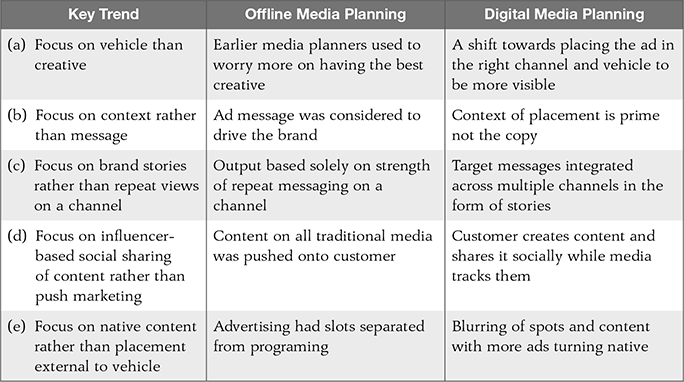
As is evident, the old rules of media planning, channel selection, and messaging for communication are changing with tremendous pace. These shifts are bringing about new execution realities on digital channels as opposed to the traditional ones.
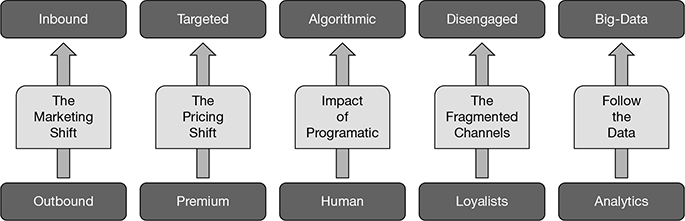
Figure 6.1 Digital Channels Impacting Media Planning
Figure 6.1 discusses the impact of digital channels on media planning exercise. We have taken the example of advertising here to discuss key impacts on this type of promotion.
- Marketing shift (from outbound to inbound): According to Comscore, 3 in 10 ads are never seen by their target audiences. Consumer’s response to traditional advertising is changing from a one-time per-chance click to inclusive marketing. Advertisements should tell a unique story and not just try to sell.
- Pricing shift (from premium to targeted): Earlier, advertising prices on traditional media used to be premium as there were only a few media channels. With digital media and the advent of automated tools for buying, marketers now have the option to differentiate inventory to increase yield through private trading desks and other tools.
- Impact of programmatic (from human to algorithmic):Programatic marketing is the practice of implementing an automated set of business rules to efficiently target a firm’s most valuable customers and prospects with personalized ads.
- Fragmented channels (from loyalists to disengaged): Media is becoming increasingly fragmented with most consumers assuming greater control of how, when, and where they consume content. This trend is forcing companies to seek out new strategies and adapt to the new landscape.
- Follow the data (from analytics to big data): Advertisers need to manage inputs and feedback not only across traditional channels but also a plethora of data across multiple new channels to be able to gauge impact. Media companies need to move from just channel analytics to analysing the big data available to increase value and remain competitive.
With an understanding of the basic media planning concepts and trends impacting them on digital platforms, let us get well-versed with media planning terminologies across traditional media and the ones most widely applied to digital media planning.
Leave a Reply