
In Fig. 6.11, we have showcased the working of any frontline search engine which involves the following steps:
- The user shows his/her intent by typing a search query in any combination of words which in Search Terminology are known as ‘keywords’.
- Once the web server receives the query, it sends the query to the index server where web pages are indexed. A typical search engine’s job is to keep crawling the web regularly using software called ‘spiders’ which index content and save them in the index server for future use.
- When the user puts the query, the index server matches the most relevant pages with the help of document servers by ranking the ones which are most authoritative and have the best quality. In this stage, snippets are also generated to describe each search result to the user.
- Once the top results are ready to be served, they are showcased in two ways—organic results for which the website/brand does not have to pay for (Search Engine Optimized-SEO results) and those which the brand pays for visibility and which appear in the right corner and top of organic ads (which are known as search engine marketed SEM results). To make a search result appear organically, website owners have to develop the most authentic content on their owned channels (websites), at times having to look at even 200+ parameters. In Chapter 8, we would look at how companies can plan for better SEO and set up productive SEM campaigns. We will also discuss digital marketing campaign execution in greater detail.
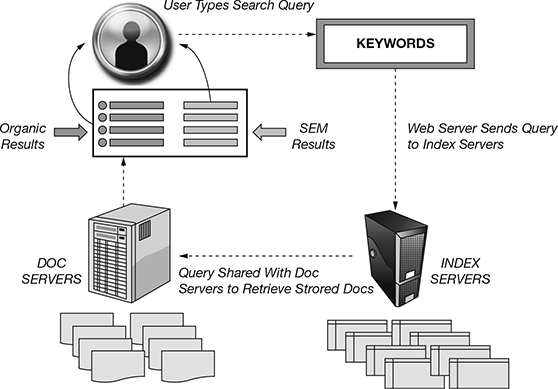
Figure 6.11 Working of Search Engines
Advantages of SEM, SEO as Marketing Channels
- SEM is generally considered to be one of the earliest approaches that digital marketers take while thinking of spending their budgets online. This is not only because of their effectiveness or low upfront cost to begin with, but also because they are one of the more non-obtrusive forms of marketing when compared to display advertising or direct marketing.
- The basic premise that SEM originates from is voluntary audience-driven intent and it is intrinsically a pull-marketing model rather than a push model.
- In the case of SEO, since brands spend a tremendous amount of time to match their content to search marketing keywords and search authority rules, what emerges is an ecosystem of pure meritocracy where marketers with the most effort and ingenuity succeed. Even when compared to SEM, research shows that SEO listings yield about three-fourths of the entire traffic to websites, which goes to show how well constructed and advanced this digital medium has evolved into.
Leave a Reply