In the last section, we covered the basics of campaign management and studied each of the seven stages and their sub-activities in detail. With this base, we would move further to cover the most prominent types of digital marketing campaigns, the first of them being search engine marketing campaigns, to understand how search campaigns are set up and executed.
Search Campaign Planning Basics
Before we start developing an understanding of how search-based campaigns are planned, we need to clearly understand the key difference between search engine marketing (SEM) and its often used counterpart terminology, pay-per-click (PPC) marketing (see Fig. 8.1).
SEM, as discussed earlier in Chapter 6, supports marketing in two different ways:
- Supporting a website to develop content and techniques to match with search queries and emerge at the top of the organic results’ listing which is known as search engine optimization.
- Providing options to marketers to place their ads against related keywords by paying search engines on the basis of the number of clicks executed on the ads. This type of SEM is known as paid search marketing.
Figure 8.1 helps understand the difference between SEM and PPC marketing. Typically, PPC marketing includes all types of marketing where advertisers pay for visitors clicking their ads. SEM, on the other hand, is related to clicks against ads put next to organic search results (in its paid form) and activities to optimize for search engines (in its unpaid form). PPC marketing, thus, includes a broader set of paid marketing from search to display to social PPC, where ads can be put on search engines, advertising networks, and content websites (blogs). As we can witness in Fig. 8.1, paid search marketing (PSM) is one type of PPC marketing while Search Engine Optimization (SEO) as a concept has nothing to do with PPC since there is no bidding for SEO.
When we talk about campaign management, we typically refer to paid search marketing (PSM) and not SEO, as the concepts of campaign management and bidding apply only to PSM. For the same reason, we would first cover the concepts of PSM in this and next two sections and concepts of SEO would be discussed in the last section of this part of the chapter. Although we have clarified the difference between PSM and SEM (with PSM being a subset), we generally refer to PSM as SEM, since that is the most commonly applied terminology used for search PPC campaigns. Thus, SEM and SEO are the two acronyms we would use going forward for paid search and optimization for search.
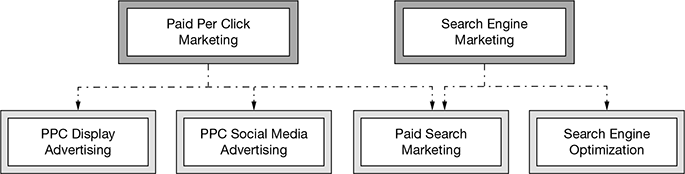
Figure 8.1 Difference between PPC and SEM
Leave a Reply