
It is a collective definition of services that are currently being offered and those which need development. There is a digital board which takes responsibility for overlooking the coordination of actions (scope, budgets, and roadmaps) across various business units.
Figure 9.5 shows the three phases of a DSU implementation plan which involve: (a) Setting organizational principles, (b) Developing organizational and governance design, and (c) Deploying a defined governance model.
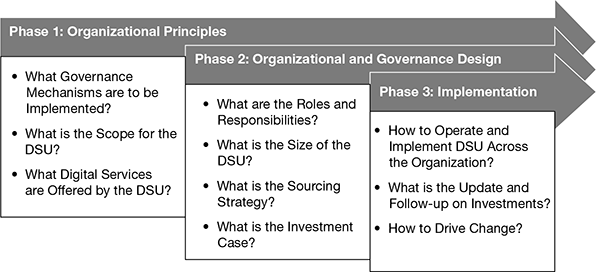
Figure 9.5 DSU Implementation Plan Development
Key considerations of DSU implementation
According to the whitepaper, there are three key considerations for DSU implementation:
- Evaluation of budget impacts: DSU implementation will have an impact upon multiple organizational functions. Multiple funding models can be developed for the initial set-up cost of a new service:
- Local investments funding model: The local entities invest in their own systems.
- Central investments funding model: The central investments pay for the global part of services while local entities pay for their own local projects.
- Supplier’s investment funding model: Design, build, and run of new service is outsourced to a supplier.
- People management and communications: This involves managing skills and competencies both within and outside the DSU, and deciding on the investment areas.
- Setting up a DSU operation on the ground: For a DSU implementation, organizations need to carefully map hierarchy, visibility, and information access at every stage to depict interdependencies. They also need to identify and define processes to ensure clear KPIs for each entity. Firms should execute necessary changes in the current processes so that new processes can be implemented with minimal impact.
Selling through Cybermediaries
In the last section, we covered how digital e-services are managed and how companies set up internal Digital Services Unit (DSUs) to service online marketing activities. In this section, we will understand the concept of online intermediaries, their key roles, and the various types of internet intermediaries which support firms across their fulfillment value chain.
Emergence of Cybermediaries
David Barnes and Matthew Hinton observe in their whitepaper, ‘Developing a Framework to Analyze the Roles and Relationships of Online Intermediaries,’ explain that a cybermediary is a business organization that occupies an intermediary position in a supply chain between a buyer and seller and which has an internet-based business model. Sarkar, Butler, and Steinfeld (1996) are among the first ones who predicted the emergence of ‘a new generation’ of ‘cyberintermediaries’. To discuss the exact role of intermediaries many researchers have shared multiple models out of which a prominent approach was attempted by Anderson and Anderson (2002) who emphasized the following three roles of cybermediaries:
- Matching: It is essentially an informational role where buyers and sellers are brought together by providing information about them and their products.
- Requisitioning: It involves bringing products to customers at the right time, in the right place, and at the right price to enable a transaction to occur. The first role here is transactional, which involves facilitation of transactions between the buyer and seller. The second role is logistical, which ensures that the product or service is made available to the customer.
- Problem solving: It involves ensuring quality, offering anonymity to buyers, if required, and customizing products. The first one is an assurance role, to provide quality and anonymity to customers, and the second is a customization role involving tailoring of products and services to facilitate customers’ needs.
Thus, at a high level, there is a five-role classification for cybermediaries: informational, logistical, transactional, assurance, and customization. Sarkar et al. (1996) have identified the following 10 roles for cybermediaries within the five-role classification:
- Search and evaluation
- Need assessment and product matching
- Product information dissemination
- Purchase influence
- Provision of customer information
- Integration of consumer and producer needs
- Transaction economies of scale
- Customer risk management
- Producer risk management
- Product distribution
In one of their reports, Organization for Economic Co-operation and Development (OECD), has developed a common definition of internet intermediaries which qualifies them as entities that “give access to, host, transmit, and index content originated by third parties or provide internet-based services to third parties.” Key internet intermediaries identified in the report include:
- Internet access and service providers: This includes firms whose main business model is to provide internet services to households, businesses, and governments. Key examples include: Verizon, Comcast, NTT, BT, etc.
- Data processing and web hosting providers: It denotes providing support in preparing, transforming, and storing data or content on the internet for other firms. Examples include: Akamai, Rackspace, Navisite, etc.
- Internet search engines and portals: It includes firms which develop websites and utilize search engine technology to provide internet access and easy search facility. Typical examples include companies like Google, Yahoo, MSN, Baidu, etc.
- E-commerce intermediaries: It refers to entities which enable internet transactions between buyers and sellers and includes companies like internet retailers, shopping comparison sites, electronic auction platforms, etc. Key examples include: Amazon, Ebay, Alibaba, Priceline.com
- Internet payment systems: Covered earlier in section titled, ‘Emerging Digital Payments Solutions,’ in detail, e-commerce payment systems support online payments to enable e-commerce transactions. Examples include: Visa, PayPal, MasterCard, etc.
- Participative networked platforms: They include services which are based on new technologies facilitating social communication and information exchange like blogs, wikis, instant messaging, podcasting, photo-sharing sites, virtual worlds, etc. Typical examples include Facebook, LinkedIn, YouTube, etc.
The two key characteristics of internet intermediaries, as discussed in the report, include:
Leave a Reply