
With a round-up of one of the global and India specific digital marketing trends, in this section, we would cover the most pertinent digital marketing trends which are impacting both dollar spend and technology adoption. Although each of the trends has multiple quantitative data behind it to debate the growth and influence of that area, our attempt here is to focus on the most impact trends at an overall level and not an RoI-based assessment.
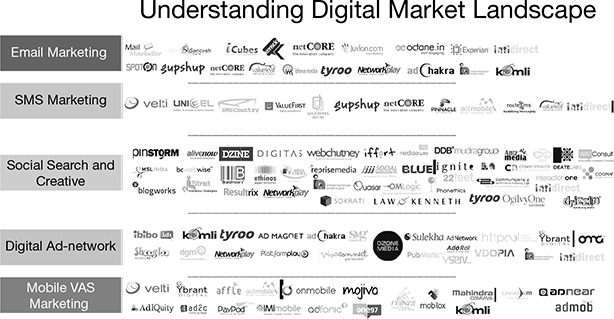
Figure 10.17 India Digital Marketing Tools Landscape
Credits: Braj Mohan Chaturvedi, Understanding Digital Market Landscape/Infidirect, Digital Marketing Landscape India, used with permission
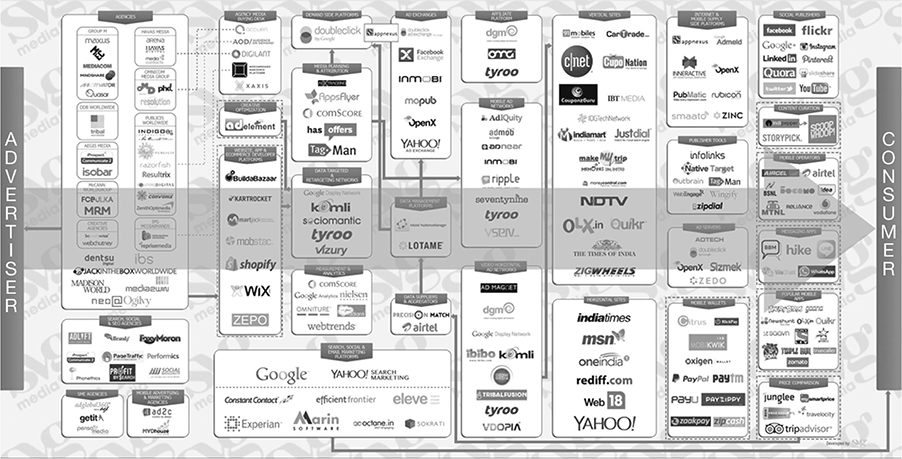
Figure 10.18 India Digital Advertising Landscape 2014 (SVG Media)
Credits: Rahul Sharma on behalf of SVG Media, used with permission of SVG Media
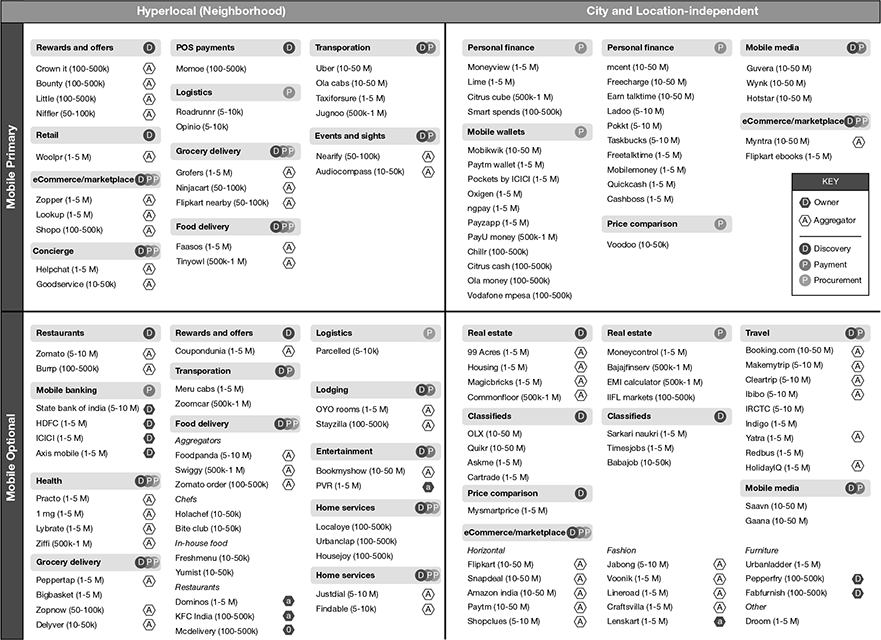
Figure 10.19 India Mobile Commerce Landscape 2014 (SVG Media)
Credits: Rahul Sharma on behalf of SVG Media, used with permission of SVG Media
According to multiple industry sources, here are the top ten most impactful trends:
- Voice Marketing: This is one of the biggest trends to dawn on digital marketing in 2018, and it can be attributed to the way voice-based marketing has entrenched all digital channels and platforms. With Amazon Echo and Google home picking up on the success of voice assistants (Assistant, Siri, Alexa, Cortana, etc.) to develop voice search-based products, usage of this product has increased across consumer segments. There is a high probability that along with wearable watches and health assistant digital bands, voice-tech products will be the harbinger of the real on-the-ground IoT (Internet-of-Things) revolution, which has been predicted a long time back.
- Micro-influencers: With influencer marketing making waves globally, multiple platforms have already taken this concept deeper across the Indian digital consumers. A bigger trend that is shaping influencer marketing relates to local or geo-specific influencers who are experts in their domains and have a ready audience to bring to multiple digital or social platforms. A prominent impact of micro-influencers is the possibility of a strong personal or offline influence this population can exert to bring magic to the way users engage with a brand and experience it in a trusted manner.
- General Data Protection Regulation or GDPR: The launch of GDPR in Europe was a gamechanger and a first for data protection and privacy for individuals. It is an initiative that is bound to have multiple roll-over effects on the way digital marketing will be executed not just in the EU region but across the world. With marketers now needing to follow strict compliances (with a heavy fall-out fee), GDPR looks to be restrictive; however, it can also provide benefits to marketers in terms of building customer trust, putting user-experience in the forefront, and activating data-security improvements.
- Growth Hacking: One of the most popular trends in digital marketing has been growth hacking and it involves a set of experiments across multiple marketing areas including product development and management, service orientation, funnel tactics, segmentation, etc., which helps marketers breach into the next levels of user engagement. The key difference between digital marketing and growth hacking is that while digital marketing focuses on broad goals across the funnel, growth hacking involves defining specific and highly achievable tactics (often with much smaller investments) across each funnel stage to attain its growth targets. A few growth hacking examples (as shared by world’s leading experimentation platform Optimizely) include generating automated notification emails and super-simple sign-up forms or sign-up driven homepages.
- Conversion Rate Optimization: The concept of conversion rate optimization (CRO) involves a combination of techniques aimed at understanding website visitor actions towards increasing conversions for specific goals including form-fillups, product buys, placing product-trial requests, etc. CRO has emerged as a widely deployed concept across the industry with multiple tools supporting across key areas like A/B Testing, Heat Maps review, Landing Page builders, etc., and the prominent among them include Instpage, VWO, Hotjar, Crazy Egg, Unbounce, etc.
- Programmatic Buying and Real-Time Bidding (RTB): With programmatic media buying on the rise (even impacting traditional media spend), there is a growing affinity towards algorithmic, especially Real-Time Bidding (RTB) spend, and E-marketer has estimated that by 2020, advertisers in the US will transact nearly $69 billion in US digital display ad spending programmatically, which accounts for 86.3 per cent of the digital display spending. With this, programmatic publishers will have a greater control over their data to get a more comprehensive view of their investments and efforts. With increase in targeting abilities, brands would also need to make sure they are able to measure metrics appropriately through programmatic buying.
- Responsive Design and Visual Storytelling: Responsive design is increasingly being adopted for marketing since it not only provides an intuitive and engaging interface for website visitors but also helps marketers integrate all of their content including service introduction, case experiences, testimonials, and insight documents in the form of a well-orchestrated story. Increased usage of HTML5, focus on video marketing, design simplicity, use of dominant colors, and quick upload times are also key aspects of responsive design, which are giving boost to marketers to improve storytelling.
- Marketing Automation: As per Salesforce “State of Marketing” Report (2017), 67 per cent of the marketing leaders currently use a marketing automation platform. The rising adoption of marketing automation tools is not just helping companies understand their audience data and buyer journey better but is also helping improve lead management and conversion rates. With marketing automation getting more streamlined, integrating data from multiple sources and moving towards mobile optimization will increasingly play a larger role in improving marketing effectiveness.
- Personalization and Micro Targeting: Personalized marketing involves using technology to target individuals at scale based on key buying segments, preferences, and prior behavior. With multiple marketing technologies now available to marketers, it is possible to identify and micro-target each customer persona with specific offers and call to actions for higher conversions. With improvements in personalization engines and improvement in data and predictive analytics, it is becoming easier to gather actionable insights, which tie online and offline information.
- Localization and Translation: With business increasingly going global and acquiring or merging companies with multi-cultural products, it is increasingly becoming crucial to localize and translate marketing offers and messages to make them most relevant to the target market. Increasing use of machine translation (MT) tools and availability of local data through mobile phone are helping companies position their brands across multiple cultures, thus serving language and geographical alterations along with providing solutions to customers in real-time and as close to their access points as possible.
Big Data and IoT—Data Technologies Impacting Marketing
With an understanding of the emerging digital marketing trends and concepts, in this and the ensuing three sections, we would look at the impact of three major concepts that have been shaping digital marketing and study them in more detail:
- Impact of Data Technologies—Big Data and Internet of Things (IoT)
- Impact of Business Segments—Small and Medium Business (SMB) and B2B Marketing
- Impact of Hyperlocal Targeting—Social Local and Mobile (SoLoMo Concept)
In this section, we will cover the impact of emerging data technologies like Big Data and IoT, and their impact on digital marketing.
Understanding Big Data
With the explosive growth in data in the past four–five years, the term Big Data has been used extensively to refer to the mix of structured and unstructured data which marketers have at their disposal to understand customer preferences, actions, and behavioral patterns, and helps them target customers and convert them more effectively. Big data as a concept is generally believed to include four Vs: volume, variety, velocity, and veracity, which are discussed below:
- Volume: It refers to the scale of data which is involved in any Big Data project and which makes it viable to derive meaningful references through analytics.
- Variety: It involves looking at the kind of data which could be structured as well as unstructured and how to make best sense from the total set. A key example of unstructured data would be the plethora of social data present across the internet in the form of short texts, videos, pictures, etc., from which meaning needs to be derived.
- Velocity: It refers to the frequency of data which needs to be processed in a particular timeframe. Typically, for Big Data to be applied to any practical problem, it should deal with the high velocity of incoming data streams which need to be managed.
- Veracity: It involves differentiation between good and bad data in terms of how trustful the source of data origination is and how much clean-up is required before it can be usefully deployed and analyzed.
The key areas where Big Data impacts and enhances marketing effectiveness includes:
- Persona development: Big data can be most useful to generate more accurate buyer personas as it can help track customers across their buying path.
- Web retargeting: With the help of extended data available on each unique customer, marketers can retarget them based on their web visits and cookie data.
- Measuring customer engagement: This involves understanding engagement and disengagement patterns for new and loyal customers to target products/services accordingly.
- Identifying conversion possibilities: Through deployment of multiple parameters, marketers can judge conversion possibilities with much more accuracy than before.
- Paid campaign analysis: Big data can help analyze whether specific paid campaigns would be worthwhile to invest along with their expected outcomes (through historical analysis).
Understanding Internet of Things (IoT)
In conjunction with Big Data, it is being increasingly realized that internet is not a stand alone entity and, if utilized to harness the power of everyday objects, can yield far better customer experiences and a smarter world, driven by analytics.
According to the Global Standards Initiative on Internet of Things (IoT-GSI), IoT has been defined as a global infrastructure for the information society, enabling advanced services by interconnecting (physical and virtual) things based on existing and evolving interoperable information and communication technologies. On the marketing side, Marketo defines IoT as “the interconnectivity of our digital devices that provides endless opportunities for brands to listen and respond to the needs of their customers—with the right message, at the right time, on the right device.”
A recap of the impact of IoT on digital marketing from top sites and digital marketing product companies across the internet yields the following advantages:
- IoT will provide highly actionable consumer data: At present, most marketers are only able to access and act upon data obtained from consumer interactions with digital media and marketing technologies. As amount of data available from connected devices, consumer wearables, and public–private digital platforms increases, marketers will be able to enrich present online–offline data sets with real-time interaction data and influence consumers in a highly targeted fashion.
- Marketers will use IoT devices to provide highly personalized consumer touch points: Presently, marketers are able to target consumers mostly through internet, mobile, and other offline media. With the inclusion of everyday devices like Smart TVs, interactive kitchen appliances, wearable devices, etc., marketers will be able to interact with the consumer using the digital device as an extension of its branding. For example, makers of a certain refrigerator brand are now able to gather a plethora of customer information on daily usage patterns, grocery buys, and food intake of the consumer, which they can use to position themselves as a consumer health-enhancing brand and share custom messages and experiences which they could never think of. A similar example is of various wearable devices (like Google Glass) which can not only provide day-to-day information to consumers on multiple areas, but also be used for digital commerce and contextual advertising to consumers when they need it most.
- IoT will help refine consumer personas and buying journeys in real time: One of the other big challenges of marketers is to tide over the attribution issue to understand the ever-changing online–offline buying journeys of multiple consumer micro-segments. With the help of the IoT ecosystem, marketers in the near future would be able to exactly understand and predict the real buying points of consumers, thus utilizing specific digital devices to sell closest to the consumer-buying moment. The most important consideration though will be the management of private data and how the ecosystem supports the sharing of this data across brands, devices, and platforms, keeping in mind that customer data needs to remain permission-based.
B2B and SMB—Segments-Based Digital Marketing
With digital marketing growing in stature and influence, its adoption has grown multi-fold, especially across two key segments—Business to Business (B2B) and the Small and Medium Business (SMB) categories. Let us look at how each of these two segments are adopting digital marketing.
Business-to-Business (B2B) Digital Marketing
With as high as 84 per cent B2B marketers planning to increase or maintain their digital marketing spend in the coming year (according to a study by Salesforce on 2015 state of B2B marketing), businesses have come a long way in terms of adoption of digital marketing for their B2B interactions. According to the report:
- Content marketing and marketing automation (66 per cent) are the top areas where B2B organizations will increase spending, followed closely by mobile applications and location-based tracking (65 per cent) and social media advertising/marketing (64 per cent).
- While CRM (57 per cent) is the most important tool for a seamless customer journey, the report shared that marketing analytics (54 per cent) and mobile applications (53 per cent) are also playing important roles in providing a robust buying experience.
- 70 per cent respondents stated that marketing automation was either an effective or very effective tool for digital marketing strategies. However, only 26 per cent respondents had a marketing automation tool implemented in their business, 31 per cent are either piloting a solution or planning to implement a marketing automation solution.
B2B Marketing, which runs one of the premier portals for B2B marketing, shared the key B2B marketing trends for 2015 as:
- Mobile will become significant for B2B web and brands will develop compelling and personalized experiences for their buyers on mobile platforms by investing in mobile-optimized elements, dynamic content, and fully functional mobile sites.
- Marketing automation will be high priority and B2B companies would rely on these real-time automation tools to target prospects with relevant and timely messages, as well as saving valuable time and resources.
- Content marketing would become a more measurable discipline for B2B where firms would assign more resources and look at improving RoI from their content activities. Integrating content marketing throughout all communication and PR channels, focusing on quality content, and integrating visuals into content strategies would become the norm for B2B firms.
- Predictive analytics would gain importance and would support marketers to make the most from the behavioral and real-time data which they have gathered over time. B2B firms will rely more on predictive scoring rather than the traditional lead scoring models to predict actual buying intent.
- Paid digital marketing will also become crucial for B2B firms and they would spend more on paid placements like sponsored posts and targeted ads on social media.
Leave a Reply