
Optimize SERP Factors The search engine results page is the first thing that potential visitors will see about your website. This is where you present your best information and persuade them to click! The most important element is the Page Title. It is presented in the SERP in big, blue letters, and is most likely the only thing that people will read! Focus your attention on creating a highly descriptive sentence or phrase that answers a searcher’s questions.
There are many options here, but it is best to keep the title around 50–60 characters (including spaces). You can create longer page titles, but the entire title may not be seen by searchers on mobile devices. It is a matter of preference, and there is no specific standard. The most important thing is what the searcher will see and how it will persuade them to click your result.
Next, use a keyword in the page title. I recommend that it be used in the context of the information. I have seen websites simply repeat the keyword and related phrases in the page title. This is a clear attempt to boost rankings. Similarly, others may recommend adding keywords separated by hyphens or bars. From my experience, I like a short, clear title in a sentence format that simply explains the content of the page. This method is the most contextually relevant and the easiest for a human to read.
Next, the URL should provide a description of the content, but also reflect the organization of the website, as in this example URL:
https://www.worldwildlife.org/stories/what-do-sea-turtles-eat-unfortunately-plastic-bags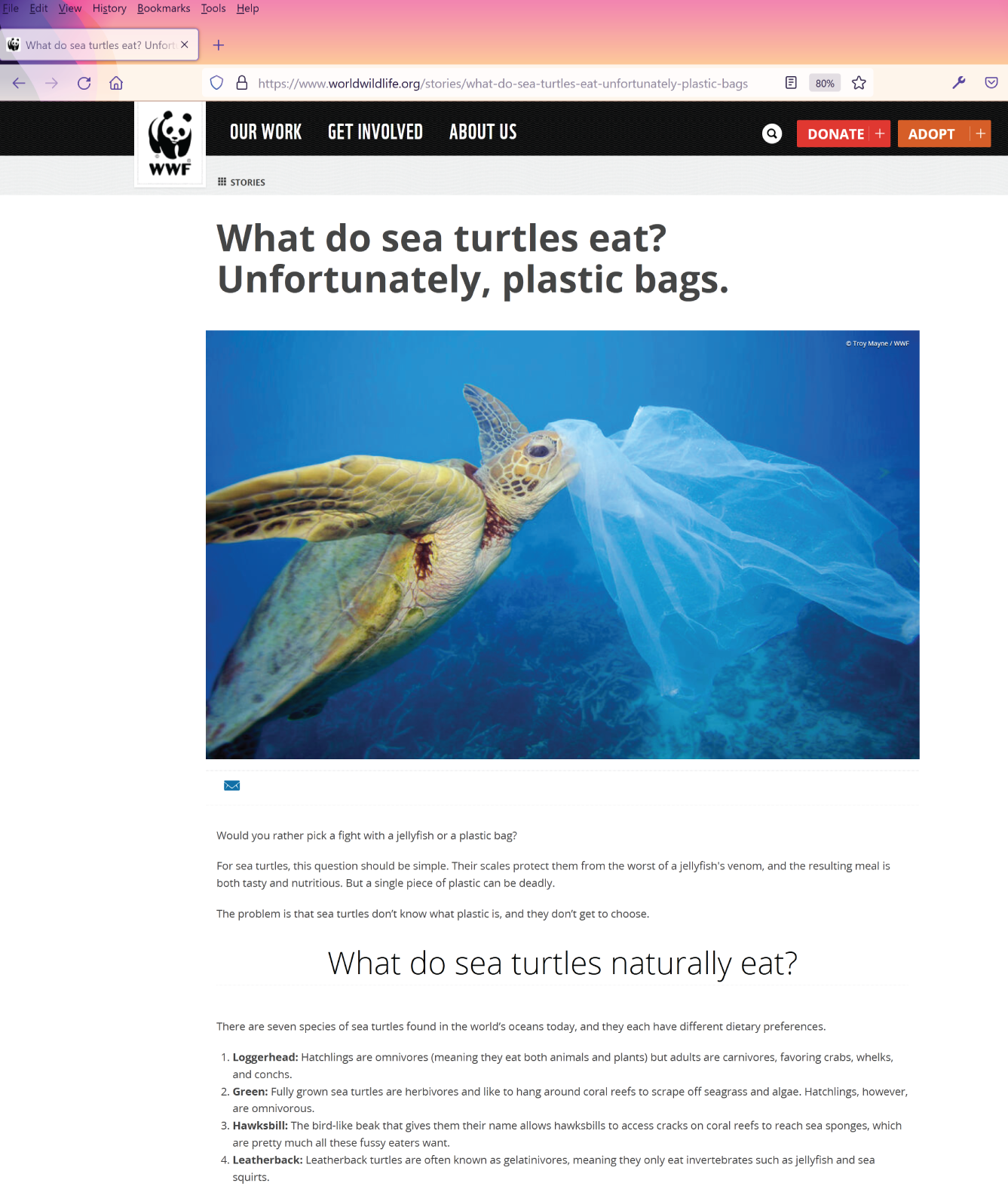
You can see that the article is located in the “Stories.” The article heading is being used in the URL. Many times, this is the default setting for many websites and blogs. Each word of the title is used and separated by a hyphen. At one time, many SEO professionals would have cautioned against the use of so many hyphens in the URL, but now it is so commonplace because of the default publishing settings on content management systems (CMS), such as WordPress and Wix.
Finally, the description. In this case, the content is being pulled from the page. You can use a meta‐description to provide a more in‐depth description of the content of the page, and the search engines may use this, but not always. The key is that you can use this to provide more information to the searcher, as the content in the meta‐description code does not affect rankings.
Leave a Reply