
Solar energy is the oldest energy source ever used. The sun was adored by many ancient civilizations as a powerful god. The first known practical application was in drying for preserving food (Kalogirou, 2004).
Probably the oldest large-scale application known to us is the burning of the Roman fleet in the bay of Syracuse by Archimedes, the Greek mathematician and philosopher (287–212 BC). Scientists discussed this event for centuries. From 100 BC to 1100 AD, authors made reference to this event, although later it was criticized as a myth because no technology existed at that time to manufacture mirrors (Delyannis, 1967). The basic question was whether Archimedes knew enough about the science of optics to devise a simple way to concentrate sunlight to a point at which ships could be burned from a distance. Nevertheless, Archimedes had written a book, On Burning Mirrors (Meinel and Meinel, 1976), which is known only from references, since no copy survived.
The Greek historian Plutarch (46–120 AD) referred to the incident, saying that the Romans, seeing that indefinite mischief overwhelmed them from no visible means, began to think they were fighting with the gods.
In his book, Optics, Vitelio, a Polish mathematician, described the burning of the Roman fleet in detail (Delyannis and Belessiotis, 2000; Delyannis, 1967): “The burning glass of Archimedes composed of 24 mirrors, which conveyed the rays of the sun into a common focus and produced an extra degree of heat.”
Proclus repeated Archimedes’ experiment during the Byzantine period and burned the war fleet of enemies besieging Byzance in Constantinople (Delyannis, 1967).
Eighteen hundred years after Archimedes, Athanasius Kircher (1601–1680) carried out some experiments to set fire to a woodpile at a distance to see whether the story of Archimedes had any scientific validity, but no report of his findings survives (Meinel and Meinel, 1976).
Many historians, however, believe that Archimedes did not use mirrors but the shields of soldiers, arranged in a large parabola, for focusing the sun’s rays to a common point on a ship. This fact proved that solar radiation could be a powerful source of energy. Many centuries later, scientists again considered solar radiation as a source of energy, trying to convert it into a usable form for direct utilization.
Amazingly, the very first applications of solar energy refer to the use of concentrating collectors, which are, by their nature (accurate shape construction) and the requirement to follow the sun, more “difficult” to apply. During the eighteenth century, solar furnaces capable of melting iron, copper, and other metals were being constructed of polished iron, glass lenses, and mirrors. The furnaces were in use throughout Europe and the Middle East. One of the first large-scale applications was the solar furnace built by the well-known French chemist Lavoisier, who, around 1774, constructed powerful lenses to concentrate solar radiation (see Figure 1.4). This attained the remarkable temperature of 1750 °C. The furnace used a 1.32 m lens plus a secondary 0.2 m lens to obtain such temperature, which turned out to be the maximum achieved for 100 years. Another application of solar energy utilization in this century was carried out by the French naturalist Boufon (1747–1748), who experimented with various devices that he described as “hot mirrors burning at long distance” (Delyannis, 2003).
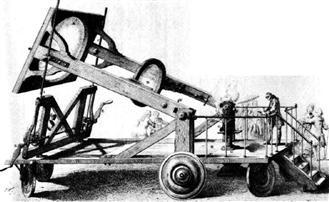
FIGURE 1.4 Solar furnace used by Lavoisier in 1774.
During the nineteenth century, attempts were made to convert solar energy into other forms based upon the generation of low-pressure steam to operate steam engines. August Mouchot pioneered this field by constructing and operating several solar-powered steam engines between the years 1864 and 1878 in Europe and North Africa. One of them was presented at the 1878 International Exhibition in Paris (see Figure 1.5). The solar energy gained was used to produce steam to drive a printing machine (Mouchot, 1878, 1880). Evaluation of one built at Tours by the French government showed that it was too expensive to be considered feasible. Another one was set up in Algeria. In 1875, Mouchot made a notable advance in solar collector design by making one in the form of a truncated cone reflector. Mouchot’s collector consisted of silver-plated metal plates and had a diameter of 5.4 m and a collecting area of 18.6 m2. The moving parts weighed 1400 kg.
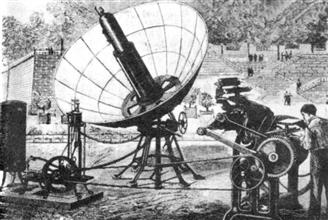
FIGURE 1.5 Parabolic collector powering a printing press at the 1878 Paris Exposition.
Abel Pifre, a contemporary of Mouchot, also made solar engines (Meinel and Meinel, 1976; Kreider and Kreith, 1977). Pifre’s solar collectors were parabolic reflectors made of very small mirrors. In shape they looked rather similar to Mouchot’s truncated cones.
The efforts were continued in the United States, where John Ericsson, an American engineer, developed the first steam engine driven directly by solar energy. Ericsson built eight systems that had parabolic troughs by using either water or air as the working medium (Jordan and Ibele, 1956).
In 1901 A.G. Eneas installed a 10 m diameter focusing collector that powered a water-pumping apparatus at a California farm. The device consisted of a large umbrella-like structure opened and inverted at an angle to receive the full effect of the sun’s rays on the 1788 mirrors that lined the inside surface. The sun’s rays were concentrated at a focal point where the boiler was located. Water within the boiler was heated to produce steam, which in turn powered a conventional compound engine and centrifugal pump (Kreith and Kreider, 1978).
In 1904, a Portuguese priest, Father Himalaya, constructed a large solar furnace. This was exhibited at the St. Louis World’s Fair. This furnace appeared quite modern in structure, being a large, off-axis, parabolic horn collector (Meinel and Meinel, 1976).
In 1912, Frank Shuman, in collaboration with C.V. Boys, undertook to build the world’s largest pumping plant in Meadi, Egypt. The system was placed in operation in 1913, using long parabolic cylinders to focus sunlight onto a long absorbing tube. Each cylinder was 62 m long, and the total area of the several banks of cylinders was 1200 m2. The solar engine developed as much as 37–45 kW continuously for a 5-h period (Kreith and Kreider, 1978). Despite the plant’s success, it was completely shut down in 1915 due to the onset of World War I and cheaper fuel prices.
During the past 50 years, many variations were designed and constructed using focusing collectors as a means of heating the heat-transfer or working fluid that powered mechanical equipment. The two primary solar technologies used are central receivers and distributed receivers employing various point and line focus optics to concentrate sunlight. Central receiver systems use fields of heliostats (two-axis tracking mirrors) to focus the sun’s radiant energy onto a single tower-mounted receiver (SERI, 1987). Distributed receiver technology includes parabolic dishes, Fresnel lenses, parabolic troughs, and special bowls. Parabolic dishes track the sun in two axes and use mirrors to focus radiant energy onto a point focus receiver. Troughs and bowls are line focus tracking reflectors that concentrate sunlight onto receiver tubes along their focal lines. Receiver temperatures range from 100 °C in low-temperature troughs to close to 1500 °C in dish and central receiver systems (SERI, 1987).
Today, many large solar plants have output in the megawatt range to produce electricity or process heat. The first commercial solar plant was installed in Albuquerque, New Mexico, in 1979. It consisted of 220 heliostats and had an output of 5 MW. The second was erected at Barstow, California, with a total thermal output of 35 MW. Most of the solar plants produce electricity or process heat for industrial use and they provide superheated steam at 673 K. Thus, they can provide electricity or steam to drive small-capacity conventional desalination plants driven by thermal or electrical energy.
Another area of interest, hot water and house heating, appeared in the mid-1930s but gained interest in the last half of the 1940s. Until then, millions of houses were heated by coal-burning boilers. The idea was to heat water and feed it to the radiator system that was already installed.
The manufacture of solar water heaters began in the early 1960s. The industry of solar water heater manufacturing expanded very quickly in many countries of the world. Typical solar water heaters in many cases are of the thermosiphon type and consist of two flat plate solar collectors having an absorber area between 3 and 4 m2 and a storage tank with capacity between 150 and 180 l, all installed on a suitable frame. An auxiliary electric immersion heater or a heat exchanger, for central heating-assisted hot water production, is used in winter during periods of low solar insolation. Another important type of solar water heater is the forced circulation type. In this system, only the solar panels are visible on the roof, the hot water storage tank is located indoors in a plant room, and the system is completed with piping, a pump, and a differential thermostat. Obviously, this type is more appealing, mainly for architectural and aesthetic reasons, but it is also more expensive, especially for small installations (Kalogirou, 1997). More details on these systems are given in Chapter 5.
1.5.1 Photovoltaics
Becquerel discovered the PV effect in selenium in 1839. The conversion efficiency of the “new” silicon cells, developed in 1958, was 11%, although the cost was prohibitively high ($1000/W). The first practical application of solar cells was in space, where cost was not a barrier, since no other source of power is available. Research in the 1960s resulted in the discovery of other PV materials such as gallium arsenide (GaAs). These could operate at higher temperatures than silicon but were much more expensive. The global installed capacity of PVs at the end of 2011 was 67 GWp (Photon, 2012). PV cells are made of various semiconductors, which are materials that are only moderately good conductors of electricity. The materials most commonly used are silicon (Si) and compounds of cadmium sulfide (CdS), cuprous sulfide (Cu2S), and gallium arsenide (GaAs).
Amorphous silicon cells are composed of silicon atoms in a thin homogenous layer rather than a crystal structure. Amorphous silicon absorbs light more effectively than crystalline silicon; so the cells can be thinner. For this reason, amorphous silicon is also known as a thin-film PV technology. Amorphous silicon can be deposited on a wide range of substrates, both rigid and flexible, which makes it ideal for curved surfaces and “foldaway” modules. Amorphous cells are, however, less efficient than crystalline-based cells, with typical efficiencies of around 6%, but they are easier and therefore cheaper to produce. Their low cost makes them ideally suited for many applications where high efficiency is not required and low cost is important.
Amorphous silicon (a-Si) is a glassy alloy of silicon and hydrogen (about 10%). Several properties make it an attractive material for thin-film solar cells:
1. Silicon is abundant and environmentally safe.
2. Amorphous silicon absorbs sunlight extremely well, so that only a very thin active solar cell layer is required (about 1 μm compared with 100 μm or so for crystalline solar cells), thus greatly reducing solar cell material requirements.
3. Thin films of a-Si can be deposited directly on inexpensive support materials such as glass, sheet steel, or plastic foil.
A number of other promising materials, such as cadmium telluride (CdTe) and copper indium diselenide (CIS), are now being used for PV modules. The attraction of these technologies is that they can be manufactured by relatively inexpensive industrial processes, in comparison to crystalline silicon technologies, yet they typically offer higher module efficiencies than amorphous silicon.
The PV cells are packed into modules that produce a specific voltage and current when illuminated. PV modules can be connected in series or in parallel to produce larger voltages or currents. PV systems can be used independently or in conjunction with other electrical power sources. Applications powered by PV systems include communications (both on earth and in space), remote power, remote monitoring, lighting, water pumping, and battery charging.
The two basic types of PV applications are the stand-alone and the grid-connected systems. Stand-alone PV systems are used in areas that are not easily accessible or have no access to mains electricity grids. A stand-alone system is independent of the electricity grid, with the energy produced normally being stored in batteries. A typical stand-alone system would consist of PV module or modules, batteries, and a charge controller. An inverter may also be included in the system to convert the direct current (DC) generated by the PV modules to the alternating current (AC) form required by normal appliances.
In the grid-connected applications, the PV system is connected to the local electricity network. This means that during the day, the electricity generated by the PV system can either be used immediately (which is normal for systems installed in offices and other commercial buildings) or sold to an electricity supply company (which is more common for domestic systems, where the occupier may be out during the day). In the evening, when the solar system is unable to provide the electricity required, power can be bought back from the network. In effect, the grid acts as an energy storage system, which means the PV system does not need to include battery storage.
When PVs started to be used for large-scale commercial applications about 20 years ago, their efficiency was well below 10%. Nowadays, their efficiency has increased to about 15%. Laboratory or experimental units can give efficiencies of more than 30%, but these have not been commercialized yet. Although 20 years ago PVs were considered a very expensive solar system, the present cost is around $2500–5000/kWe (depending on the size of the installation), and there are good prospects for further reduction in the coming years. More details on PVs are included in Chapter 9 of this book.
Solar desalination
The lack of water was always a problem to humanity. Therefore, among the first attempts to harness solar energy was the development of equipment suitable for the desalination of seawater. Solar distillation has been in practice for a long time (Kalogirou, 2005).
As early as in the fourth century BC, Aristotle described a method to evaporate impure water and then condense it to obtain potable water. However, historically, probably one of the first applications of seawater desalination by distillation is depicted in the drawing shown in Figure 1.6. The need to produce freshwater onboard emerged by the time the long-distance trips were possible. The drawing illustrates an account by Alexander of Aphrodisias in 200 AD, who said that sailors at sea boiled seawater and suspended large sponges from the mouth of a brass vessel to absorb what evaporated. In drawing this liquid off the sponges, they found that it was sweet water (Kalogirou, 2005).
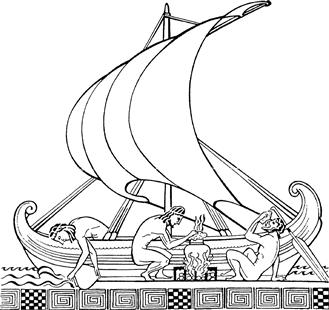
FIGURE 1.6 Sailors producing freshwater with seawater distillation.
Solar distillation has been in practice for a long time. According to Malik et al. (1985), the earliest documented work is that of an Arab alchemist in the fifteenth century, reported by Mouchot in 1869. Mouchot reported that the Arab alchemist had used polished Damascus mirrors for solar distillation.
Until medieval times, no important applications of desalination by solar energy existed. During this period, solar energy was used to fire alembics to concentrate dilute alcoholic solutions or herbal extracts for medical applications and to produce wine and various perfume oils. The stills, or alembics, were discovered in Alexandria, Egypt, during the Hellenistic period. Cleopatra the Wise, a Greek alchemist, developed many distillers of this type (Bittel, 1959). One of them is shown in Figure 1.7 (Kalogirou, 2005). The head of the pot was called the ambix, which in Greek means the “head of the still”, but this word was applied very often to the whole still. The Arabs, who overtook science and especially alchemy about the seventh century, named the distillers Al-Ambiq, from which came the name alembic (Delyannis, 2003).
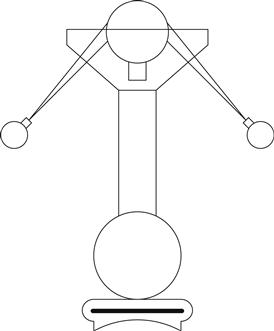
FIGURE 1.7 Cleopatra’s alembic.
Mouchot (1879), the well-known French scientist who experimented with solar energy, in one of his numerous books mentions that, in the fifteenth century, Arab alchemists used polished Damascus concave mirrors to focus solar radiation onto glass vessels containing saltwater to produce freshwater. He also reports on his own solar energy experiments to distill alcohol and an apparatus he developed with a metal mirror having a linear focus in which a boiler was located along its focal line.
Later on, during the Renaissance, Giovani Batista Della Porta (1535–1615), one of the most important scientists of his time, wrote many books, which were translated into French, Italian, and German. In one of them, Magiae Naturalis, which appeared in 1558, he mentions three desalination systems (Delyannis, 2003). In 1589, he issued a second edition in which, in the volume on distillation, he mentions seven methods of desalination. The most important of them is a solar distillation apparatus that converted brackish water into freshwater. In this, wide earthen pots were used, exposed to the intense heat of the solar rays to evaporate water, and the condensate collected into vases placed underneath (Nebbia and Nebbia-Menozzi, 1966). He also describes a method to obtain freshwater from the air (what is known today as the humidification–dehumidification method).
Around 1774, the great French chemist Lavoisier used large glass lenses, mounted on elaborate supporting structures, to concentrate solar energy on the contents of distillation flasks. The use of silver- or aluminum-coated glass reflectors to concentrate solar energy for distillation has also been described by Mouchot.
In 1870, the first American patent on solar distillation was granted to the experimental work of Wheeler and Evans. Almost everything we know about the basic operation of the solar stills and the corresponding corrosion problems is described in that patent. The inventors described the greenhouse effect, analyzed in detail the cover condensation and re-evaporation, and discussed the dark surface absorption and the possibility of corrosion problems. High operating temperatures were claimed as well as means of rotating the still to follow the solar incident radiation (Wheeler and Evans, 1870).
Two years later, in 1872, an engineer from Sweden, Carlos Wilson, designed and built the first large solar distillation plant, in Las Salinas, Chile (Harding, 1883); thus, solar stills were the first to be used on large-scale distilled water production. The plant was constructed to provide freshwater to the workers and their families at a saltpeter mine and a nearby silver mine. They used the saltpeter mine effluents, of very high salinity (140,000 ppm), as feed-water to the stills. The plant was constructed of wood and timber framework covered with one sheet of glass. It consisted of 64 bays having a total surface area of 4450 m2 and a total land surface area of 7896 m2. It produced 22.70 m3 of freshwater per day (about 4.9 l/m2). The still was operated for 40 years and was abandoned only after a freshwater pipe was installed, supplying water to the area from the mountains.
In the First World Symposium on Applied Solar Energy, which took place in November 1955, Maria Telkes described the Las Salinas solar distillation plant and reported that it was in operation for about 36 continuous years (Telkes, 1956a).
The use of solar concentrators in solar distillation was reported by Louis Pasteur, in 1928, who used a concentrator to focus solar rays onto a copper boiler containing water. The steam generated from the boiler was piped to a conventional water-cooled condenser in which distilled water was accumulated.
A renewal of interest in solar distillation occurred after the First World War, at which time several new devices had been developed, such as the roof-type, tilted wick, inclined tray, and inflated stills.
Before the Second World War only a few solar distillation systems existed. One of them, designed by C.G. Abbot, is a solar distillation device, similar to that of Mouchot (Abbot, 1930, 1938). At the same time some research on solar distillation was undertaken in the USSR (Trofimov, 1930; Tekutchev, 1938). During the years 1930–1940, the dryness in California initiated the interest in desalination of saline water. Some projects were started, but the depressed economy at that time did not permit any research or applications. Interest grew stronger during the Second World War, when hundreds of Allied troops suffered from lack of drinking water while stationed in North Africa, the Pacific islands, and other isolated places. Then a team from MIT, led by Maria Telkes, began experiments with solar stills (Telkes, 1943). At the same time, the U.S. National Research Defense Committee sponsored research to develop solar desalters for military use at sea. Many patents were granted (Delano, 1946a, b; Delano and Meisner, 1946) for individual small plastic solar distillation apparatuses that were developed to be used on lifeboats or rafts. These were designed to float on seawater when inflated and were used extensively by the U.S. Navy during the war (Telkes, 1945). Telkes continued to investigate various configurations of solar stills, including glass-covered and multiple-effect solar stills (Telkes, 1951, 1953, 1956b).
The explosion of urban population and the tremendous expansion of industry after the Second World War again brought the problem of good-quality water into focus. In July 1952, the Office of Saline Water (OSW) was established in the United States, the main purpose of which was to finance basic research on desalination. The OSW promoted desalination application through research. Five demonstration plants were built, and among them was a solar distillation plant in Daytona Beach, Florida, where many types and configurations of solar stills (American and foreign) were tested (Talbert et al., 1970). G.O.G. Loef, as a consultant to the OSW in the 1950s, also experimented with solar stills, such as basin-type stills, solar evaporation with external condensers, and multiple-effect stills, at the OSW experimental station in Daytona Beach (Loef, 1954).
In the following years, many small-capacity solar distillation plants were erected on Caribbean islands by McGill University of Canada. Everett D. Howe, from the Sea Water Conversion Laboratory of the University of California, Berkeley, was another pioneer in solar stills who carried out many studies on solar distillation (Kalogirou, 2005).
Experimental work on solar distillation was also performed at the National Physical Laboratory, New Delhi, India, and the Central Salt and Marine Chemical Research Institute, Bhavnagar, India. In Australia, the Commonwealth Scientific and Industrial Research Organization (CSIRO) in Melbourne carried out a number of studies on solar distillation. In 1963, a prototype bay-type still was developed, covered with glass and lined with black polyethylene sheet (CSIRO, 1960). Solar distillation plants were constructed using this prototype still in the Australian desert, providing freshwater from saline well water for people and livestock. At the same time, V. A. Baum in the USSR was experimenting with solar stills (Baum, 1960, 1961; Baum and Bairamov, 1966).
Between 1965 and 1970, solar distillation plants were constructed on four Greek islands to provide small communities with freshwater (Delyannis, 1968). The design of the stills, done at the Technical University of Athens, was of the asymmetric glass-covered greenhouse type with aluminum frames. The stills used seawater as feed and were covered with single glass. Their capacity ranged from 2044 to 8640 m3/day. In fact, the installation in the island of Patmos is the largest solar distillation plant ever built. On three more Greek islands, another three solar distillation plants were erected. These were plastic-covered stills (Tedlar) with capacities of 2886, 388, and 377 m3/day, which met the summer freshwater needs of the Young Men’s Christian Association campus.
Solar distillation plants were also constructed on the islands of Porto Santo and Madeira, Portugal, and in India, for which no detailed information exists. Today, most of these plants are not in operation. Although a lot of research is being carried out on solar stills, no large-capacity solar distillation plants have been constructed in recent years.
A number of solar desalination plants coupled with conventional desalination systems were installed in various locations in the Middle East. The majority of these plants are experimental or demonstration scale. A survey of these simple methods of distilled water production, together with some other, more complicated ones, is presented in Chapter 8.
1.5.3 Solar drying
Another application of solar energy is solar drying. Solar dryers have been used primarily by the agricultural industry. The objective in drying an agricultural product is to reduce its moisture contents to a level that prevents deterioration within a period of time regarded as the safe storage period. Drying is a dual process of heat transfer to the product from a heating source and mass transfer of moisture from the interior of the product to its surface and from the surface to the surrounding air. For many centuries farmers were using open sun drying. Recently, however, solar dryers have been used, which are more effective and efficient.
Drying by exposure to the sun is one of the oldest applications of solar energy, used for food preservation, such as vegetables, fruits, and fish and meat products. From the prehistoric times mankind used solar radiation as the only available thermal energy source to dry and preserve all necessary foodstuffs, to dry soil bricks for their homes and to dry animal skins for dressing.
The first known drying installation is in South of France and is dated at about 8000 BC. This is in fact a stone paved surface used for drying crops. Breeze or natural moderate wind velocities were combined with solar radiation to accelerate drying (Kroll and Kast, 1989).
Various other installations have been found around the world, dated between the years 7000 and 3000 BC. There are various combined installations, utilizing solar radiation combined with natural air circulation, used mainly for drying food. In Mesopotamia various sites have been found, for solar air drying of colored textile material and written clay plates. The first solely air drying installation for crops was found in Hindu river valley and is dated at about 2600 BC (Kroll and Kast, 1989).
The well-known Greek philosopher and physician, Aristotle (384–322 BC), described in detail the drying phenomena, and gave for first time, theoretical explanations of drying. Later on, biomass and wood were used to fire primitive furnaces to dry construction material, such as bricks and roof tiles, but food was exposed only to direct solar radiation (Belessiotis and Delyannis, 2011). The industry of conventional drying started about the eighteenth century but despite any modern methods developed, drying by exposure to the sun continues to be the main method for drying small amounts of agricultural products worldwide.
The objective of a dryer is to supply the product with more heat than is available under ambient conditions, increasing sufficiently the vapor pressure of the moisture held within the crop, thus enhancing moisture migration from within the crop and decreasing significantly the relative humidity of the drying air, hence increasing its moisture-carrying capability and ensuring a sufficiently low equilibrium moisture content.
In solar drying, solar energy is used as either the sole heating source or a supplemental source, and the air flow can be generated by either forced or natural convection. The heating procedure could involve the passage of the preheated air through the product or by directly exposing the product to solar radiation, or a combination of both. The major requirement is the transfer of heat to the moist product by convection and conduction from surrounding air mass at temperatures above that of the product, by radiation mainly from the sun and to a little extent from surrounding hot surfaces, or by conduction from heated surfaces in conduct with the product. More information on solar dryers can be found in Chapter 7.
1.5.4 Passive solar buildings
Finally, another area of solar energy is related to passive solar buildings. The term passive system is applied to buildings that include, as integral parts of the building, elements that admit, absorb, store, and release solar energy and thus reduce the need for auxiliary energy for comfort heating. These elements have to do with the correct orientation of buildings, the correct sizing of openings, the use of overhangs and other shading devices, and the use of insulation and thermal mass.
Before the advent of mechanical heating and cooling, passive solar building design was practiced for thousands of years as a means to provide comfortable indoor conditions and protect inhabitants from extreme weather conditions. People at those times considered factors such as solar orientation, thermal mass, and ventilation in the construction of residential dwellings, mostly by experience and the transfer of knowledge from generation to generation. The first solar architecture and urban planning methods were developed by both the Greeks and the Chinese. These methods specified that by orienting buildings toward the south, light and warmth can be provided. According to the “memorabilia” of Xenophon, mentioned in Section 1.1, Socrates said: “Now, supposing a house to have a southern aspect, sunshine during winter will steal in under the verandah, but in summer, when the sun traverses a path right over our heads, the roof will afford an agreeable shade, will it not?”. These concepts, together with the others mentioned above, are nowadays considered by bioclimatic architecture. Most of these concepts are investigated in Chapter 6 of this book.
Leave a Reply