Physics can be divided into several key branches, each focusing on a specific aspect of nature:
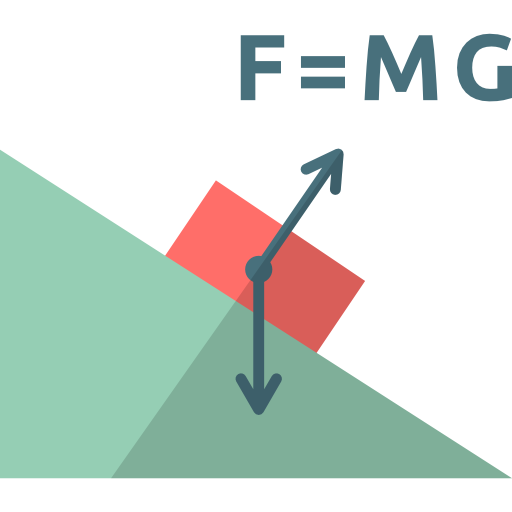
- Classical Mechanics: The study of motion and forces that act on objects. It includes topics like Newton’s laws of motion, gravity, and energy.
- Example: How does a ball move when you throw it?
- Thermodynamics: The study of heat, energy, and their transformations. It explains how energy flows and how it affects the state of matter.
- Example: Why does a pot of water heat up when you place it on the stove?
- Electromagnetism: The study of electric charges, electric fields, magnetic fields, and the interaction between them.
- Example: How does a magnet attract or repel other magnets?
- Optics: The study of light and how it behaves, including reflection, refraction, and diffraction.
- Example: Why does a spoon look bent when placed in a glass of water?
- Relativity: The study of how objects behave at very high speeds (close to the speed of light) and the effect of gravity on space and time.
- Example: How does time change for astronauts moving at speeds close to the speed of light?
- Quantum Mechanics: The study of particles at the smallest scales, where traditional physics doesn’t apply. It includes concepts like wave-particle duality and the uncertainty principle.
- Example: How can a particle be in two places at once?
- Nuclear Physics: The study of the structure and behavior of atomic nuclei and particles.
- Example: How do nuclear reactions power the sun?
- Astrophysics: The study of the universe, including stars, galaxies, black holes, and the overall structure of space-time.
- Example: How did the universe begin, and what is it made of?
Leave a Reply