The process by which the meiotic type of eukaryotic cell division occurs is relatively more complex than both prokaryotic binary division/budding and eukaryotic mitotic type of cell division.
Just prokaryotes, this type of eukaryotic cell division process is an essential means of reproduction. It ensures that gamete formation occurs properly and genetic diversity is maintained in the species.
Amongst the 2 types of cell divisions in eukaryotic organisms, meiosis is the second type.
This type of cell division occurs in sexually reproducing organisms.
Just like mitosis, DNA, and organelles are replicated in the interphase before meiotic cell division.
Meiosis comprises 2 sets of divisions:
Meiosis I (marked by the separation of homologous chromosomes)
Meiosis II (marked by separation of sister chromatids; this is similar to mitosis)
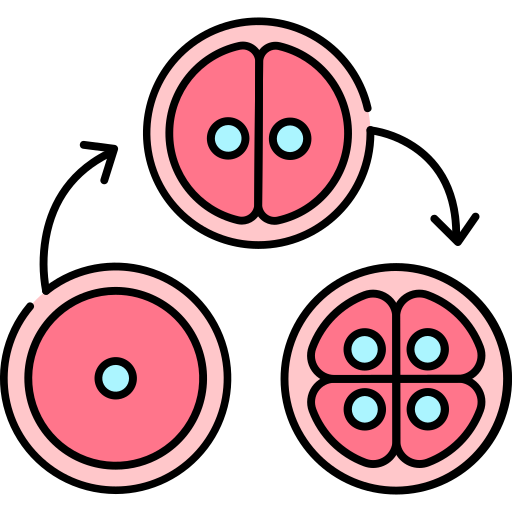
At the end of meiotic cell division, four daughter cells (gametes) are formed, unlike 2 daughter cells in mitotic cell division.
All daughter cells, i.e., gametes produced after meiosis have just 1 one copy of the genome, making them haploid (four haploid daughter cells).
Only after one gamete fuses with the gamete of the opposite sex during fertilization, the ploidy level is restored.
Leave a Reply