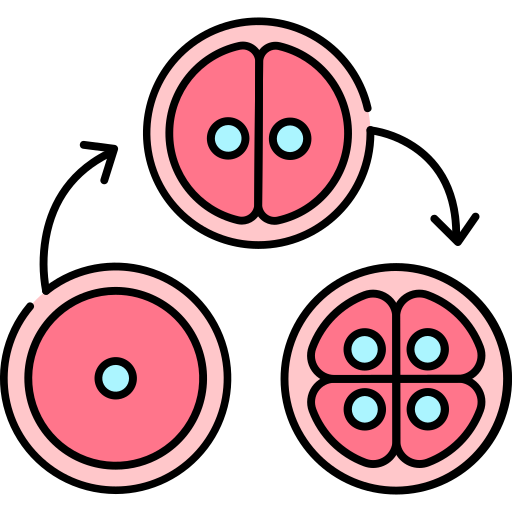
Some important points to note about mitosis type of cell division in eukaryotes are as follows:
- It is also called equational division.
- The process by which the mitotic type of eukaryotic cell division (a smaller part of the eukaryotic cell cycle) occurs is relatively more complex than the prokaryotic one.
- Unlike prokaryotes, this type of eukaryotic cell division process is not just a means of reproduction but also ensures growth, repair, and other metabolic functions.
- Amongst the 2 types of cell divisions in eukaryotic organisms, mitosis is the first type.
- Since eukaryotic organisms are replete with membrane-bound cell organelles, it’s not just the DNA that has to replicate and divide but the cytoplasmic content (including cell organelles) too has to double. This increases the difficulty of the mitotic type of cell division relative to prokaryotic cell division
- In eukaryotes, mitotic cell division occurs after the interphase (G1, S, G2 phases).
- Interphase is marked by the DNA synthesis and duplication of organelles and always precedes cell division.
- Mitosis comprises 4 main phases:
- Prophase (where chromosomes condense and the nuclear envelope disintegrates)
- Metaphase (where the chromosomes line up at the metaphase plate)
- Anaphase (separation of sister chromatids)
- Telophase (formation of two daughter cells with distinct cytoplasmic and genetic material)
Leave a Reply