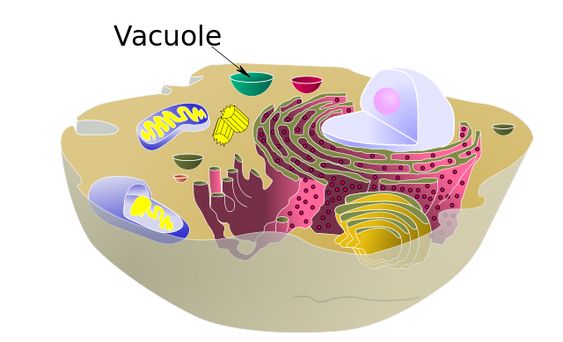
Vacuole Structure and Functions:
The size and shape of vacuoles vary according to the specific requirements of the cell. So, if unsure what a vacuole looks like, well, vacuoles basically have no definite shape. The vacuole is most like an amoeba in the sense that they have no fixed shape. Even the size of the vacuole isn’t fixed.
There can be one large vacuole in a cell or many small vacuoles. Plant cells usually have central vacuoles whereas animal cells typically have more than one vacuole. The structure of an animal cell and animal cell organelles is quite different from that of plant cells.
How vacuoles are formed in the cell? This question is generally common and many hypotheses have been proposed as explanations for the subject. Some scientists believe that vacuoles have formed after the fusion of many small vesicles.
Essentially, the structure of a vacuole is composed of 2 parts:
- Cell sap (Vacuolar content)
- Tonoplast (Vacuolar membrane)
Functions of Vacuole:
- Specialized compartment: Vacuoles serve as a specialized compartment where the cell dumps all of its extra supplies.
- Storage of toxins: Vacuoles serve an amazing role in storing and hence separating all the waste products of the cell. This separation of the toxins or toxic ions ensures that the cell and other cell organelles aren’t harmed by them.
- Maintenance of hydrostatic pressure: Vacuoles are more prominently present and identified in the eukaryotic plant cell, fungal cell, and some protist cells. The main function of the vacuole is the maintenance of an internal hydrostatic/turgor pressure inside the mature plant cells. This eventually helps in the provision of support and stature to plant structures like stems, leaves, and flowers due to the hydrostatic pressure of the central vacuole. So, this essentially answers the question, what does the vacuole do in plant cells,
- Maintenance of pH: Vacuoles aid the optimal pH maintenance in the cellular system, i.e. in the cytoplasm. When the pH in the cell’s environment drops below the optimum level with a haphazard change in the chemical gradient, protons (or H+ ions) start moving from the external environment into the cell. This raises the acidity of the cell and holds serious implications for the cell system. So, here comes the vacuole to the cell’s rescue. The tonoplast or the vacuolar membrane helps in the facilitation of moving the protons or H+ ions from the cytoplasm to the vacuole against the concentration gradient. Although this increases the acidity of vacuole but simultaneously also ensures that the cell’s pH is maintained.
- Growth: Central vacuole functions in plant cells in a very unique way. They have the ability to increase immensely in their size and thus facilitate the quick growth of plant parts by using only water. Therefore, vacuole function in a plant cell is often stated as extraordinary as growth in animal cells isn’t due to this same phenomenon.
- Autophagy: Vacuoles also play an indispensable role in autophagy. They maintain a healthy balance between the two biologically contrasting processes: biogenesis and degradation. This pertains to many different substances, cell structures, misfolded proteins, invading bacteria, etc. They are known to store the by-products of the autophagy process (age-related or damage-related)
- Growth site for some bacterial species: Some species of Salmonella are able to resist the acidic nature of vacuoles and also reproduce in many mammalian animals’ vacuoles after getting engulfed.
Leave a Reply