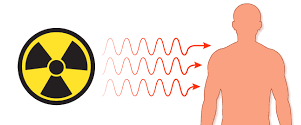
All matter continuously radiates electromagnetic radiation unless its temperature is absolute zero. It is observed that the higher the temperature then the greater amount of energy is radiated. If two bodies at different temperatures are so placed that the radiation from each body is intercepted by the other, then the body at the lower temperature will receive more energy than it is radiating, and hence its internal energy will increase; similarly the internal energy of the body at higher temperature will decrease. Thus, there is a net transfer of energy from high temperature body to low temperature body by virtue of the temperature difference between the bodies. Radiant energy, being electromagnetic radiation, requires no medium for its propagation and will pass through a vacuum. Heat transfer by radiation is most frequent between solid surfaces, although radiation from gases also occurs.
Stefan–Boltzmann Law of Thermal Radiation
The law states that the rate of radiation heat transfer per unit area from a black surface is directly proportional to fourth power of the absolute temperature of the surface and is given by,

where Ts is absolute temperature in K; and σ is proportionality constant and called as Stefan–Boltzman constant equal to 5.67 × 10− 8 W/m2K4. The heat flux emitted by a real surface is less than that of black surface and is given by,

where ε is radiative properties of surface, called emmissivity.
The net rate of radiation heat exchange between a real surface and its surrounding is

where T∞ and Ts are surrounding and surface temperature in K, respectively.
Leave a Reply