A transformer is a static device that transfers AC electrical power from one circuit to the other at the same frequency, but the voltage level is usually changed.
The block diagram of a transformer is shown in Figure 10.1. When the voltage is raised on the output side (V2 > V1), the transformer is known as step-up transformer, whereas the transformer in which the voltage is lowered on the output side (V2 < V1) is called a step-down transformer.
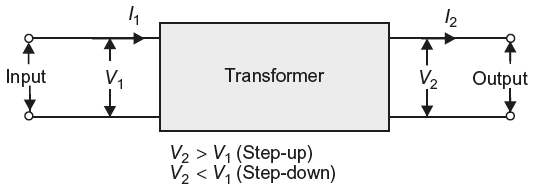
Fig. 10.1 Block diagram of a transformer
10.2.1 Necessity
In our country, usually electrical power is generated at 11 kV. For economical reasons, AC power is transmitted at very high voltages (220 kV or 400 kV) over long distances; therefore, a step-up transformer is applied at the generating station. Then, to feed different areas, voltages are stepped down to different levels (for economical reasons) by transformer at various substations. Ultimately, for the utilization of electrical power, the voltage is stepped down to 400/230 V for safety reasons.
Thus, transformer plays an important role in the power system. The pictorial view of a power transformer is shown in Figure 10.2. The important accessories are labelled on it.
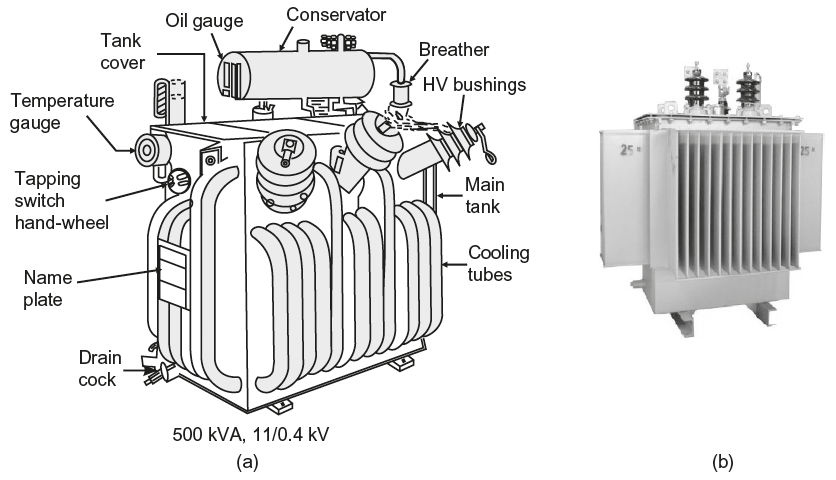
Fig. 10.2 (a) Oil-immersed air natural cooled transformer (b) Single-phase transformer
10.2.2 Applications
Main applications of the transformers are given below:
- Used to change the level of voltage and current in electric power systems.
- As impedance-matching device for maximum power transfer in low-power electronic and control circuits.
- As a coupling device in electronic circuits.
- To isolate one circuit from another, since primary and secondary are not electrically connected.
- To measure voltage and currents, these are known as instrument transformers.
Transformers are extensively used in AC power systems because of the following reasons:
- Electric energy can be generated at the most economic level (11 kV−33 kV)
- Stepping up the generated voltage to high voltage, extra high voltage (EHV) (voltage above 230 kV), or to even ultrahigh voltage (UHV) (750 kV and above) to suit the power transmission requirement in order to minimize losses and increase transmission capacity of lines.
- The transmission voltage is stepped down in many stages for distribution and utilization for domestic, commercial, and industrial consumers.
Leave a Reply