In this chapter, we will primarily be dealing with the processing of real-world signals using both analog and digital techniques. Before starting, however, let’s look at a few key concepts and definitions required to lay the groundwork for things to come (Figure 16.1).
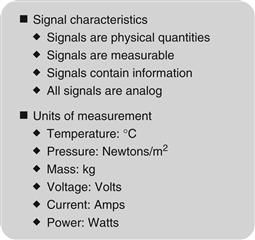
Figure 16.1 Signal characteristics
Webster’s New Collegiate Dictionary defines a signal as “a detectable (or measurable) physical quantity or impulse (as voltage, current, or magnetic field strength) by which messages or information can be transmitted.” Key to this definition are the words: detectable, physical quantity, and information.
By their very nature, signals are analog, whether DC, AC, digital levels, or pulses. It is customary, however, to differentiate between analog and digital signals in the following manner: Analog (or real-world) variables in nature include all measurable physical quantities. In this chapter, analog signals are generally limited to electrical variables, their rates of change, and their associated energy or power levels. Sensors are used to convert other physical quantities such as temperature or pressure to electrical signals. The entire subject of signal conditioning deals with preparing real-world signals for processing, and includes such topics as sensors (temperature and pressure, for example), isolation amplifiers, and instrumentation amplifiers.
Some signals result in response to other signals. A good example is the returned signal from a radar or ultrasound imaging system, both of which result from a known transmitted signal.
On the other hand, there is another classification of signals, called digital, where the actual signal has been conditioned and formatted into a digit. These digital signals may or may not be related to real-world analog variables. Examples include the data transmitted over local area networks (LANs) or other high speed networks.
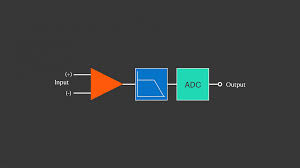
In the specific case of digital signal processing (DSP), the analog signal is converted into binary form by a device known as an analog-to-digital converter (ADC). The output of the ADC is a binary representation of the analog signal and is manipulated arithmetically by the digital signal processor. After processing, the information obtained from the signal may be converted back into analog form using a digital-to-analog converter (DAC).
Another key concept embodied in the definition of signal is that there is some kind of information contained in the signal. This leads us to the key reason for processing real-world analog signals: the extraction of information (Figure 16.2).
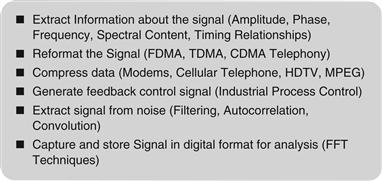
Figure 16.2 Reasons for signal processing
Leave a Reply