There is often confusion between deep learning and machine learning. And this is reasonable. Both topics are quite complex, and they do share many similarities.
So to understand the differences, let’s first take a look at two high-level aspects of machine learning and how they relate to deep learning. First of all, while both usually require large amounts of data, the types are generally different.
Take the following example: Suppose we have photos of thousands of animals and want to create an algorithm to find the horses. Well, machine learning cannot analyze the photos themselves; instead, the data must be labeled. The machine learning algorithm will then be trained to recognize horses, through a process known as supervised learning (covered in Chapter 3).
Even though machine learning will likely come up with good results, they will still have limitations. Wouldn’t it be better to look at the pixels of the images themselves—and find the patterns? Definitely.
But to do this with machine learning, you need to use a process called feature extraction. This means you must come up with the kinds of characteristics of a horse—such as the shape, the hooves, color, and height—which the algorithms will then try to identify.
Again, this is a good approach—but it is far from perfect. What if your features are off the mark or do not account for outliers or exceptions? In such cases, the accuracy of the model will likely suffer. After all, there are many variations to a horse. Feature extraction also has the drawback of ignoring a large amount of the data. This can be exceedingly complicated—if not impossible—for certain use cases. Look at computer viruses. Their structures and patterns, which are known as signatures, are constantly changing so as to infiltrate systems. But with feature extraction, a person would somehow have to anticipate this, which is not practical. This is why cybersecurity software is often about collecting signatures after a virus has exacted damage.
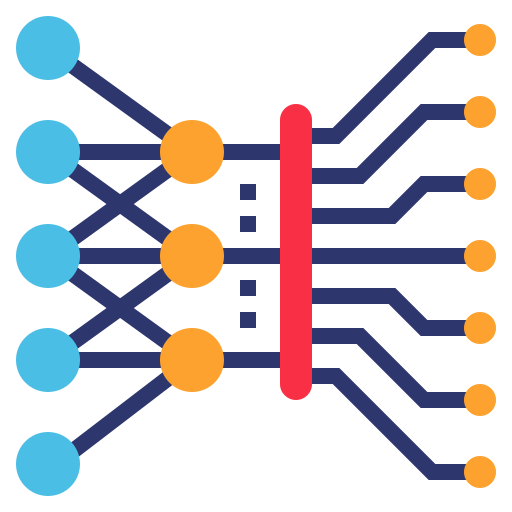
But with deep learning, we can solve these problems. This approach analyzes all the data—pixel by pixel—and then finds the relationships by using a neural network, which mimics the human brain.
Let’s take a look.
So What Is Deep Learning Then?
Deep learning is a subfield of machine learning. This type of system allows for processing huge amounts of data to find relationships and patterns that humans are often unable to detect. The word “deep” refers to the number of hidden layers in the neural network, which provide much of the power to learn.
When it comes to the topic of AI, deep learning is at the cutting-edge and often generates most of the buzz in mainstream media. “[Deep learning] AI is the new electricity,” extolled Andrew Yan-Tak Ng, who is the former chief scientist at Baidu and co-founder of Google Brain.3
But it is also important to remember that deep learning is still in the early stages of development and commercialization. For example, it was not until about 2015 that Google started using this technology for its search engine.
As we saw in Chapter 1, the history of neural networks was full of ebbs and flows. It was Frank Rosenblatt who created the perceptron, which was a fairly basic system. But real academic progress with neural networks did not occur until the 1980s, such as with the breakthroughs with backpropagation, convolutional neural networks, and recurrent neural networks. But for deep learning to have an impact on the real world, it would take the staggering growth in data, such as from the Internet, and the surge in computing power.
Leave a Reply