- Deep learning, which is a subfield of machine learning, processes huge amounts of data to detect relationships and patterns that humans are often unable to detect. The word “deep” describes the number of hidden layers.
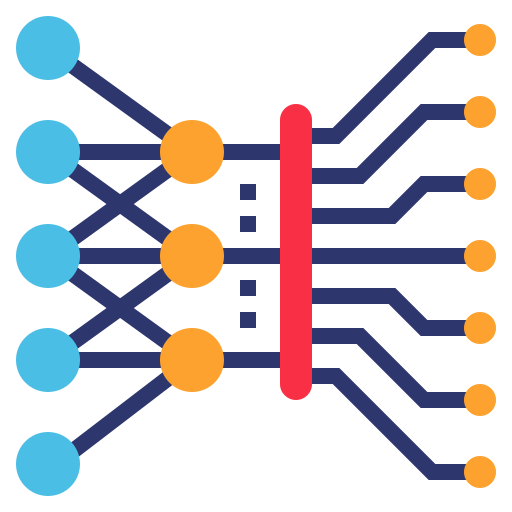
- An artificial neural network (ANN) is a function that includes units that have weights and are used to predict values in an AI model.
- A hidden layer is a part of a model that processes incoming data.
- A feed-forward neural network has data that goes only from input to the hidden layer to the output. The results do not cycle back. Yet they can go into another neural network.
- An activation function is non-linear. In other words, it tends to do a better job of reflecting the real world.
- A sigmoid is an activation function that compresses the input value into a range of 0–1, which makes it easier for analysis.
- Backpropagation is a sophisticated technique to adjust the weights in a neural network. This approach has been critical for the growth in deep learning.
- A recurrent neural network (RNN) is a function that not only processes the input but also prior inputs across time.
- A convolutional neural network (CNN) analyzes data section by section (that is, by convolutions). This model is geared for complex applications like image recognition.
- A generative adversarial network or GAN is where two neural networks compete with each other in a tight feedback loop. The result is often the creation of a new object.
- Explainability describes techniques for transparency with complex deep learning models.
Leave a Reply