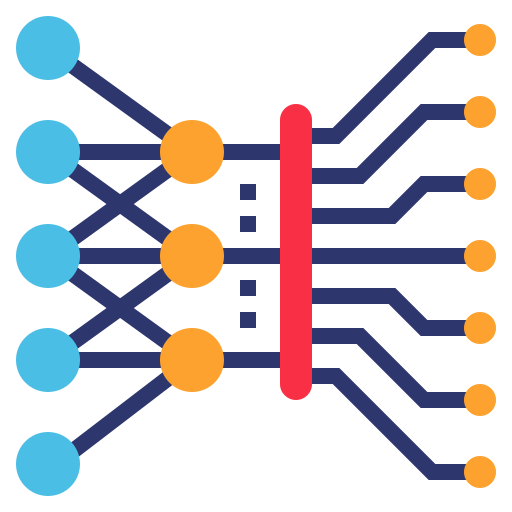
Weighing only about 3.3 pounds, the human brain is an amazing feat of evolution. There are about 86 billion neurons—often called gray matter—that are connected with trillions of synapses. Think of neurons as CPUs (Central Processing Units) that take in data. The learning occurs with the strengthening or weakening of the synapses.
The brain is made up of three regions: the forebrain, the midbrain, and the hindbrain. Among these, there are a variety of areas that perform different functions. Some of the main ones include the following:
- Hippocampus: This is where your brain stores memories. In fact, this is the part that fails when a person has Alzheimer’s disease, in which a person loses the ability to form short-term memories.
- Frontal Lobe: Here the brain focuses on emotions, speech, creativity, judgment, planning, and reasoning.
- Cerebral Cortex: This is perhaps the most important when it comes to AI. The cerebral cortex helps with thinking and other cognitive activities. According to research from Suzana Herculano-Houzel, the level of intelligence is related to the number of neurons in this area of the brain.
Then how does deep learning compare to the human brain? There are some tenuous similarities. At least in areas like the retina, there is a process of ingesting data and processing them through a complex network, which is based on assigning weights. But of course, this is only a minute part of the learning process. Besides, there are still many mysteries about the human brain, and of course, it is not based on things like digital computing (instead, it appears that it is more of an analogue system). However, as the research continues to advance, the discoveries in neuroscience could help build new models for AI.
Leave a Reply