
With an understanding of the key value elements which differentiate sales of products and services in an offline or online mode, let us extend these concepts by applying them to the same example—journal publishing—which we were discussing in the earlier section for easy reference.
Laying down the key digital value aspects on all of the six differentiating value elements, we can see how any journal publisher can make use of these pointers towards improving his/her present marketing approach and activities (see Fig. 2.9).
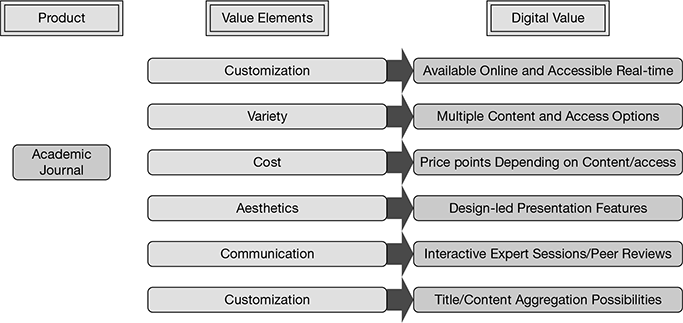
Figure 2.9 Digital Value Marketing Approach—Journal Publishing
Following Fig. 2.9, let us go through the various digital value drivers related to the marketing of an academic journal.
- Convenience: Academic journals had already made the journey from physical titles, (which were shipped across the world to multiple locations), to uploaded scanned copies on various e-subscribed journals for universities. But when new technologies to render content on multiple digital platforms came across, educational publishers started making use of content available on multiple platforms and devices. This, along with the industry’s move to open access models, has led to real-time access of e-journals possible, not only for researchers and students but also for those who earlier could not access them because of price constraints.
- Variety: It includes the possibility of indexing and classifying multiple articles across a journal based on context and also providing multiple access options with the recent advancements in search technologies. We would cover the impact of classification of data in the latter part of this section in detail to see how metadata tools and technologies (which provide context to multiple pieces of content) have increased the number of content pieces which can be generated and sold in real-time, thus tremendously impacting the variety offered by e-journals.
- Cost: Even five years back, journals were costly, particularly the printed subscriptions. Though open-access models are still not in vogue, with new disruptive models in place (and students adopting digital platforms in a big way), the mode of accessing journals and the price universities and international students (who demand a low-cost model) are willing to pay is changing drastically. Journals now have to decide between which titles to share for free, which premium ones to keep in print, which ones to sell through generic aggregators, and which content to sell as upmarket packages based on advanced research.
- Aesthetics: If any young scholar were to go back 20 years in time and try to remember the look and feel of books which were available through university kiosk systems and libraries, he/she would probably think of them as reverse sci-fi, in terms of the dull interfaces and unappealing fonts those digital interfaces presented. In present times, where a student wants to access his book though an iPad app, he/she looks for ease of interface, moving across chapters intuitively, and seeing diagrams in an interactive fashion even sometimes linking them to educational videos. These examples show the vast changes marketers have to execute to sell the content.
- Communication: With each journal being heavily marketed to make it stand out against competition in the market, content ceases to be the only differentiator. Instead communication of that content and its value becomes critical for adoption. Authors these days not only have to maintain their own websites, but also have to make easily comprehensible interactive content like videos and webinars readily available to customers. Also, peer and expert reviews are being showcased as part of improving connection with customers and building trust with them. When an industry expert or a peer markets a product, it is seen as a sign of the journal being more credible. These days even Facebook, LinkedIn, and Twitter are being widely used to reach out to new customers and help loyal customers be engaged regularly.
- Customization: Finally, customers these days are not looking at buying full-text articles which they do not have time to go through. Rather they are looking towards publishers to provide mind-maps or break down the content into chunks which can be easily grasped and used. This customization is not only helping publishers look at content in a different manner but also improve monetization abilities and venues for long-tail consumption in a manner they could never have attempted earlier. This is also possible with the coming up of a much larger ecosystem of apps, content aggregators, and vertical portals, which we will cover at the end of this section.
Digital Marketing Models Creation
With an understanding of how key digital value elements impact the manner in which new marketing models are generated and utilized, the following sections would extend the example of journal publishing to see how new business models are developed combining a couple of value elements and how digital marketing acts as the key behind supporting these new models.
We start with Fig. 2.10 taking a hypothetical example of a journal of digital marketing, aiming to develop new digital business models by using a combination of the digital value elements discussed in the last section.

Figure 2.10 The Traditional Marketing Approach
In the traditional model, typically a journal has a set of articles which are sold as a booklet published quarterly or monthly, and shared through a subscription model in a physical or an accessible e-journal mode (mostly sold as library subscriptions).
The customer for this journal, once subscribed to it, can only view the journal as a single piece of content with multiple articles strung together. With this model, the issue has always been that it lacks the possibility of a customer (in this case a university student) being able to search and aggregate content based on his/her specific needs and pay only for the content he/she intends to use rather than paying a high price upfront for a mix of articles which he/she might never even consume.
With this problem at hand, we applied the digital value elements concept to see how the utilization of some of these value elements can help journal publishers develop new business models which are led by consumer needs and driven by digital marketing.
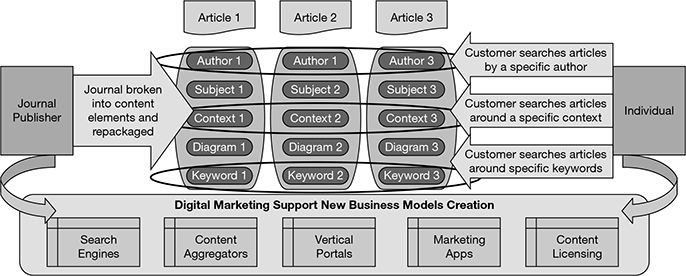
Figure 2.11 Digital Value Elements (Classification and Aggregation)-Led Marketing
In Fig. 2.11, we showcase the interactions between the publisher and the individual with an addition of a content layer in between. Now, rather than looking at the journal as a single piece of product, we have divided it into its key content elements which are the articles (for simplification we assume in this example that this journal only has three articles).
For each of the articles in the middle layer, we will try to apply the digital value elements of variety and customization to see how we can create multiple content types and business models to service these content needs. If we look at the content composition of any academic journal article and break it down further, we will see distinct content classification types including:
- Author: Each article has one or more authors tagged to them who might have written multiple papers or articles for this journal
- Subject: Subject is the full text of the article broken down into logical sections which can be consumed based upon each title header and its body in a combined manner
- Context: Context involves looking at the background/summary for which this article might be useful to read, helping readers know, (even before they spend their time reading), whether they have found the right article that matches with their problem area
- Diagram/Frameworks: Includes non-text based data which can be searched separately or made use of just by themselves towards elaboration of any other research work
- Keywords: Finally, all set of content today can be classified as a set of relevant keywords so that a user with just one word or phrase or an aggregation of words is able to search and find the right paragraph in minimum time
Let us now see how using the concepts of variety (which in this case relates to classifying a piece of content and converting it into various usable forms) and customization (relates to looking at a customer query and aggregating content based on his/her requirements) will help generate new business models. With content divided in the five-point manner (author, subject, context, diagrams, keywords), we can provide any consumer the possibility to search, aggregate, and buy content in the following manner (few examples):
- By author name: Users searching for a particular topic, say, for example, knowledge on ‘Evolution of Search Algorithms for Digital Marketing’ can punch in this phrase in an advanced search-box (specifically created to support content classification) and thereby obtain a list of authors who have written papers/articles on these topics. The users can go ahead and buy only the articles related to these authors and this search topic rather than paying for all articles.
- By context: Because multiple contexts can be provided to each title/section combination and the overall article content itself (in the form of a summary), numerous possibilities can be generated for a customer to search for his specific context (which could be a need to know how search technologies are built on legacy databases). If content is well classified and has the ability to aggregate, it becomes possible to provide the specific paragraphs or text (which have a relevance for the consumer context) and integrate them into a package for which the customer can be charged separately. The price for such customization might be higher than a per-article price (as there is additional customization being provided here), but it might be cheaper for the student who would prefer to pay for a portion rather than the whole journal.
- By keywords: This is by far the most common form of search available, wherein a consumer shares the most important keywords he is looking out for and is able to get a listing of top related articles across the whole set of present and historical journals available (the consumer would be able to see a summary related to that keyword for each search result). This is essentially the same search model which was pioneered by Google and became immensely successful in terms of intent and display-based advertisements which could be positioned against consumer searches and advertisers paying up to be present on those premium search results (we would be going through Google’s search model in detail in subsequent chapters during our coverage on search marketing and technologies).
With the few instances of ‘classification and aggregation value-based’ content models created earlier, in the subsequent section we will see how multiple business models are created out of this identified customer need for content search and how digital marketing supports these value shifts to create new opportunities.
Leave a Reply