
In the last chapter, we learnt about the evolution of digital marketing and the underlying technology frameworks responsible for the growth of multiple digital marketing models on the internet platform. In this chapter, we will underline key marketplace factors behind the development of digital marketing, how value chains get revised, and the impact of digital value shifts across business models.
This first section focuses on how factors like increase of interactivity, revised relationships between multiple business groups, emergence of network economy and surfacing of customer experience at the core have been responsible for fueling the growth and sustenance of digital marketing. It is important to understand these trends and functions as they are not only a direct byproduct of the growth of internet technology, but also includes efforts made by different types of businesses and leaders to give meaningful shape to that growth and give digital marketing its right place in the sun.
From Brick and Mortar to Bricks and Clicks
The most commonly used terminology to describe a shift of any business from a pure physical presence to any part of it being executed online is referred to as a shift from brick and mortar to bricks and clicks model. “Brick and Mortar,” as the phrase implies, refers to a company possessing physical assets like buildings, production facilities, or retail stores for their operations. To put some interesting literary connotation, this term was originally used by Charles Dickens in Little Dorrit.
In contrast, “Bricks and Clicks,” describes a business model where a company integrates both offline (bricks) and online (clicks) presences, including all post-internet actions. Apart from these, many other terminologies and combinations of the words bricks, clicks, mortar, and even flips (physical catalogs) have also been used in business to describe the multiple states where a business might fall in.
Brick and Mortar only companies, in the present context, are referred to as firms which either by their very nature have a high physical component, for example, agriculture, or are present in locations where their prime customer can only interact with them offline, for instance, a small and medium-sized business (SMB) in a small town, or those which have still not transformed themselves to shift online and are essentially lagging behind.
Brick and Click companies also vary in terms of the online component they have embraced. Some might have just begun their web journey and have a basic website only (or a classified listing in, say, Just Dial, the top Indian listings website), or might be a bit more advanced, are selling only a small portion of their products online (like on eBay or Amazon), or might have adopted full digitization (as in full-fledged e-commerce businesses like MakeMyTrip for travel bookings or Myntra as a fashion destination portal).
According to a 2012 Booz & Company Digitization study, where the consulting firm came up with a digitization index for Europe, financial services, automotive, and computers and electronics were the three top sectors having greater than 50 per cent digitization while hotels, restaurants and construction companies were found to be the least digitized (see Fig. 2.1).
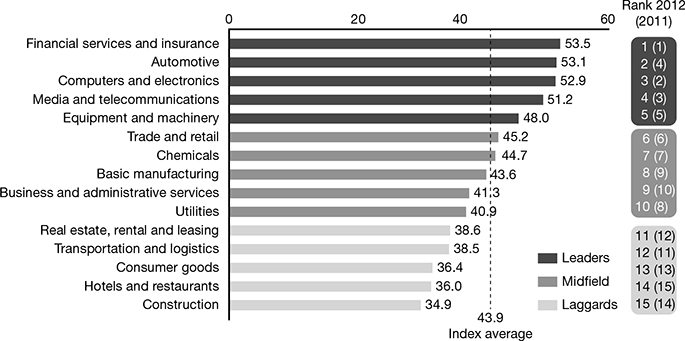
Figure 2.1 Industry Digitization Index (2012)
If we study the methodology behind the calculations for this study, we will find four dimensions on which the extent of digital presence was measured:
Leave a Reply