
Before we move ahead to understand the impact of digital on consumer behavior, it is important to know the difference between a regular consumer and one who is online. What are the characteristics which separate these two types of consumers and why is it useful for marketers to give importance to digital consumers?
A digital consumer has the following characteristics which differentiates him/her from the traditional (offline) consumer and helps support the marketer’s cause.
- Higher potential for profiling: Technology now provides the possibility to map each move of the online customer, resulting in a much higher potential to gather data points on consumer’s profile like location, number of visits, type of products bought, time spent on different webpages, product browsing history (before final buy), etc., typically adding to the overall information on specific customer sets.
- Development of consumer personas: The concept of consumer personas has become quite crucial and is widely applied across the advertising and marketing industry in present times. It refers to creating fictional characters to represent specific customer segments and their needs. Consumer personas help marketers understand the kind of products and services which can be targeted to specific personality groups wherein their behavior towards purchase has already been tested and measured and products are specifically developed to target to their tastes and likings.
- Possibility to gather unsolicited feedback: With online customers sharing comments and reviews across multiple social networking sites and with advanced tools being developed to analyze consumer sentiment through text analytics, marketers are now endowed with tools which can help them gather feedback in an unsolicited manner to understand the real preferences and attitudes of customers towards products which cannot be gauged even through well-organized focus groups.
- Availability of real-time expert/peer influence: Digital customers who in their offline avatar have high difficulty to gather opinions and views of experts and friends, can obtain these in a much more directed fashion online and marketers can influence consumer decisions through investments in content marketing and targeted messaging even during the last-mile steps of a consumer who is about to convert a purchase.
- Use online data to target loyal offline customers: With digital channels, there is a high possibility to gather preferences and attitudes of consumers who might already be loyal customers in the offline world. With marketers now having the ability to track and map their traditionally loyal customers and gather online data, they can use this knowledge to provide customized experiences to customers who are buying products in real stores.
Knowing that online customers are distinctly important to marketers, let us see how marketers are using multiple online elements to influence their CDP (Consumer Decision Process), and thus, getting more leverage. Let’s discuss a classic example of buying a pair of branded jeans, an activity which is quite normal in the traditional marketing world but one which has added a lot of consumer-influencing elements to it with the advent of online channels.
In Fig. 3.2, we see how a particular consumer in the traditional world would be influenced while purchasing a pair of jeans. We have divided the influences into two types—passive and active. Passive influences are those on which the consumer does not have much control and he receives them in an unsolicited manner, though he might be influenced by them. Active influences, on the other hand, are the ones which a consumer actively seeks out while he/she is evaluating or finalizing a purchase.
In Fig. 3.2, we see how the traditional marketing model could impact the CDP in a limited manner only and there were not many opportunities that the marketer had to influence consumer behavior and make it favorable for his/her set of products and services.
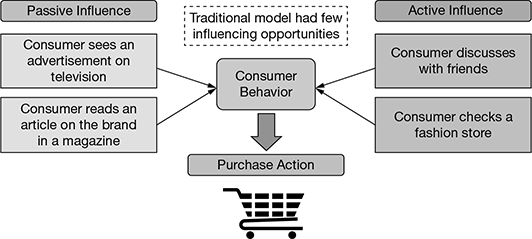
Figure 3.2 Traditional Areas Impacting CDP (Consumer Decision Process)
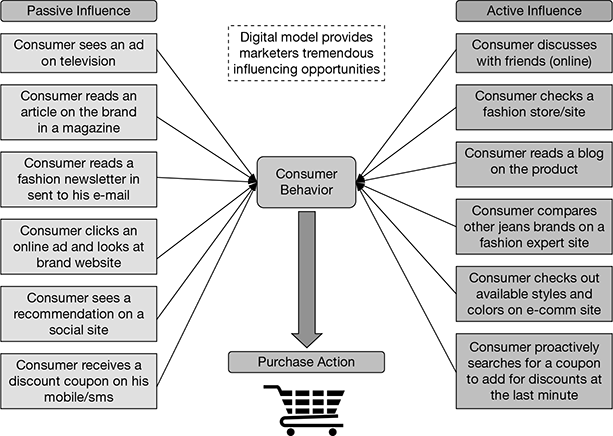
Figure 3.3 Impact of Digital Technology on CDP (Consumer Decision Process)
In contrast, if we look at the impact of digital technologies (see Fig. 3.3) on CDP , we shall see addition of multiple marketing channels which the marketer now has at his/her disposal to impact a consumer’s behavior and attitude towards his/her brands. Some of these passive and active influences brought about by digital technology can be explained as below.
Leave a Reply