
As we discussed in the initial section, internet by definition is a global system of interconnected computer networks where millions of private, public, academic, business, and government networks worldwide connect with each other to share massive amounts of information, resources, and services.
Intranet and extranets, which have similar functionality and set-up as internet, are concepts that differ in terms of their usage—intranet being an internal only network while extranet being a network set-up to be accessed by a select set of external users only. An intranet is a local network that uses internet technologies and creates a localized version of the internet that would only be used by the members of a corporation with authorized access to share data on the network. On the other hand, extranet can be looked at as an extension of the company’s intranet. Stakeholders can have specific access areas based on the type of interaction and collaboration set up for each of them.
The key difference between intranet and extranet is that if the intranet network is connected to the internet, the intranet will reside behind a firewall and, if it allows access from the internet, it will be termed an extranet. A portal in common internet parlance is called a web portal which is a specifically designed web page that brings together information from many sources in a uniform way. The same context can be applied to intranet and extranet where portals are developed as in the web version which provides links to different sites and pages that the specific set of users might need to access to accomplish their jobs.
Portals as a concept and terminology is very common in internet parlance and is used to describe sites which have been developed on specific business interest topics or verticals like business, government, culture, entertainment, etc. As a portal brings together and aggregates content from a number of systems or servers, maintaining and profitably running a portal is always a much more intensive exercise than developing and running a few pages.
Understanding Web and Wireless Technologies
Having discussed portals, we move on to the most basic type of portal which in common parlance is called a website, visited by all of us on almost a daily basis. With a basic understanding of website in the earlier section, let us get into a more detailed understanding of web technologies and its concepts.
At the basic level, web technologies involve a combination of multi-tier infrastructure stacks which put together help deliver the data and content requested through any specific web browser. As discussed earlier in the book, any user, who visits a webpage from any internet-connected platform or device, will place a request by typing in a URL into the browser which then sends a request to the back-end server.
Client–Server Model
The most important concept which forms the basis of web technologies relates to how a request is placed and information packets are sent back to the receiver. Typically, when any of us log on to the internet, we are basically accessing what in web terminology is termed as a ‘client.’ Clients are the devices that request and render web content. The request is typically executed from any device into a browser, mobile application, text reader, content aggregator. This layer is called the Client layer as shown in Fig. 1.6.
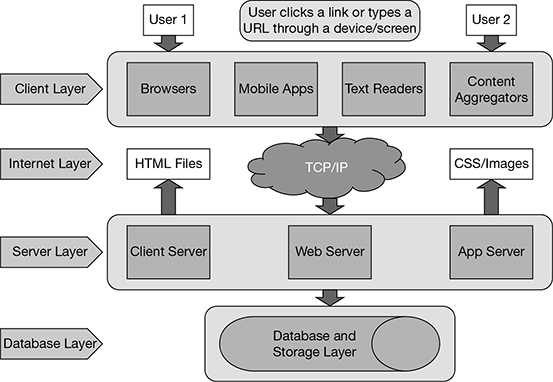
Figure 1.6 Understanding Web Technology Layers
On the other side of the Client layer is the Server layer. Servers are applications that deliver web content or services to clients. There is a layer in between client and server called the Internet layer which facilitates the request from a client device and fulfillment by a server. Typically, when a browser makes a request, the URL passes it to a DNS (Domain Name Server) which translates the URL to an IP address. The browser then uses this IP address to locate the host’s server and send a request for the content.
In Fig. 1.6, the Server layer is differentiated into a Web Server, App Server, and Data Server, all of which process requests specific to them. Based on the type of files requested, the Server layer shares static or dynamic content like HTML files, CSS/Images, and other dynamic content through the network. There is also a final database layer below where all the information is stored. The difference between the various servers is that while the Client Server is the presentation layer and contains the presentation logic, the Web and the App Server layers contain the Business and Data Access logic responsible for computing the business logics of the web application.
Wireless Networks
Wireless by definition is the transfer of information between two or more points that are not connected by an electrical conductor. The Wireless Local Area Network (WLAN) serves the same purpose as the wired one which is to link a group of computers, the main benefit being that it is generally easier, faster, and cheaper to set up. Wireless communication has become important for the digital age as it can cover various types of fixed, mobile, and portable applications (which are crucial to present-day marketing communications) like cellular phones, personal digital assistants (PDAs), SMS, GPS, Wi-Fi, Bluetooth, satellite, and broadcast television among others.
Behind wireless networks is the Radio Frequency (RF) technology, a frequency with a unique ability for long-range communication associated with radio wave propagation. The cornerstone of a wireless network is a device known as an access point (AP). The primary job of an access point is to broadcast a wireless signal that computers can detect and ‘tune’ into. Typically, to connect to an access point and join a wireless network, computers must be equipped with wireless network adapters or can be made wireless-capable through the use of an add-on adapter.
Mobile as the Most Important Wireless Technology for Marketing
The biggest impact wireless technologies have had on marketing is the commercialization of telecom networks for which this generation is also sometimes referred to as the smartphone generation. Marketing through a wireless device, mostly referred to as mobile marketing, provides multiple advantages of an easy-to-carry computing device, location-based promotion, personalization, multiple communication channels, etc., which are difficult to achieve with any fixed line or communication device.
The way wireless technologies have rapidly entered our lives and the credible advancements in design and functionality since the creation of iPhones by Apple have led to a simultaneous marketing revolution in which all types of customers with an affordable investment can utilize the benefit of marketing communications targeted at them which they can receive and respond to instantly.
Also with the emerging concept of marketing applications, each brand can now hope and establish a one-to-one connect with each customer to know their product preferences, periods of interaction, promotion likeability, instant feedback, and sharing recommendations with their social groups similar to word-of-mouth in the offline world. Also this unique combination of online and offline marketing is being deployed and integrated in a manner never attempted before because of the possibilities opened up by wireless networks.
Reshaping Interactions: Individuals/Businesses/Non-Profit
When we look at how business transactions take place in digital marketing and the interactions between different entity types, we traditionally classify them with acronyms like B2B (Business to Business), B2C (Business to Consumer), and C2C (Consumer to Consumer also termed as Peer to Peer). These terms for long have been very helpful in categorizing specific groups of sellers and buyers to analyze their unique interactions and businesses likewise.
But as we move forward and embrace the complex digital world and its multiple channels of interactions, we would see a change in the manner various entities interact and produce business possibilities not envisaged earlier. And there is also a distinct shift in terms of the end objectives of different businesses which is reshaping and usurping old interactions. With earlier business interactions focusing mostly on revenue and brand building, there are new sets of individuals, small and medium businesses, and even non-profit organizations which though might be small and local in nature, are run professionally and have in turn devised digital models which are completely new in nature. The biggest example of this is Wikipedia which started out as an online encyclopedia and positioned itself to provide the most accurate expert crowd-sourced definitions while running on a donation model, has been quite unique in inception, marketing, and the iconic status that it has obtained.
Fig. 1.7 showcases key digital business entities and multiple interactions which have developed over the past few years as digital businesses and concepts. The most common business models have mostly been referred to as interactions between large brands and other large businesses termed as B2B (business to business) and also the same businesses targeting individuals which are called B2C (Business to Consumer).
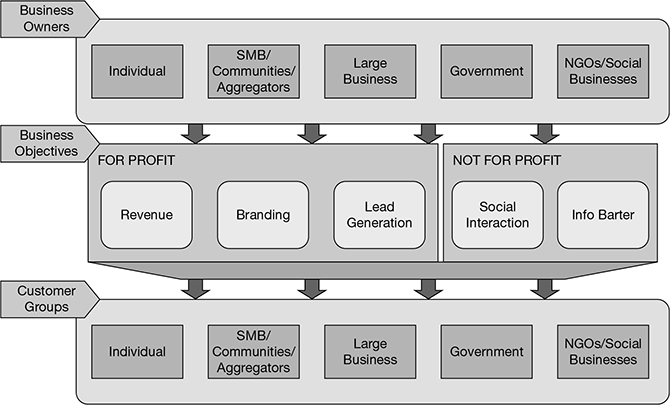
Figure 1.7 Types of Digital Business Interactions
As businesses appeared to grow, we saw addition of two new business groups—government and non-governmental organizations (NGOs). With the advent of digital marketing, there have been two new categories which have emerged strongly—the individual as the business owner (who can create, market, and deliver goods over internet-based channels all by himself) and the SMBs (Small and Medium Business Groups) which could either be standalone businesses or groups of entities/people/aggregators and even rural/home-maker communities who can combine together to execute businesses and deliver profits as smaller organizations. SMB organizations have become a strong target for online marketing companies developing new platforms and providing them advice to help them establish online and also sell their goods for incremental revenues.
In the middle layer of Fig.1.7, we have divided the key business objectives for each type of business interaction into two main buckets—‘For Profit’ and ‘Not for Profit’ objectives. ‘For Profit’ objectives include the three most important outcomes businesses are measured against—the primary one of course being revenue, and the two other as secondary objectives related to an established or newly launched product/service. For an established service, a goal which does not have revenue generation as a primary objective could have an objective like developing new leads to build newer customers for the same product/service. For a newly launched product/service, the key objective would be to increase branding/visibility so that the product starts fetching revenue in future.
The second bucket, which is ‘Not-for-profit,’ can relate to any of the five business groups. However, it would definitely be more pertinent to the NGO/social business and government categories as a lot of their interactions are oriented towards launching products/services/schemes geared towards two key objectives—social interaction and information barter. Both social interaction and information barter have the sole purpose of creating and catering to social groups to exchange information and sometimes products/services (as in the case of government organizations) for the betterment of society or some special interest groups.
The interaction mesh at the top of the customer groups layer showcases how the present digital era provides opportunities for almost any type of group or business entity (be it a single individual work-from-home or a subsidiary of a government arm) to market, sell, or develop stronger social ties with any other customer groups without the intensive effort which was needed to be put in earlier times.
To understand the impact of these multiple business interactions better, here are some examples:
- Individual to individual: Key examples are one-to-one ecommerce and Peer to Peer (P2P) data sharing on websites
- Individual to SMBs: Traditional home-made products delivered to small businesses to market and re-sell to big conglomerates
- Individual to NGO: Professional services to create blogs and promotional material for NGO social events
- SMB to individual: Many SMBs are professionally deploying Google Advertising to sell to individual customers and customize services specifically to their tastes
- SMB to SMB: Certain small concerns are in the business of providing value addition to raw products to refine them for use by other small and medium enterprises
- Large business to individuals: Large brands are using real-time advertising techniques to target high-end customers on e-commerce sites based on their previous cart buys and favored product categories
- Large businesses to social enterprises: Many companies are promoting social causes like health and environment by supporting social concerns and groups wherein the cause is also in line with their product and brand philosophies
- Government to government: There are interesting cases in which different central government departments market their policies to state governments to influence them on investing in key sectors for both commercial and social causes
- NGO to consumer: In multiple instances, NGOs these days are reaching out to customers through mobile messages to involve them in promoting their causes like event-related marathons, donations, and even buying socially relevant products
Opportunities and Challenges to Internet Marketing
Internet Marketing Opportunities
Marketing on the internet has opened up a plethora of opportunities for traditional marketers to utilize multiple mediums and channels:
- Reaching out to new set of prospects and leads: Internet marketing opens up opportunities to identify and target new segments apart from the present customer set
- Improving customer connect: The plethora of channels from which customers can obtain information about the brand and product are helping to improve brand credibility
- Increasing availability: With increased avenues to buy products on the go from different devices and avenues, customers now have multiple options to buy products
- Multiple pricing options: With intermediaries being cut out of the equation and with reduced warehousing costs, most products online are available with plans and options at prices and discounts which were not available before.
- Reaching international markets: The technology behind internet marketing enables a major category of products and services to be available online without incurring extra costs in establishing presence at a physical level
Challenges to Internet Marketing
The biggest challenge in introducing and establishing internet marketing in any new organization has six key aspects to it (see Fig. 1.8).
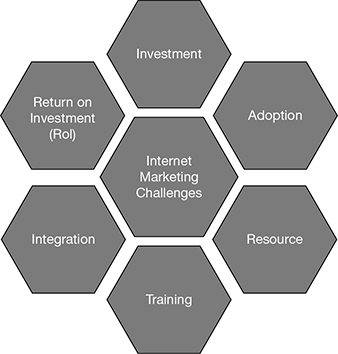
Figure 1.8 Internet Marketing Challenges
- Investment: Getting the firm to invest in IT is the biggest challenge for marketers as marketing has always been looked at as more of a cost center
- Adoption: Once investment is finalized and agreed upon, a clear strategy has to be adopted by each of the key company divisions specific to their objectives
- Resource: The next important step is the realization of an expert resource set to be hired or groomed internally to execute marketing efforts on the internet
- Training: Providing the right kind of training and establishing key deliverables which support the firm’s business objectives is essential
- Integration: Once marketing is operational one of the biggest challenges is to integrate its various functions across departments and end channels
- Establishing RoI (Return on Investment): Finally, the most difficult of tasks is to establish a cause and effect for each of the marketing activities so that the management is convinced of its outcomes and also develops a consistent reporting for follow-up actions
Leave a Reply