
With an understanding of consumer behavior and its changing patterns and influences, in this second part of the chapter we shall concentrate on what consumer demand means, how we can gauge it, the factors impacting demand and how marketers can interpret and manage changing consumer demands to integrate them into the product development lifecycle.
Understanding Consumer Demands
Before we start to focus on the forces that impact consumer demand let us get an insight into the concept of demand itself and how it varies from traditional to online marketing mediums.
The concept of demand (which originated from the field of economics) is the utility for a good or service of an economic agent, relative to his/her income. Though the definition seems loaded, simply translated in marketing terms it refers to the want for a commodity backed by the ability and willingness to pay for it.
Consumer demand as a term is generally used to denote the overall demand for a product or a service in the market. It can also be seen in two different ways—individual demand and market demand, wherein individual demand is the quantity a consumer would buy at a given price, while market demand would be the total demand of all buyers together at a given price in a given period of time.
In Chapter 1, section titled ‘Delivering Enhanced Customer Value,’ we had touched upon the concepts of Online Value Proposition (OVP) and seen how different types of needs (stated and unstated) can lead to new/improved products/services to be developed. The concept of consumer demand moves parallel to that of needs and wants. There are mainly eight types of demand patterns which have to be taken into consideration by marketing teams:
- Negative demand: consumers dislike the product and may even pay a price to avoid it
- Non-existent demand: consumers may be unaware or uninterested in the product
- Latent demand: consumers may share a strong need that cannot be satisfied by an existing product
- Declining demand: consumers begin to buy the product less frequently or do not buy at all
- Irregular demand: consumer purchases vary on a seasonal, monthly, weekly, daily, or even hourly basis
- Full demand: consumers are adequately buying all products available in the marketplace
- Overfull demand: more consumers would like to buy the product than can be satisfied
- Unwholesome demand: consumers may be attracted to products that have undesirable social consequences
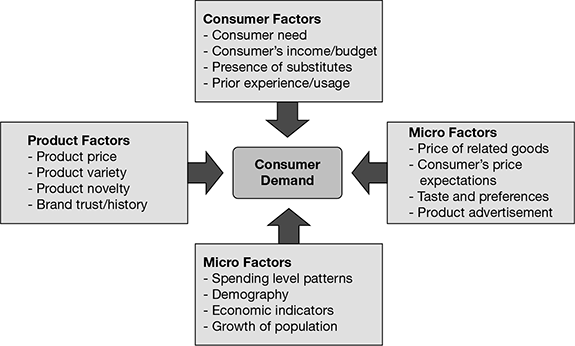
Figure 3.6 Factors Impacting Consumer Demand
With an understanding of key demand pattern types, we would now look at the key factors impacting consumer demand.
The primary factors impacting consumer demand can be classified into four broad areas (see Fig. 3.6):
- Consumer factors: This area refers to factors impacting a typical consumer of the product at hand. Key consumer factors cover the extent/type of consumer need, his income level, historical budget to spend on that category, presence of substitutes available which the consumer can buy, and his prior experience with the use of that product or brand and views/opinions he/she holds of it.
- Product factors: This category includes product/brand-specific factors that impact a consumer’s choice for it. The price of product and its variants is a key determining factor here followed by product variety (including availability) as also its novelty/desirability factor along with the overall trust a brand exudes through its communication, history, or imagery.
- Micro-factors: Involves other factors which are crucial and can be impacted by marketers one way or the other. Key micro-factors include the price of related goods (in competition with the product/brand, wherein marketers can compare and match prices with their nearest competitor to improve demand), consumer expectations of increase/decrease of prices in the near future, specific tastes and preferences of an audience/regional area, and other aspects like product advertisement or channels of marketing.
- Macro-factors: Involves ecosystem factors which actually define key consumer segments and typically cannot be impacted by marketers. Macro-factors include overall spending patterns of consumer segments, the demography they belong to, key economic indicators (to gauge the growth of that sector itself), population growth and other such macro- economic indicators.
With an understanding of these impact factors, it is also important to know how digital marketers can gauge these changing consumer demand patterns. Typically, any marketer who wants to manage and direct consumer demand for higher profits needs to:
- Conduct regular demand analysis along with online sales channel partners
- Measure audience activity on various digital sales channels
- Understand buying preferences/patterns of digital audiences
- Define consumer personas based on their demand patterns (timing/seasonality)
- Test-market products with new promotional strategies to gauge demand
- Compare and study dependencies of offline/online buying
- Study perceptions and engagement patterns of new online customers
- Assess impact of price changes and availability of substitutes for that product/brand
- Conduct usability and design tests (multivariate A/B Tests) to understand channel attractiveness
We have earlier shared multiple techniques available to manage and improve target consumer’s perception and demand for a certain category of products. We will study some of these pointers in depth in later chapters when we cover techniques to develop and improve digital marketing to make it more effective. The key point to realize here is that consumer demand has to be monitored and analyzed on a regular basis as there are so many new trends and variables impacting the nature of online demand that it is of utmost importance for a marketer to realize and chaff trends which are to stay and those which are just fads (and would not impact consumer demand on a long-term basis).
Leave a Reply