
In the last part of the chapter, we established an understanding of the business strategy for digital marketing and its structures along with doing the groundwork for CCA and customer development through implementation of STP2.0. In this section, we shall look at how marketers need to map changes which the digital landscape has brought to the 4Ps of Product, Price, Place, and Promotion along with the introduction of four other Ps—People, Process, Programs, and Performance.
Offering Mix for Digital
In this section, we shall deal with the first P of the marketing mix known as Product. Typically, when we talk about a product, the coinage also relates to a service or a brand. The case of digital is more complex, since the regular traditional distinctions between each of these terms (product, service, brand) begin to diffuse not only because of the elements which the digital medium lends to it but also how marketers are actively mixing components of one into the other to make it a wholesome value enhancing unit which we can call as the ‘Offering mix.’
A key feature of a product or service in the offline world is that they can be a commodity, or as we say non-branded enough, but still sell on the basis of local availability and the ‘reach factor,’ where they are available in nearby stores and do not have to bear the costs of being on a digital channel, marketing themselves, and delivering to a location. This brings us to the fact that any product or service which is being sold online and across digital channels needs to be reasonably differentiated and have so-called ‘brand attributes’ or elements attached to them, to differentiate from competition and be seen in the first place.
A product can be classified as consisting two key components—tangible and intangible. Tangible components are described as the ones which can be physically seen while the intangible parts might not be directly visible but their impact is felt and perceived by the customer. A service is also considered to be a product category which is intangible in nature.
An offering on the digital platform differs from its traditional form primarily in the way it develops and integrates the intangible or service aspects to it. These services can either be developed as new digital products (along with the main product line) or be an extension to the physical product itself to make it easier for the customer to access, interact, and ultimately, purchase the main product. Philip Kotler (Marketing Management, 14th edition) has shared five states of service mix components that can be built around a product.
Figure 5.7 showcases the five states of an offering mix, which starts with a pure tangible product with no service element and ends as being a pure service with no product component. The offering mix of any firm can be classified across any of these five states depending upon the extent of tangible products and intangible service elements which are a part of it. Let us understand them as follows:
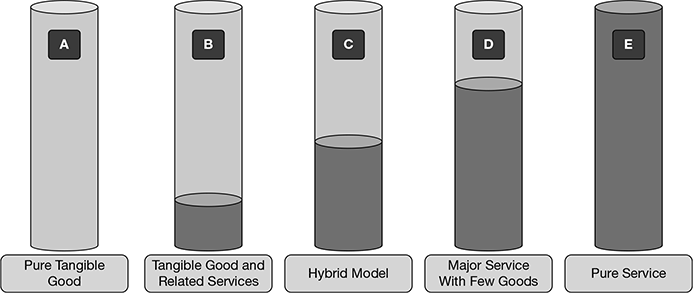
Figure 5.7 Offering Mix (Product-Service) States
- State A: Firms in this state have a mix of only tangible products which are primarily physical in form and mostly commodity in nature. Examples could be sugar, steel, a basic accessory, etc. Most of these products might have a generic brand name but do not exhibit the characteristics of a brand or its experiential elements. Although there is scope to differentiate, but without a service element, consumers are not able to build a connection to a product. Pure tangible goods are typically not geared enough for the digital platform.
- State B: It involves tangible goods which have a decent service element to them. Examples include mobiles, automobiles, furniture, etc., which in their base state are tangible products, but addition of digital value elements (aesthetics, customization, convenience, etc.) provides a service experience to the target customer. Most of the products sold through e-commerce sites would fall in this state, where the product is sold mostly in the physical form, but with good amount of intangible elements like information, history, positive customer references, demo videos, etc., built around it.
- State C: This is a unique state in which the offering has an equal mix of product and service elements built into it. Key examples would relate to hospitality services like theme parks (which sell a service and also merchandise), restaurants (where food is tangible and service is the intangible part), etc. Even firms like Apple and Samsung which are built and marketed as products but have strong technology-based service elements around them can come in this category. There are only a few firms who can deliver an offering mix in this state as they need to have strong product and service elements in their portfolio which is often hard to achieve and sustain.
- State D: In this state, the intangible part forms the core service, while the tangible part is built as a support element. This includes typical examples like air travel where additional services or supporting goods like snacks and drinks are sold, but increasingly we are seeing service-oriented companies moving to a productized format wherein each of their key features and processes are being broken down and sold as a product in itself. Point in case is the software products industry with firms like Google and Microsoft which sell services that are customized so as to gain maximum advantage of a service-driven model with enhanced revenues accruing through its product form. The same can be said for banking and insurance industries which are converting pieces of their services and branding them as products, thus increasing service lines and revenues.
- State E: This final state involves an offering having complete intangible attributes. Examples include Spa and other wellness services, online consulting, support helplines, etc. Again, we should state here that these types of pure service offerings can also be well branded although they might not have any tangible or physical aspect to them.
With an explanation of the above states, we would also like to take up examples of how firms and marketers are using base elements of their pure products and services (across states A and E) and combining or skipping stages to develop new offerings for higher revenues or to pre-empt competition from other product or service firms. Key examples include:
- Products changing their form to digital: There are specific industries like media and broadcasting which easily lend to a complete change of their form to digital products. Books, music, movies, TV content, etc., all have the ability to move directly from a physical to a digital product stage with large associated service elements. Other examples could include a hardboard games manufacturer, for instance, converting the whole concept of the Monopoly board-game to a digital game format for new revenues.
- Products picking up a perceived benefit to convert into a service: Nike which is the top global manufacturer of footwear, took one of its key elements ‘performance’ to launch iPhone Apps which provide services as a neat extension of the brand and its core values and in turn, also helps earn additional revenues.
- Products converting content into new products: Traditional information product companies are looking at strong disruptions to their models as a part of which they are creating customized products for key user segments, utilizing content as a differentiating factor.
- Products converting a particular feature into a service: Zappos is a well-known example of how a particular product element (like in this case, customization of shoes) can be taken up to develop a unique set of service elements around it, which become so differentiating as to the product itself being seen as a service. A similar example is Starbucks which built its reputation on strong service elements while delivering a rather commodity product like coffee.
- Services picking up a sub-process to market as a product: Messaging, which was always looked at as a free service to be provided to consumers (in reference to Google and Facebook for their e-mail and social media products) was picked up by WhatsApp and tweaked to build a product which helped in individual and group messaging, with an yearly subscription charge. This goes to show how sub-processes can be picked up and developed into mass offerings.
- Services converting an expected service to a unique product: The classic example here is of Geek-Squad (the post-purchase service arm of Best Buy) which was so well developed and branded into a desirable product for which customers pay yearly charges for support and maintenance services which they might not even need. A similar example on the e-commerce side, is how companies have started introducing paid services like ‘Online Delivery in a Day’ for extra charge which customers are delighted to pay for as an extra.
- Service firms creating content-based service lines: An example of this kind would include management institutes conducting soft skills trainings for corporates apart from their academic programs, thus utilizing the content they produce in-house through one service to create other sets of services.
- Service firms using intangible elements like social networks to provide new services: One of the best examples in this category include LinkedIn which has started providing paid services to customers to connect and send messages to other members in the social network. This is a good example to showcase how intangible digital elements, if identified and crafted well, can be used to generate incremental revenues on newer platforms with the same customer set.
With multiple examples shared, as above, on how marketers are disrupting and combining various tangible and intangible elements to create multiple product-service offerings, brands should also take care that it is not just in the creation of new products and services that business survives but how well the offering mix is differentiated and sustainable. As shared in Chapter 3 in the section titled ‘Brand Building on the Web,’ firms should look at developing the six brand elements (Memorable, Meaningful, Likeable, Transferrable, Adaptable, and Protectable) to their mix to achieve their digital objectives and keep differentiating.
Next we would look at the second “P” of the marketing mix which is Pricing. Pricing has a crucial impact on how offerings which have been created fare in the market and how successful companies execute their business strategies and revenue objectives.
Leave a Reply