
The practice of SEO started back in the mid‐1990s. (I know because I used SEO to optimize our website when I became the vice president of marketing at WebCT in 1999. Back then, the leading search engines included AltaVista, Excite, Infoseek, and Lycos.)
The term “social media” was coined by Chris Shipley in 2004. (I know because she asked me to speak at BlogOn 2004, which was the first “social media conference.”) Interest in the search term social media marketing took off in 2008.
But interest in the search term content marketing didn’t take off until 2011, which was also when the Content Marketing Institute was founded. (I know because I became the faculty chair of content marketing at Market Motive in 2012.)
Because content marketing was the new‐new thing, I was frequently asked to explain how it related to SEO and social media marketing. And I often used a Venn diagram to illustrate the similarities, differences, and relationships between these basic digital marketing disciplines (Figure 5.1).
I’d explain that many SEO strategies and tactics are often focused on optimizing content on websites. However, many content marketing strategies and tactics are often focused on optimizing content on websites, blogs, YouTube, and other platforms, which have been blended into Google’s Universal Search results since May 2007.
Yes, there is overlap. SEOs and content marketers can collaborate to optimize all of the short articles/posts (fewer than 3,000 words), videos, virtual events/webinars/online courses, research reports, e‐books/whitepapers, and case studies on their organization’s website.
And I’d explain that most social media marketing strategies and tactics are often focused on creating and distributing engaging and shareable content on Facebook, LinkedIn, Instagram, and YouTube. However, most content marketing strategies and tactics are often focused on creating and distributing valuable and relevant content on websites, blogs, and email newsletters as well as social media platforms.
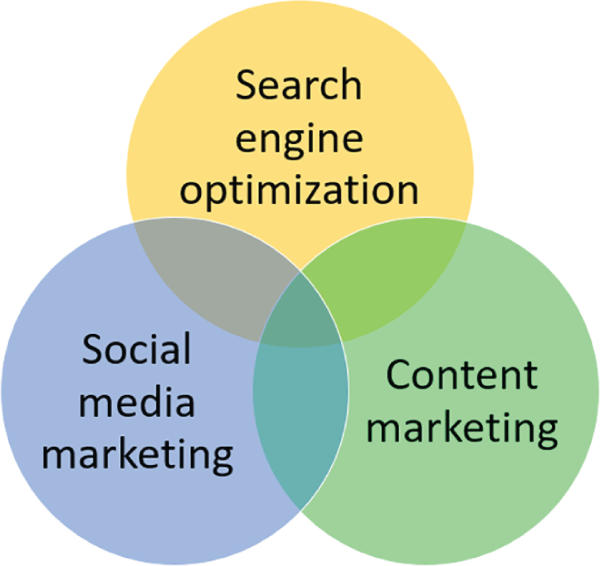
Yes, there is overlap. But social media and content marketers can collaborate to create a consistent stream of content that is valuable, relevant, engaging, and shareable as well as distribute it across more and different channels. Although, this often requires the teams to share a “war room” for product launches or industry tent‐pole events.
Leave a Reply