
With an understanding of the development of digital media planning stages, we will now look at the ways in which firms can analyze their digital marketing investments and plan for better RoI from their digital media planning exercise by applying marketing metrics.
According to Lenskold Group (a leading authority on Marketing RoI development), the sole mission of any firm’s marketing program is to help maximize company’s profits. RoI development and management involves taking stock of the promotional budget at hand and the priorities for allocating budget in the most profitable manner. According to Lenskold, RoI can typically be calculated as:
ROI = {(Net Present Value of Profits & Expenses) – Investment}/Investment
‘Investment’ here represents the marketing expense and the ‘Net Present Value of Profits and Expenses’ represents the resulting flow of profits and expenses, with future cashflow discounted back to reflect the time value of money. RoI can be measured at an overall business level, the department level, and even at the marketing campaign level. Here, we would be looking more into the RoI at an overall business level, and metrics related to specific campaigns would be discussed in Chapter 8 on ‘Digital Marketing Execution.’
The three key components of the RoI equation which can be used to measure and plan marketing initiatives include:
- Customer Lifetime Value (CLV): It represents the net present value of profit from the stream of customer transactions resulting from the investment. RoI improves as CLV increases.
- Total number of customers: It is generated from marketing investment. RoI improves as total number of customers increase, provided the CLV per customer is greater than the marketing expense per customer.
- Marketing expense: Includes the total investment made with the expectation of generating a return.
With this understanding of the broader concept of RoI, we would now look at developing a plan for marketing RoI. The Marketo Group (one of the top digital marketing product companies) has devised a three-step process to plan for marketing RoI.
- Establishing targets and RoI estimates: The first objective for any marketer includes definition of their digital planning objectives and identification of measurable metrics for the chosen goals of their specific product portfolio and respective presence across marketing funnel. The basic RoI model for any type of marketing activity should capture the following metrics:
- Incremental sales generated
- Revenue per sale
- Gross margin percentage
- Total marketing and sales investments
- Designing measurable programs: All the programs developed should be measurable. The marketer should exactly know what he is going to measure for the specific channel, timing of measurement, and the way the program will be measured.
- Marketing improvement decisions: Involves marketers focusing not just on data which is measurable but which improves company profitability. This means marketers should focus beyond ‘what is’ to ‘what if.’
To support the Marketing RoI initiatives, Marketo in their ‘Definitive Guide to Marketing Metrics and Analytics’ have shared a framework for measurement which discusses multiple metrics that a firm can track including revenue, margin, profit, cash flow, RoI, shareholder value across three key categories—business performance metrics and KPIs, diagnostic metrics, and leading indicators. Typical areas of metrics, put up against this framework, are discussed below.
In Fig. 6.8, three key types of metric areas—revenue, marketing program performance, and profit per customer have been placed against the framework to identify most important metrics for a firm.
To share the importance of the right metrics for each marketing program, the Marketo report has picked up one of the three key metric areas—the revenue metric—to place it along the revenue cycle (aligned to general marketing funnel), to define and explain the four key ‘metrics that really matter’ for a marketer and where critical insight can be gained in measuring and optimizing marketer’s aggregate impact on revenue. These include flow (lead generation), balance (lead counts), conversion, and velocity.
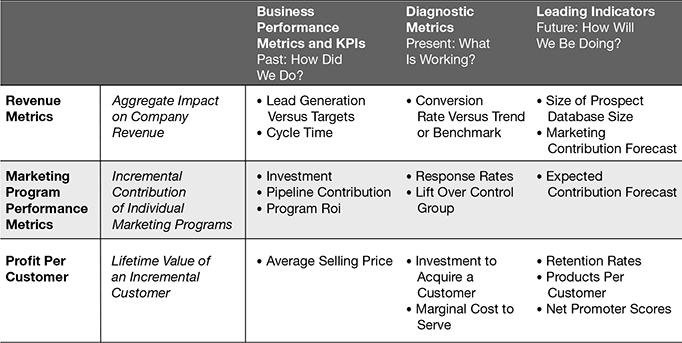
Figure 6.8 Right Metrics Summary by Marketo
Source: Definitive Guide to Marketing Metrics and Analytics, https://cdn2.hubspot.net, © Marketo, accessed in February 2017
Figure 6.9 gives a good picture of the kind of questions to be asked for evaluating and measuring each of the four metrics and also related examples. Apart from revenue metrics, a company can develop metrics across multiple other areas of the program, including channel returns, product performance, sales effectiveness, customer profitability, brand performance, among others. It is typically advised that marketers pick up a few specific areas of measurement across their marketing programs and funnel activities and focus on the quality of metrics rather than quantity to assess their present operations and effectiveness. Also, it is crucial that other key aspects of marketing implementation like people, process, technology, etc., are also aligned to RoI analysis activities to achieve the most impactful results from the exercise.
Leave a Reply