
In the previous chapters, we understood how digital marketing and campaigns are implemented. For any company to successfully execute its campaigns and get fully operational on multiple digital platforms, it first has to manage the delivery part of its online services (also known as e-services), which is what we will focus in this section. E-services as a terminology is typically used across multiple areas and had found applicability both for individual firms trying to set up their online services and also, in a broader sense, for government bodies trying to go digital with their citizen services for better governance. For our study, we are looking to confine to e-services which would help firms set up their digital marketing and sales operations, thus relating to areas like supply–chain management, customer relationship management, resource management, etc.
E-services was first defined in academic papers by Tiwana and Balasubramaniam in 2001 and, according to them, e-services are internet-based applications that fulfil service needs by seamlessly bringing together distributed, specialized resources to enable complex (often real-time) transactions. Rowley (in 2006) approached e-services as deeds, efforts, or performances, whose delivery is mediated by information technology. Such e-services include the service element of e-tailing, customer support, and service delivery. The three main components involved here are of service provider, service receiver, and the channels of service delivery (technology).
Capgemini, in their co-research with MIT, have seen that for setting up digital e-services, it is crucial that digital leaders invest in a Digital Services Unit (DSU) which can support a firm’s governance initiatives around these crucial initiatives. In their whitepaper ‘Accelerating Digital Transformation: Understanding and Setting Up a Digital Services Unit,’ they have shared the definition of a DSU as “an organizational structure, which focuses on digital activities across an organization and plays a critical role by challenging traditional strategies and incorporating new digital initiatives.”
Figure 9.4 describes a general DSU model wherein digital services are delivered by the digital marketing unit within the firm. This entity provides digital services to both the marketing and sales units and also defines a digital services catalog for all the services provided to external clients. The resources for this DSU model are basically loaned from their respective parent groups. The key advantage of this marketing DSU is that it provides autonomy to individual business units and enables dedicated service to respective clients.
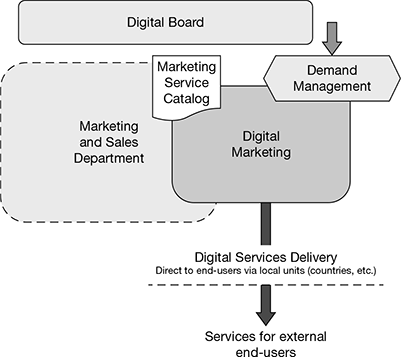
Figure 9.4 Marketing Centric DSU Governance Models (Capgemini Consulting Analysis)
Leave a Reply