
The designer’s task in selecting windows, doors, and skylights is facilitated by testing programs that allow objective comparisons of the structural, thermal, and other performance requirements of products of different types and from different manufacturers.
Structural Performance and Resistance to Wind and Rain
The first of these standards is the Standard/Specification for Windows, Doors, and Unit Skylights, jointly published by the American Architectural Manufacturers Association (AAMA), the Window and Door Manufacturers Association (WDMA), and the Canadian Standards Association (CSA), officially designated as AAMA/WDMA/CSA 101/I.S.2/A440. This specification establishes minimum requirements for air leakage, water penetration, structural strength, operating force, and forced-entry resistance of aluminum, plastic, and wood-framed windows, doors, and unit skylights.
The AAMA/WDMA/CSA Standard/Specification uses a letter designation called Performance Class and a numeric designation called Performance Grade to indicate the minimum capabilities of fenestration products. Performance Classes, in order of increasing capability, are R, LC, C, HC, and AW. In previous editions of the standard, these letter designations were associated with the terms “residential,” “light commercial,” “commercial,” “heavy commercial,” and “architectural,” respectively. Although these plain word descriptions have been removed from the newest version of the standard, knowledge of them is still helpful in recalling the intended ranking of the letter designations themselves. Each Performance Class sets criteria for resistance to wind loads, resistance to water penetration, and maximum air leakage.
Numeric Performance Grades correspond to maximum design wind pressures. For example, Grade 30 indicates a unit suitable for design wind pressures up to 30 psf (1440 Pa). Grades are specified starting at 15 psf (720 Pa) and increasing in increments of 5 psf (240 Pa). Each Class (letter designation) has a minimum acceptable Grade (design wind pressure), and higher than minimum Grades can be specified where resistance to higher wind forces is required.
An example of a manufacturer’s complete tested product designation is C-R30 760 × 1520 (30 × 60), where C stands for casement window, R is the Performance Class, 30 is the Performance Grade, and the final pairs of numbers indicate the maximum size of the tested unit that meets these criteria, expressed as width by height, first in millimeters and then, in parentheses, in inches. In practice, the designer may choose a Performance Class based on the building type and general expectations for durability of the system. For example, a Class LC window may be specified for a low-rise multifamily building, a Class HC window for a hospital or school, or a Class AW window for a large institutional or high-rise building. The required Performance Grade should be determined based on the design wind pressures acting on the building, information that is usually provided by the structural engineer.
Thermal Performance
With regard to energy efficiency, the National Fenestration Rating Council (NFRC) sponsors a program of testing and labeling based on the standards Procedure for Determining Fenestration Product U-Factors, NFRC 100 and Procedure for Determining Fenestration Product Solar Heat Gain Coefficient and Visible Transmittance at Normal Incidence, NFRC 200. The two most important properties included in these standards are thermal transmittance (U-Factor) and solar heat gain coefficient, both of which directly impact building energy consumption and are regulated by energy codes. Importantly, U-Factors represent the overall thermal transmittance, or whole product heat loss, of complete window, door, and skylight products. That is, they account for the combined contributions to thermal transmittance of the center of glass, edge of glass, framing, and any other components. Visible light transmittance air leakage, and condensation resistance ratings may also be included in NFRC ratings. An example of a standard label that is affixed to each NFRC-rated window is shown in Figure 18.28.
Both AAMA/WDMA/CSA and NFRC standards are referenced by the International Building Code, making them the de facto standards for the selection of most building fenestration products sold in United States.
Impact Resistance
Buildings in hurricane-prone regions can be subject to extremely powerful and destructive winds, and glazed openings in such buildings are especially vulnerable. The pressure of high-speed winds can cause glass to break, or it can suck whole lights out of their sashes, whole sashes out of their surrounding frames, or whole frames out of their rough openings. Glass can also be broken by rocks, severed tree limbs, and other debris launched by the wind with missilelike force. Once openings in a building are breached, the force of the wind can, in extreme cases, literally blow the roof off a structure. Even where a building structure remains intact, failed openings can admit large amounts of rainwater that can severely damage the building and its contents.
In the International Building Code, glazed openings in wind-borne debris regions must meet special standards for resistance to high wind forces and debris impact. These regions include portions of the U.S. Atlantic Ocean and Gulf of Mexico coasts, the islands of Hawaii, and certain other U.S. territorial islands that are frequently subjected to hurricane-force winds. In these regions, most glazed openings must meet the requirements of two tests, ASTM E1996 and E1886, which subject assemblies to airborne “missiles” and cyclical air pressures to determine their ability to remain in place under hurricane-like conditions. The testing can be quite dramatic. For windows destined for installed locations not more than 30 feet (9.1 m) above grade, a 9-pound, roughly 8-foot-long (4.1 kg, roughly 2.4 m long) 2 × 4 is fired endwise toward the window from a special cannon at a speed of 34 mph (55 kph). While the glass is permitted to crack, it must survive in place, without being penetrated by the 2 × 4.
Such impact-resistant openings (also sometimes referred to as hurricane-rated openings) are fitted with laminated glass with a heavy interlayer of PVB or other similarly tough, viscous plastic. They also have stronger glazing (gasketing) systems to better hold the glass units in place, their frames are structurally reinforced, and they are fastened into their rough openings with extra-strong attachment hardware. As an alternative to providing impact-resistant openings in one- and two-story buildings, the code permits the use of precut plywood or OSB panels that can be fastened into place over the outside of such openings when needed to act as temporary storm shutters.
Blast Resistance
In buildings subject to special security requirements, windows, curtain walls, and other glazing systems can be designed for resistance to the force of explosive blasts. At this time, standards for blast-resistant glazing systems are published by several U.S. federal agencies, including the Department of Defense and the General Services Administration, as well AAMA, one of the copublishers of the Standard/Specification for Windows, Doors, and Unit Skylights discussed previously. Design for blast resistance involves defining the size of the blast and its distance from the glazing system, as well as the glazing system’s response to the blast. Of particular concern is the extent to which glass remains intact in the system or is shattered and dispersed as hazardous fragments. Like impact-resistant glazing, blast-resistant glazing typically relies on laminated glass and reinforced framing and attachment systems.
FIGURE 18.28 A sample NFRC certification label that is affixed to a window unit so that buyers may compare energy efficiencies. The U-Factor is the reciprocal of the R-value, which means that the R-value of this window unit is about 3.
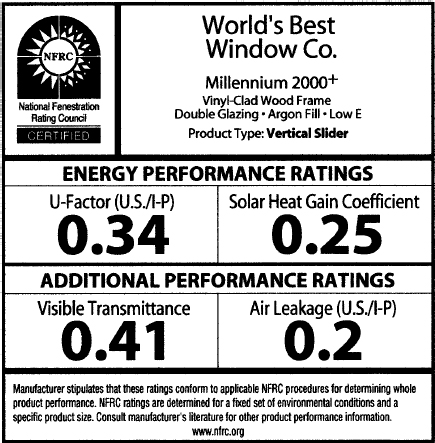
FIGURE 18.29 Custom wood doors on architect Steven Holl’s The Chapel of St. Ignatius. (Photo by Joseph Iano)

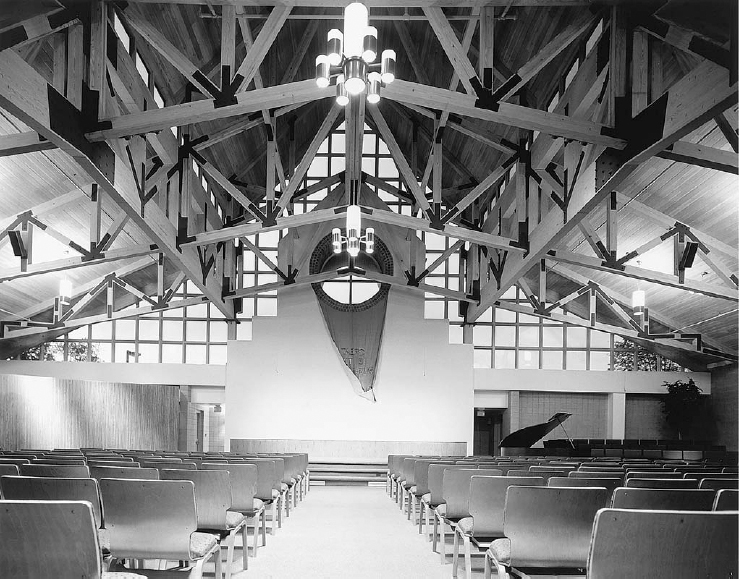
FIGURE 18.30 The Blanchard Road Alliance Church in Wheaton, Illinois, silhouettes laminated wood trusses against a wall of vinyl-clad wood frame fixed windows. (Architect: Walter C. Carlson Associates. Photo courtesy Andersen Windows, Inc. Andersen is a registered trademark of Andersen Corporation, copyright 1997. All rights reserved)
Leave a Reply