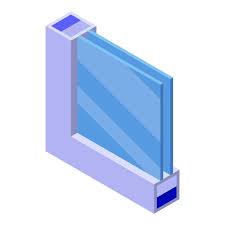
Glass is a two-way pipeline for the flow of both conducted and radiated heat. As noted previously, glass, even when doubled or tripled, conducts heat rapidly into or out of a building. It can also collect and trap large amounts of solar heat inside a building.
In residential buildings, the conduction of heat through glass should be minimized in the extremely hot or cold seasons of the year. Double glazing, low-e coatings, low-conductivity gas fills, and snug curtains or shutters are desirable features for residential windows. Warming sunlight is welcome in winter but highly undesirable in summer, which leads the conscientious designer of residences to orient major windows toward the south, with overhangs or sunshades above to protect them against the high summer sun. Large east or west windows can cause severe overheating in summer and should be avoided unless they are shaded by nearby trees.
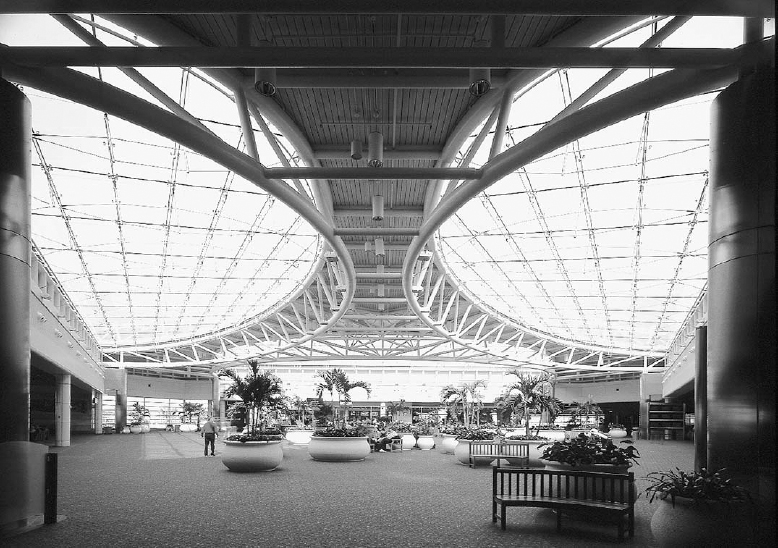
FIGURE 17.35 Airside 2 Terminal at Orlando International Airport. (Photo of Pilkington Planar System courtesy of W&W Glass Systems, Inc.)
In nonresidential buildings, heat generated within the building by lights, people, and machinery is often sufficient to maintain comfort throughout much of the winter. In warmer weather, this heat, along with any solar heat that has entered the windows, must be removed from the building by a cooling system. In this situation, north-facing windows contribute least to the problem of cooling the building, and south-facing windows with horizontal sunshades above allow the entry of solar heat only in the winter. East and west windows are problematic, as they contribute strongly to summertime overheating and are very difficult to shade. Shades or blinds inside the glass are helpful in eliminating the glare from such windows, but they do little to keep out the heat because once sunlight strikes them, its heat is already inside the building and little of it will escape.
Tinted and reflective glasses are of obvious value in controlling the entry of solar heat into buildings, to the point that they might be perceived as encouraging the designer to pay little attention to window size and orientation. But a growing number of larger-scale buildings are characterized by different glazing schemes for the different sides of the building, each designed to create an optimal flow of heat into and out of the building for that orientation, and each making creative use of the available types of glass for this purpose. The results, as measured in occupant comfort and energy savings, are generally impressive, and the aesthetic possibilities are intriguing.
This last statement could apply equally well to the role of glass in admitting light to a building. Electric lighting is often the major consumer of energy in a commercial building, especially when the heat generated by the lights must be removed from the building by a cooling system. Daylight shining through windows and skylights, distributed throughout a space by reflecting and diffusing surfaces, can reduce or eliminate the need for electric lights under many circumstances and is often more pleasant than artificial illumination. Low-cost computer models make it easy to predict the levels of daylighting that can be achieved with alternative designs, enabling more and more architects and engineers to become expert in this field.
Leave a Reply