
Many buildings feature glass roofs over such amenities as lobbies, restaurants, cafes, swimming pools, and garden courtyards. A glass roof presents particular problems with respect to potential water leakage, because it is impossible to neutralize the force of gravity on a surface that is not vertical. Furthermore, moisture that condenses on the interior surfaces of the glass is likely to accumulate and drip onto the occupants of the space beneath. Therefore, every sloped glazing system is designed by its manufacturer to include an internal drainage system. This system collects any water that results from leakage or condensation and drains it to the outdoors. The glass surface is sloped rather than flat because the slope enables gravity to assist in keeping water from ponding on the roof, in causing condensate to run to the lower edge of each light of glass before dripping off, and in moving water through the drainage channels to the weep holes through which it is conducted back to the outdoors.
A proprietary sloped glazing system is illustrated in Figures 21.26 and 21.27. This system is designed to adapt to a range of slopes from 15 to 60 degrees. Water leakage is discouraged by a well-designed system of glazing gaskets, but if leakage should occur because of gasket deterioration or faulty installation, the internal drainage system will catch it along any purlin or rafter and drain it away. Moisture condensation is minimized by double glazing and thermal breaks, but any condensate that may form under extreme conditions is also caught and drained by the same system of channels in the aluminum members.
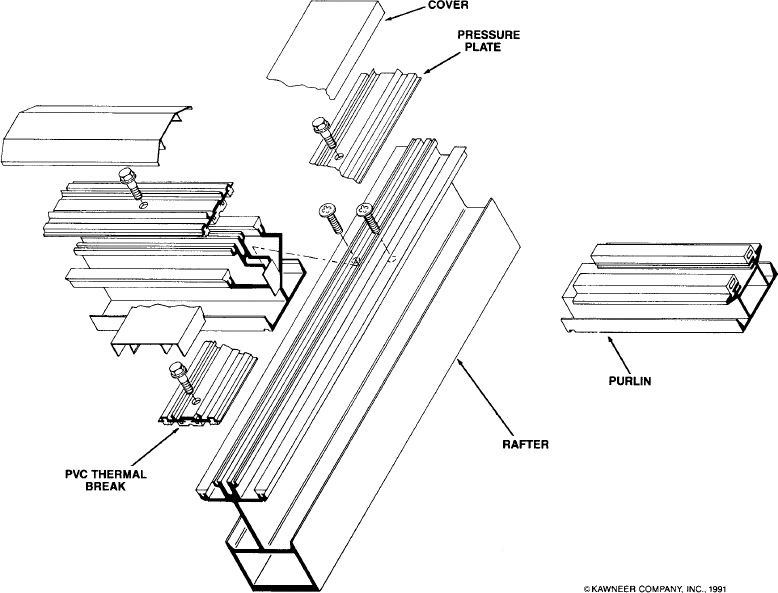
FIGURE 21.26 The Kawneer 1600 S.G.® sloped glazing system is framed with aluminum extrusions that incorporate internal gutters to drain away condensate and incidental leakage. (Courtesy of Kawneer Company, Inc.)
The International Building Code places restrictions, intended to prevent falling glass from injuring occupants below, on glass sloped more than 15 degrees from vertical. The only glazing material types permitted without any limitations are laminated glass and plastic. Other glass types are permitted in some circumstances, depending on the height of the glass above the floor, the size of the lights, the type of occupancy, and other factors. Alternatively, a metal screen may be installed below the glass to catch the shards if a light breaks.
Leave a Reply