
Concrete is a shapeless material that must be given form by the designer. For economy, the designer can adopt a standard system of concrete framing. For excitement, one can invent new shapes and textures, a route taken by many of the leading architects. Some have pursued its sculptural possibilities, others its surface patterns and textures, still others its structural logic. From each of these routes have come masterpieces—Le Corbusier’s chapel at Ronchamp (Figure 14.62), Wright’s Unity Temple (Figure 14.1), and the elegant structures of Torroja, Candela, and Nervi, examples of which are sketched in Figure 14.55. Many of these masterpieces, especially from the latter three designers, were also constructed with impressive economy. Sitecast concrete can do almost anything, be almost anything, at almost any scale, and in any type of building. It is a potent architectural material, and therefore a material both of spectacular architectural achievements and dismal architectural failures. A material so malleable demands skill and restraint from those who would build with it, and a material so commonplace requires imagination if it is to rise above the mundane.
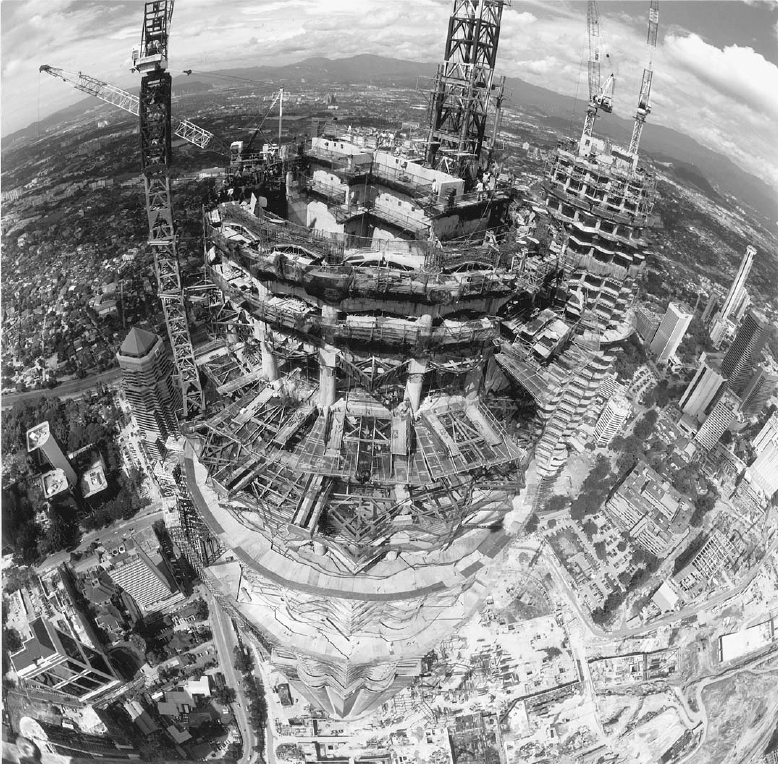
FIGURE 14.58 Concrete work nears the 1475-foot (450-m) summit of, at the time of their construction, the world’s tallest buildings, the twin Petronas Towers in Kuala Lumpur, Malaysia. Each tower is supported by a perimeter ring of 16 cylindrical concrete columns and a central core structure, also made of concrete. The columns vary in diameter from 8 feet (2400 mm) at the base of the building to 4 feet (1200 mm) at the top. For speed of construction, the floors are framed with steel and composite metal decking. Concrete with strengths as high as 11,600 psi (80 MPa) was used in the columns. The architect was Cesar Pelli & Associates, Inc. The structural engineers were Thornton-Tomasetti and Rahnill Bersekutu Sdn Bhd. The U.S. partner in the joint venture team that constructed the towers was J. A. Jones Construction Co., Charlotte, North Carolina. (Photograph by Uwe Hausen, J. A. Jones, Inc.)
As designers, we have learned to express the internal composition of concrete by exposing its aggregates at the surface, or to show the beauties of the formwork in which it was cast by leaving the marks of the ties and the textures of the formboards. But we have yet to discover how to reveal in the finished structure the lovely and complex geometries of the steel bars that constitute half of the structural partnership that makes concrete buildings stand up.
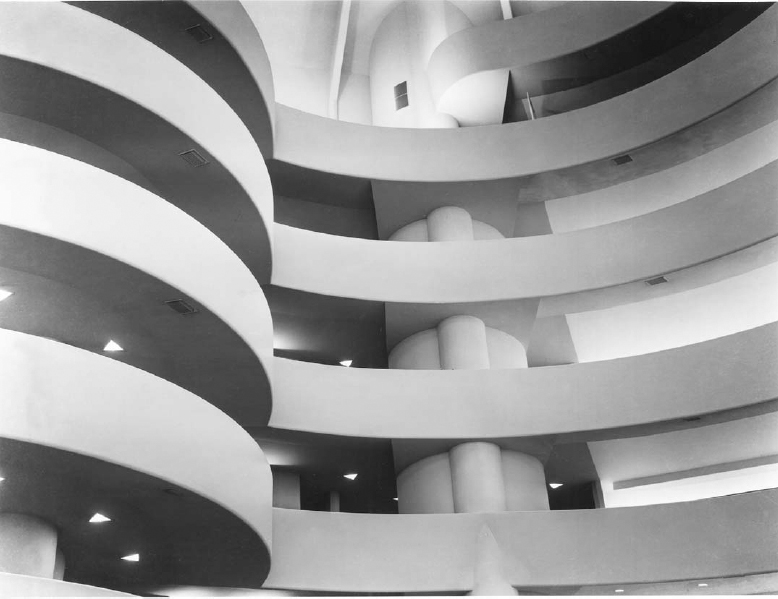
FIGURE 14.59 The plastered surfaces of Frank Lloyd Wright’s Guggenheim Museum (1943–1956) cover a helical ramp of cast-in-place concrete. (Photo by Wayne Andrews)
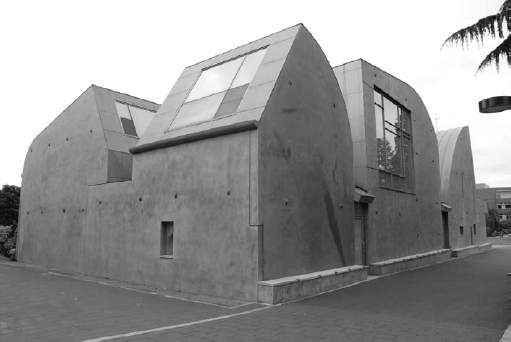
FIGURE 14.60 The Chapel of St. Ignatius, Seattle University, designed by architect Steven Holl, is a tilt-up concrete structure. (Photo by Joseph Iano)
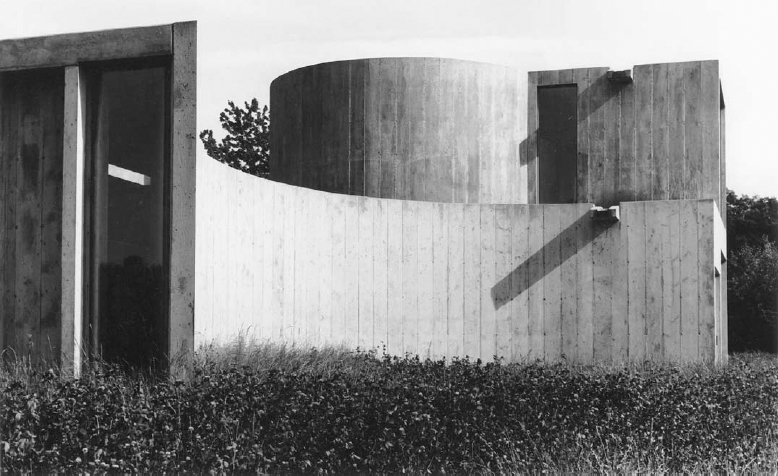
FIGURE 14.61 A sitecast concrete house in Lincoln, Massachusetts. (Architects: Mary Otis Stevens and Thomas F. McNulty)
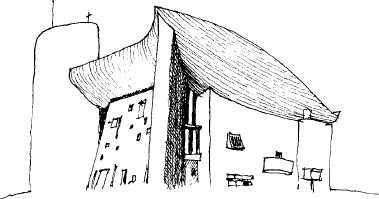
FIGURE 14.62 Le Corbusier’s most sculptural building in his favorite material, concrete: the chapel of Notre Dame de Haut at Ronchamp, France (1950–1955). (Drawing by Edward Allen)
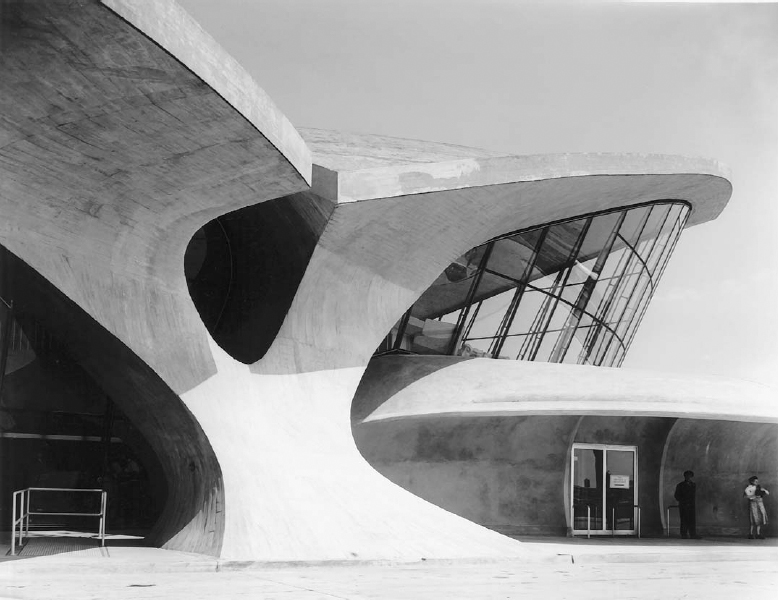
FIGURE 14.63 The TWA Terminal at John F. Kennedy Airport, New York, 1956–1962. (Architect: Eero Saarinen. Photo by Wayne Andrews)
Leave a Reply