
General
All substances, solid bodies as well as liquids and gases above the absolute zero temperature, emit energy in the form of electromagnetic waves.
The radiation that is important to solar energy applications is that emitted by the sun within the ultraviolet, visible, and infrared regions. Therefore, the radiation wavelength that is important to solar energy applications is between 0.15 and 3.0 μm. The wavelengths in the visible region lie between 0.38 and 0.72 μm.
This section initially examines issues related to thermal radiation, which includes basic concepts, radiation from real surfaces, and radiation exchanges between two surfaces. This is followed by the variation of extraterrestrial radiation, atmospheric attenuation, terrestrial irradiation, and total radiation received on sloped surfaces. Finally, it briefly describes radiation measuring equipment.
2.3.2 Thermal radiation
Thermal radiation is a form of energy emission and transmission that depends entirely on the temperature characteristics of the emissive surface. There is no intervening carrier, as in the other modes of heat transmission, that is, conduction and convection. Thermal radiation is in fact an electromagnetic wave that travels at the speed of light (C ≈ 300,000 km/s in a vacuum). This speed is related to the wavelength (λ) and frequency (ν) of the radiation as given by the equation:
 (2.31)
When a beam of thermal radiation is incident on the surface of a body, part of it is reflected away from the surface, part is absorbed by the body, and part is transmitted through the body. The various properties associated with this phenomenon are the fraction of radiation reflected, called reflectivity (ρ); the fraction of radiation absorbed, called absorptivity (α); and the fraction of radiation transmitted, called transmissivity (τ). The three quantities are related by the following equation:
 (2.32)
It should be noted that the radiation properties just defined are not only functions of the surface itself but also functions of the direction and wavelength of the incident radiation. Therefore, Eq. (2.32) is valid for the average properties over the entire wavelength spectrum. The following equation is used to express the dependence of these properties on the wavelength:
 (2.33)
The angular variation of absorptance for black paint is illustrated in Table 2.3 for incidence angles of 0–90°. The absorptance for diffuse radiation is approximately 0.90 (Löf and Tybout, 1972).
Table 2.3
Angular Variation of Absorptance for Black Paint
| Angle of Incidence (°) | Absorptance |
| 0–30 | 0.96 |
| 30–40 | 0.95 |
| 40–50 | 0.93 |
| 50–60 | 0.91 |
| 60–70 | 0.88 |
| 70–80 | 0.81 |
| 80–90 | 0.66 |
Reprinted from Löf and Tybout (1972) with permission from ASME.
Most solid bodies are opaque, so that τ = 0 and ρ + α = 1. If a body absorbs all the impinging thermal radiation such that τ = 0, ρ = 0, and α = 1, regardless of the spectral character or directional preference of the incident radiation, it is called a blackbody. This is a hypothetical idealization that does not exist in reality.
A blackbody is not only a perfect absorber but also characterized by an upper limit to the emission of thermal radiation. The energy emitted by a blackbody is a function of its temperature and is not evenly distributed over all wavelengths. The rate of energy emission per unit area at a particular wavelength is termed as the monochromatic emissive power. Max Planck was the first to derive a functional relation for the monochromatic emissive power of a blackbody in terms of temperature and wavelength. This was done by using the quantum theory, and the resulting equation, called Planck’s equation for blackbody radiation, is given by:
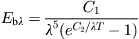 (2.34)
Ebλ = monochromatic emissive power of a blackbody (W/m2 μm).
T = absolute temperature of the surface (K).
C1 = constant =  = 3.74177 × 10⁸ W μm4/m2.
C2 = constant = hco/k = 1.43878 × 104 μm K.
h = Planck’s constant = 6.626069 × 10⁻³⁴ Js.
co = speed of light in vacuum = 2.9979 × 10⁸ m/s.
k = Boltzmann’s constant = 1.38065 × 10⁻²³ J/K.
Equation (2.34) is valid for a surface in a vacuum or a gas. For other mediums it needs to be modified by replacing C1 by C1/n2, where n is the index of refraction of the medium. By differentiating Eq. (2.34) and equating to 0, the wavelength corresponding to the maximum of the distribution can be obtained and is equal to λmaxT = 2897.8 μm K. This is known as Wien’s displacement law. Figure 2.22 shows the spectral radiation distribution for blackbody radiation at three temperature sources. The curves have been obtained by using the Planck’s equation.
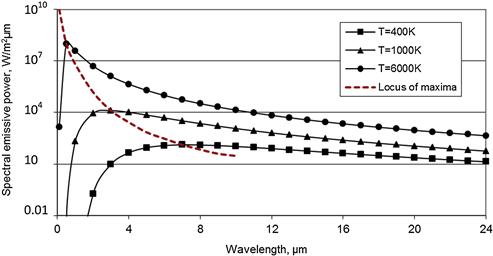
FIGURE 2.22 Spectral distribution of blackbody radiation.
The total emissive power, Eb, and the monochromatic emissive power, Ebλ, of a blackbody are related by:
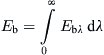 (2.35)
Substituting Eq. (2.34) into Eq. (2.35) and performing the integration results in the Stefan–Boltzmann law:
 (2.36a)
where σ = the Stefan–Boltzmann constant = 5.6697 × 10⁻⁸ W/m2K4.
In many cases, it is necessary to know the amount of radiation emitted by a blackbody in a specific wavelength band λ1 → λ2. This is done by modifying Eq. (2.35) as:
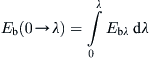 (2.36b)
Since the value of Ebλ depends on both λ and T, it is better to use both variables as:
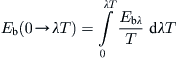 (2.36c)
Therefore, for the wavelength band of λ1 → λ2, we get:
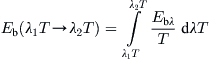 (2.36d)
which results in Eb(0 → λ1T) − Eb(0 → λ2T). Table 2.4 presents a tabulation of Eb(0 → λT) as a fraction of the total emissive power, Eb = σT4, for various values of λT, also called fraction of radiation emitted from a blackbody at temperature T in the wavelength band from λ = 0 to λ, f0-λT or for a particular temperature, fλ. The values are not rounded, because the original table, suggested by Dunkle (1954), recorded λT in micrometer-degrees Rankine (μm °R), which were converted to micrometer-Kelvins (μm K) in Table 2.4.
Table 2.4
Fraction of Blackbody Radiation as a Function of λT
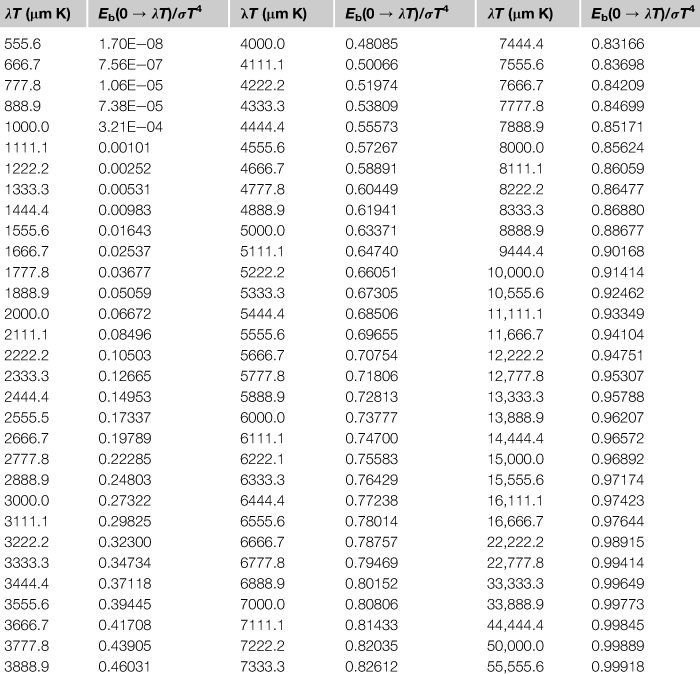
The fraction of radiation emitted from a blackbody at temperature T in the wavelength band from λ = 0 to λ can be solved easily on a computer using the polynomial form, with about 10 summation terms for good accuracy, suggested by Siegel and Howell (2002):
 (2.36e)
A blackbody is also a perfect diffuse emitter, so its intensity of radiation, Ib, is a constant in all directions, given by:
 (2.37)
Of course, real surfaces emit less energy than corresponding blackbodies. The ratio of the total emissive power, E, of a real surface to the total emissive power, Eb, of a blackbody, both at the same temperature, is called the emissivity (ε) of a real surface; that is,
 (2.38)
The emissivity of a surface not only is a function of surface temperature but also depends on wavelength and direction. In fact, the emissivity given by Eq. (2.38) is the average value over the entire wavelength range in all directions, and it is often referred to as the total or hemispherical emissivity. Similar to Eq. (2.38), to express the dependence on wavelength, the monochromatic or spectral emissivity, ελ, is defined as the ratio of the monochromatic emissive power, Eλ, of a real surface to the monochromatic emissive power, Ebλ, of a blackbody, both at the same wavelength and temperature:
 (2.39)
Kirchoff’s law of radiation states that, for any surface in thermal equilibrium, monochromatic emissivity is equal to monochromatic absorptivity:
 (2.40)
The temperature (T) is used in Eq. (2.40) to emphasize that this equation applies only when the temperatures of the source of the incident radiation and the body itself are the same. It should be noted, therefore, that the emissivity of a body on earth (at normal temperature) cannot be equal to solar radiation (emitted from the sun at T = 5760 K). Equation (2.40) can be generalized as:
 (2.41)
Equation (2.41) relates the total emissivity and absorptivity over the entire wavelength. This generalization, however, is strictly valid only if the incident and emitted radiation have, in addition to the temperature equilibrium at the surfaces, the same spectral distribution. Such conditions are rarely met in real life; to simplify the analysis of radiation problems, however, the assumption that monochromatic properties are constant over all wavelengths is often made. Such a body with these characteristics is called a gray body.
Similar to Eq. (2.37) for a real surface, the radiant energy leaving the surface includes its original emission and any reflected rays. The rate of total radiant energy leaving a surface per unit surface area is called the radiosity (J), given by:
 (2.42)
Eb = blackbody emissive power per unit surface area (W/m2).
H = irradiation incident on the surface per unit surface area (W/m2).
ε = emissivity of the surface.
ρ = reflectivity of the surface.
There are two idealized limiting cases of radiation reflection: the reflection is called specular if the reflected ray leaves at an angle with the normal to the surface equal to the angle made by the incident ray, and it is called diffuse if the incident ray is reflected uniformly in all directions. Real surfaces are neither perfectly specular nor perfectly diffuse. Rough industrial surfaces, however, are often considered as diffuse reflectors in engineering calculations.
A real surface is both a diffuse emitter and a diffuse reflector and hence, it has diffuse radiosity; that is, the intensity of radiation from this surface (I) is constant in all directions. Therefore, the following equation is used for a real surface:
 (2.43)
EXAMPLE 2.10
A glass with transmissivity of 0.92 is used in a certain application for wavelengths 0.3 and 3.0 μm. The glass is opaque to all other wavelengths. Assuming that the sun is a blackbody at 5760 K and neglecting atmospheric attenuation, determine the percent of incident solar energy transmitted through the glass. If the interior of the application is assumed to be a blackbody at 373 K, determine the percent of radiation emitted from the interior and transmitted out through the glass.
Solution
For the incoming solar radiation at 5760 K, we have:


From Table 2.4 by interpolation, we get:


Therefore, the percent of solar radiation incident on the glass in the wavelength range 0.3–3 μm is:

In addition, the percentage of radiation transmitted through the glass is 0.92 × 94.61 = 87.04%.
For the outgoing infrared radiation at 373 K, we have:


From Table 2.4, we get:
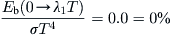

The percent of outgoing infrared radiation incident on the glass in the wavelength 0.3–3 μm is 0.1%, and the percent of this radiation transmitted out through the glass is only 0.92 × 0.1 = 0.092%. This example, in fact, demonstrates the principle of the greenhouse effect; that is, once the solar energy is absorbed by the interior objects, it is effectively trapped.
EXAMPLE 2.11
A surface has a spectral emissivity of 0.87 at wavelengths less than 1.5 μm, 0.65 at wavelengths between 1.5 and 2.5 μm, and 0.4 at wavelengths longer than 2.5 μm. If the surface is at 1000 K, determine the average emissivity over the entire wavelength and the total emissive power of the surface.
Solution
From the data given, we have:


From Table 2.4 by interpolation, we get:
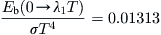
and
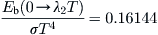
Therefore,

and

The average emissive power over the entire wavelength is given by:

and the total emissive power of the surface is:

The other properties of the materials can be obtained using the Kirchhoff’s law given by Eq. (2.40) or Eq. (2.41) as demonstrated by the following example.
EXAMPLE 2.12
The variation of the spectral absorptivity of an opaque surface is 0.2 up to the wavelength of 2 μm and 0.7 for bigger wavelengths. Estimate the average absorptivity and reflectivity of the surface from radiation emitted from a source at 2500 K. Determine also the average emissivity of the surface at 3000 K.
Solution
At a temperature of 2500 K:

Therefore, from Table 2.4: 
The average absorptivity of the surface is:

As the surface is opaque from Eq. (2.32): α + ρ = 1. So, ρ = 1 − α = 1 − 0.383 = 0.617.
Using Kirchhoff’s law, from Eq. (2.41) ε(T) = α(T). So the average emissivity of this surface at T = 3000 K is:

Therefore, from Table 2.4: 
And ε(T) = ε1fλ1 + ε2(1 − fλ1) = (0.2)(0.73777) + (0.7)(1 – 0.73777) = 0.331.
2.3.3 Transparent plates
When a beam of radiation strikes the surface of a transparent plate at angle θ1, called the incidence angle, as shown in Figure 2.23, part of the incident radiation is reflected and the remainder is refracted, or bent, to angle θ2, called the refraction angle, as it passes through the interface. Angle θ1 is also equal to the angle at which the beam is specularly reflected from the surface. Angles θ1 and θ2 are not equal when the density of the plane is different from that of the medium through which the radiation travels. Additionally, refraction causes the transmitted beam to be bent toward the perpendicular to the surface of higher density. The two angles are related by the Snell’s law:
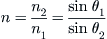 (2.44)
where n1 and n2 are the refraction indices and n is the ratio of refraction index for the two media forming the interface. The refraction index is the determining factor for the reflection losses at the interface. A typical value of the refraction index is 1.000 for air, 1.526 for glass, and 1.33 for water.
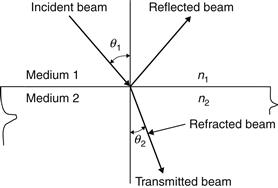
FIGURE 2.23 Incident and refraction angles for a beam passing from a medium with refraction index n1 to a medium with refraction index n2.
Expressions for perpendicular and parallel components of radiation for smooth surfaces were derived by Fresnel as:
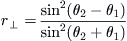 (2.45)
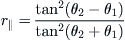 (2.46)
Equation (2.45) represents the perpendicular component of unpolarized radiation and Eq. (2.46) represents the parallel one. It should be noted that parallel and perpendicular refer to the plane defined by the incident beam and the surface normal.
Properties are evaluated by calculating the average of these two components as:
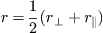 (2.47)
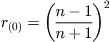
For normal incidence, both angles are 0 and Eq. (2.47) can be combined with Eq. (2.44) to yield:
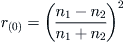 (2.48)
If one medium is air (n = 1.0), then Eq. (2.48) becomes:
 (2.49)
Similarly, the transmittance, τr (subscript r indicates that only reflection losses are considered), can be calculated from the average transmittance of the two components as follows:
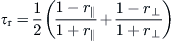 (2.50a)
For a glazing system of N covers of the same material, it can be proven that:
 (2.50b)
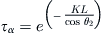
The transmittance, τα (subscript α indicates that only absorption losses are considered), can be calculated from:
 (2.51)
where K is the extinction coefficient, which can vary from 4m−1 (for high-quality glass) to 32m−1 (for low-quality glass), and L is the thickness of the glass cover.
The transmittance, reflectance, and absorptance of a single cover (by considering both reflection and absorption losses) are given by the following expressions. These expressions are for the perpendicular components of polarization, although the same relations can be used for the parallel components:
 (2.52a)
 (2.52b)
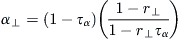 (2.52c)
Since, for practical collector covers, τα is seldom less than 0.9 and r is of the order of 0.1, the transmittance of a single cover becomes:
 (2.53)
The absorptance of a cover can be approximated by neglecting the last term of Eq. (2.52c):
 (2.54)
and the reflectance of a single cover could be found (keeping in mind that ρ = 1 − α − τ) as:
 (2.55)
For a two-cover system of not necessarily same materials, the following equation can be obtained (subscript 1 refers to the outer cover and 2 to the inner one):
 (2.56)
 (2.57)
EXAMPLE 2.13
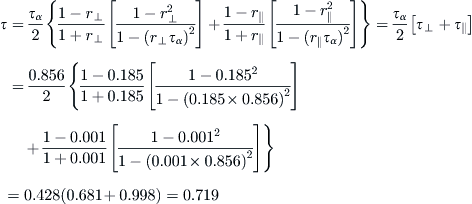
A solar energy collector uses a single glass cover with a thickness of 4 mm. In the visible solar range, the refraction index of glass, n, is 1.526 and its extinction coefficient K is 32m−1. Calculate the reflectivity, transmissivity, and absorptivity of the glass sheet for the angle of incidence of 60° and at normal incidence (0°).
Solution
Angle of incidence = 60°
From Eq. (2.44), the refraction angle θ2 is calculated as:

From Eq. (2.51), the transmittance can be obtained as:

From Eqs (2.45) and (2.46),


From Eqs (2.52a)–(2.52c), we have:


Normal incidence
At normal incidence, θ1 = 0° and θ2 = 0°. In this case, τα is equal to 0.880. There is no polarization at normal incidence; therefore, from Eq. (2.49),

From Eqs (2.52a)–(2.52c), we have:



2.3.4 Radiation exchange between surfaces
When studying the radiant energy exchanged between two surfaces separated by a non-absorbing medium, one should consider not only the temperature of the surfaces and their characteristics but also their geometric orientation with respect to each other. The effects of the geometry of radiant energy exchange can be analyzed conveniently by defining the term view factor, F12, to be the fraction of radiation leaving surface A1 that reaches surface A2. If both surfaces are black, the radiation leaving surface A1 and arriving at surface A2 is Eb1A1F12, and the radiation leaving surface A2 and arriving at surface A1 is Eb2A2F21. If both surfaces are black and absorb all incident radiation, the net radiation exchange is given by:
 (2.58)
If both surfaces are of the same temperature, Eb1 = Eb2 and Q12 = 0. Therefore,
 (2.59)
It should be noted that Eq. (2.59) is strictly geometric in nature and valid for all diffuse emitters, irrespective of their temperatures. Therefore, the net radiation exchange between two black surfaces is given by:
 (2.60)
From Eq. (2.36a), Eb = σT4, Eq. (2.60) can be written as:
 (2.61)
where T1 and T2 are the temperatures of surfaces A1 and A2, respectively. As the term (Eb1 − Eb2) in Eq. (2.60) is the energy potential difference that causes the transfer of heat, in a network of electric circuit analogy, the term 1/A1F12 = 1/A2F21 represents the resistance due to the geometric configuration of the two surfaces.
When surfaces other than black are involved in radiation exchange, the situation is much more complex, because multiple reflections from each surface must be taken into consideration. For the simple case of opaque gray surfaces, for which ε = α, the reflectivity ρ = 1 − α = 1 − ε. From Eq. (2.42), the radiosity of each surface is given by:
 (2.62)
The net radiant energy leaving the surface is the difference between the radiosity, J, leaving the surface and the irradiation, H, incident on the surface; that is,
 (2.63)
Combining Eqs (2.62) and (2.63) and eliminating irradiation H results in:
 (2.64)
Therefore, the net radiant energy leaving a gray surface can be regarded as the current in an equivalent electrical network when a potential difference (Eb − J) is overcome across a resistance R = (1 − ε)/Aε. This resistance, called surface resistance, is due to the imperfection of the surface as an emitter and absorber of radiation as compared with a black surface.
By considering the radiant energy exchange between two gray surfaces, A1 and A2, the radiation leaving surface A1 and arriving at surface A2 is J1A1F12, where J is the radiosity, given by Eq. (2.42). Similarly, the radiation leaving surface A2 and arriving surface A1 is J2A2F21. The net radiation exchange between the two surfaces is given by:
 (2.65)
Therefore, due to the geometric orientation that applies between the two potentials, J1 and J2, when two gray surfaces exchange radiant energy, there is a resistance, called space resistance, R = 1/A1F12 = 1/A2F21.
An equivalent electric network for two the gray surfaces is illustrated in Figure 2.24. By combining the surface resistance, (1 − ε)/Aε for each surface and the space (or geometric) resistance, 1/A1F12 = 1/A2F21, between the surfaces, as shown in Figure 2.24, the net rate of radiation exchange between the two surfaces is equal to the overall potential difference divided by the sum of resistances, given by:
 (2.66)
In solar energy applications, the following geometric orientations between two surfaces are of particular interest.
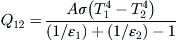
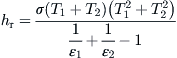
A. For two infinite parallel surfaces, A1 = A2 = A and F12 = 1, Eq. (2.66) becomes:
 (2.67)
B. For two concentric cylinders, F12 = 1 and Eq. (2.66) becomes:
 (2.68)
C. For a small convex surface, A1, completely enclosed by a very large concave surface, A2, A1 << A2 and F12 = 1, then Eq. (2.66) becomes:
 (2.69)
The last equation also applies for a flat-plate collector cover radiating to the surroundings, whereas case B applies in the analysis of a parabolic trough collector receiver where the receiver pipe is enclosed in a glass cylinder.

FIGURE 2.24 Equivalent electrical network for radiation exchange between two gray surfaces.
As can be seen from Eqs (2.67)–(2.69), the rate of radiative heat transfer between surfaces depends on the difference of the fourth power of the surface temperatures. In many engineering calculations, however, the heat transfer equations are linearized in terms of the differences of temperatures to the first power. For this purpose, the following mathematical identity is used:
 (2.70)
Therefore, Eq. (2.66) can be written as:
 (2.71)
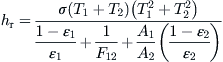
with the radiation heat transfer coefficient, hr, defined as:
 (2.72)
For the special cases mentioned previously, the expressions for hr are as follows:
 (2.73)
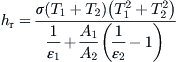 (2.74)
 (2.75)
It should be noted that the use of these linearized radiation equations in terms of hr is very convenient when the equivalent network method is used to analyze problems involving conduction and/or convection in addition to radiation. The radiation heat transfer coefficient, hr, is treated similarly to the convection heat transfer coefficient, hc, in an electric equivalent circuit. In such a case, a combined heat transfer coefficient can be used, given by:
 (2.76)
In this equation, it is assumed that the linear temperature difference between the ambient fluid and the walls of the enclosure and the surface and the enclosure substances are at the same temperature.
EXAMPLE 2.14
The glass of a 1 × 2 m flat-plate solar collector is at a temperature of 80 °C and has an emissivity of 0.90. The environment is at a temperature of 15 °C. Calculate the convection and radiation heat losses if the convection heat transfer coefficient is 5.1 W/m2K.
Solution
In the following analysis, the glass cover is denoted by subscript 1 and the environment by 2. The radiation heat transfer coefficient is given by Eq. (2.75):
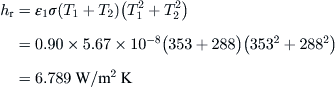
Therefore, from Eq. (2.76),

Finally,

EXAMPLE 2.15
Two very large parallel plates are maintained at uniform temperatures of 900 K and 400 K. The emissivities of the two surfaces are 0.3 and 0.8, respectively. What is the radiation heat transfer between the two surfaces?
Solution
As the areas of the two surfaces are not given the estimation is given per unit surface area of the plates. As the two plates are very large and parallel, Eq. (2.67) apply, so:

EXAMPLE 2.16
Two very long concentric cylinders of diameters 30 and 50 cm are maintained at uniform temperatures of 850 K and 450 K. The emissivities of the two surfaces are 0.9 and 0.6, respectively. The space between the two cylinders is evacuated. What is the radiation heat transfer between the two cylinders per unit length of the cylinders?
Solution
For concentric cylinders Eq. (2.68) applies. Therefore,

2.3.5 Extraterrestrial solar radiation
The amount of solar energy per unit time, at the mean distance of the earth from the sun, received on a unit area of a surface normal to the sun (perpendicular to the direction of propagation of the radiation) outside the atmosphere is called the solar constant, Gsc. This quantity is difficult to measure from the surface of the earth because of the effect of the atmosphere. A method for the determination of the solar constant was first given in 1881 by Langley (Garg, 1982), who had given his name to the units of measurement as Langleys per minute (calories per square centimeter per minute). This was changed by the SI system to Watts per square meter (W/m2).
When the sun is closest to the earth, on January 3, the solar heat on the outer edge of the earth’s atmosphere is about 1400 W/m2; and when the sun is farthest away, on July 4, it is about 1330 W/m2.
Throughout the year, the extraterrestrial radiation measured on the plane normal to the radiation on the Nth day of the year, Gon, varies between these limits, as indicated in Figure 2.25, in the range of 3.3% and can be calculated by (Duffie and Beckman, 1991; Hsieh, 1986):
 (2.77)
Gon = extraterrestrial radiation measured on the plane normal to the radiation on the Nth day of the year (W/m2).
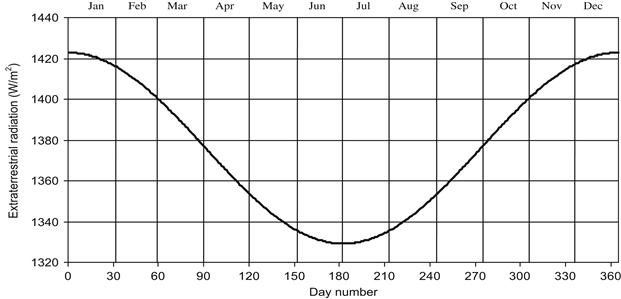
FIGURE 2.25 Variation of extraterrestrial solar radiation with the time of year.
The latest value of Gsc is 1366.1 W/m2. This was adopted in 2000 by the American Society for Testing and Materials (ASTM), which developed an AM0 reference spectrum (ASTM E-490). The ASTM E-490 Air Mass Zero solar spectral irradiance is based on data from satellites, space shuttle missions, high-altitude aircraft, rocket soundings, ground-based solar telescopes, and modeled spectral irradiance. The spectral distribution of extraterrestrial solar radiation at the mean sun–earth distance is shown in Figure 2.26. The spectrum curve of Figure 2.26 is based on a set of data included in ASTM E-490 (Solar Spectra, 2007).
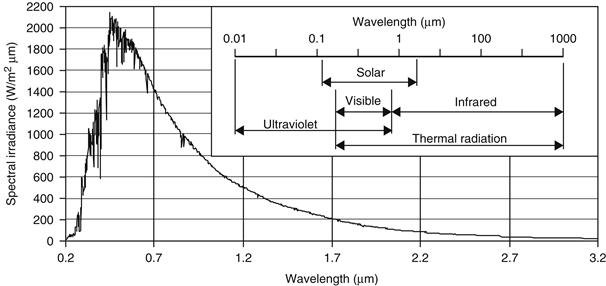
FIGURE 2.26 Standard curve giving a solar constant of 1366.1 W/m2 and its position in the electromagnetic radiation spectrum.
When a surface is placed parallel to the ground, the rate of solar radiation, GoH, incident on this extraterrestrial horizontal surface at a given time of the year is given by:
 (2.78)
The total radiation, Ho, incident on an extraterrestrial horizontal surface during a day can be obtained by the integration of Eq. (2.78) over a period from sunrise to sunset. The resulting equation is:
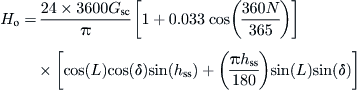 (2.79)
where hss is the sunset hour in degrees, obtained from Eq. (2.15). The units of Eq. (2.79) are joules per square meter (J/m2).
To calculate the extraterrestrial radiation on a horizontal surface for an hour period, Eq. (2.78) is integrated between hour angles, h1 and h2 (h2 is larger). Therefore,
 (2.80)
It should be noted that the limits h1 and h2 may define a time period other than 1 h.
EXAMPLE 2.17
Determine the extraterrestrial normal radiation and the extraterrestrial radiation on a horizontal surface on March 10 at 2:00 pm solar time for 35°N latitude. Determine also the total solar radiation on the extraterrestrial horizontal surface for the day.
Solution
The declination on March 10 (N = 69) is calculated from Eq. (2.5):

The hour angle at 2:00 pm solar time is calculated from Eq. (2.8):

The hour angle at sunset is calculated from Eq. (2.15):

The extraterrestrial normal radiation is calculated from Eq. (2.77):

The extraterrestrial radiation on a horizontal surface is calculated from Eq. (2.78):

The total radiation on the extraterrestrial horizontal surface is calculated from Eq. (2.79):

A list of definitions that includes those related to solar radiation is found in Appendix 2. The reader should familiarize himself or herself with the various terms and specifically with irradiance, which is the rate of radiant energy falling on a surface per unit area of the surface (units, watts per square meter [W/m2] symbol, G), whereas irradiation is incident energy per unit area on a surface (units, joules per square meter [J/m2]), obtained by integrating irradiance over a specified time interval. Specifically, for solar irradiance this is called insolation. The symbols used in this book are H for insolation for a day and I for insolation for an hour. The appropriate subscripts used for G, H, and I are beam (B), diffuse (D), and ground-reflected (G) radiation.
2.3.6 Atmospheric attenuation
The solar heat reaching the earth’s surface is reduced below Gon because a large part of it is scattered, reflected back out into space, and absorbed by the atmosphere. As a result of the atmospheric interaction with the solar radiation, a portion of the originally collimated rays becomes scattered or non-directional. Some of this scattered radiation reaches the earth’s surface from the entire sky vault. This is called the diffuse radiation. The solar heat that comes directly through the atmosphere is termed direct or beam radiation. The insolation received by a surface on earth is the sum of diffuse radiation and the normal component of beam radiation. The solar heat at any point on earth depends on:
2. The distance traveled through the atmosphere to reach that point
3. The amount of haze in the air (dust particles, water vapor, etc.)
4. The extent of the cloud cover
The earth is surrounded by atmosphere that contains various gaseous constituents, suspended dust, and other minute solid and liquid particulate matter and clouds of various types. As the solar radiation travels through the earth’s atmosphere, waves of very short length, such as X-rays and gamma rays, are absorbed in the ionosphere at extremely high altitude. The waves of relatively longer length, mostly in the ultraviolet range, are then absorbed by the layer of ozone (O3), located about 15–40 km above the earth’s surface. In the lower atmosphere, bands of solar radiation in the infrared range are absorbed by water vapor and carbon dioxide. In the long-wavelength region, since the extraterrestrial radiation is low and the H2O and CO2 absorption is strong, little solar energy reaches the ground.
Therefore, the solar radiation is depleted during its passage though the atmosphere before reaching the earth’s surface. The reduction of intensity with increasing zenith angle of the sun is generally assumed to be directly proportional to the increase in air mass, an assumption that considers the atmosphere to be unstratified with regard to absorbing or scattering impurities.
The degree of attenuation of solar radiation traveling through the earth’s atmosphere depends on the length of the path and the characteristics of the medium traversed. In solar radiation calculations, one standard air mass is defined as the length of the path traversed in reaching the sea level when the sun is at its zenith (the vertical at the point of observation). The air mass is related to the zenith angle, Φ (Figure 2.27), without considering the earth’s curvature, by the equation:
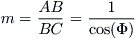 (2.81)
Therefore, at sea level when the sun is directly overhead, that is, when Φ = 0°, m = 1 (air mass one); and when Φ = 60°, we get m = 2 (air mass two). Similarly, the solar radiation outside the earth’s atmosphere is at air mass zero. The graph of direct normal irradiance (solar spectrum) at ground level for air mass 1.5 is shown in Appendix 4.
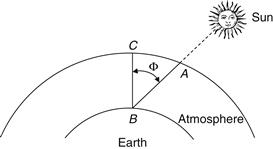
FIGURE 2.27 Air mass definition.
2.3.7 Terrestrial irradiation
A solar system frequently needs to be judged on its long-term performance. Therefore, knowledge of long-term monthly average daily insolation data for the locality under consideration is required. Daily mean total solar radiation (beam plus diffuse) incident on a horizontal surface for each month of the year is available from various sources, such as radiation maps or a country’s meteorological service (see Section 2.4). In these sources, data, such as 24 h average temperature, monthly average daily radiation on a horizontal surface  (MJ/m2 day), and monthly average clearness index,
  , are given together with other parameters, which are not of interest here.2 The monthly average clearness index, , is defined as:
 (2.82a)
 = monthly average daily total radiation on a terrestrial horizontal surface (MJ/m2 day).
 = monthly average daily total radiation on an extraterrestrial horizontal surface (MJ/m2 day).
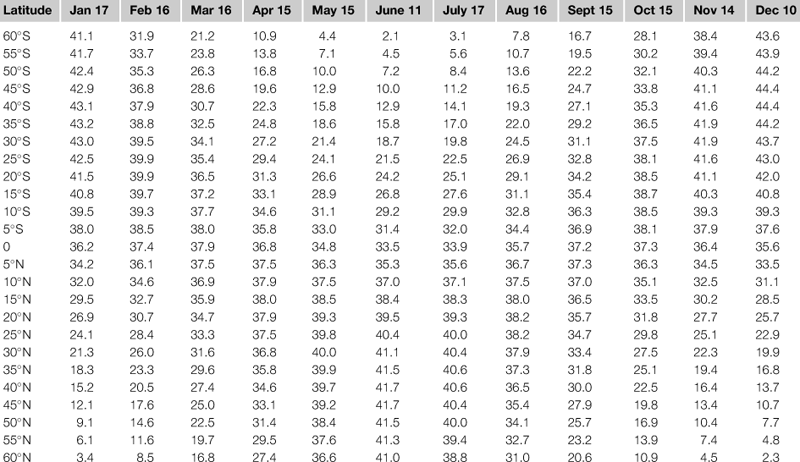
The bar over the symbols signifies a long-term average. The value of can be calculated from Eq. (2.79) by choosing a particular day of the year in the given month for which the daily total extraterrestrial insolation is estimated to be the same as the monthly mean value. Table 2.5 gives the values of  for each month as a function of latitude, together with the recommended dates of each month that would give the mean daily values of . The day number and the declination of the day for the recommended dates are shown in Table 2.1. For the same days, the monthly average daily extraterrestrial insolation on a horizontal surface for various months in kilowatt hours per square meter (kWh/m2 day) for latitudes −60° to +60° is also shown graphically in Figure A3.5 in Appendix 3, from which we can easily interpolate.
Table 2.5
Monthly Average Daily Extraterrestrial Insolation on Horizontal Surface (MJ/m2)
Further to Eq. (2.82a) the daily clearness index KT, can be defined as the ratio of the radiation for a particular day to the extraterrestrial radiation for that day given by:
 (2.82b)
Similarly, an hourly clearness index kT, can be defined given by:
 (2.82c)
In all these equations the values of  , H, and I can be obtained from measurements of total solar radiation on horizontal using a pyranometer (see section 2.3.9).
To predict the performance of a solar system, hourly values of radiation are required. Because in most cases these types of data are not available, long-term average daily radiation data can be utilized to estimate long-term average radiation distribution. For this purpose, empirical correlations are usually used. Two such frequently used correlations are the Liu and Jordan (1977) correlation for the diffuse radiation and the Collares-Pereira and Rabl (1979) correlation for the total radiation.
According to the Liu and Jordan (1977) correlation,
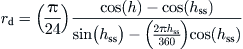 (2.83)
rd = ratio of hourly diffuse radiation to daily diffuse radiation (=ID/HD).
hss = sunset hour angle (degrees).
h = hour angle in degrees at the midpoint of each hour.
According to the Collares-Pereira and Rabl (1979) correlation,
 (2.84a)
r = ratio of hourly total radiation to daily total radiation (=I/H).
 (2.84b)
 (2.84c)
EXAMPLE 2.18
Given the following empirical equation,

where  is the monthly average daily diffuse radiation on horizontal surface—see Eq. (2.105a)—estimate the average total radiation and the average diffuse radiation between 11:00 am and 12:00 pm solar time in the month of July on a horizontal surface located at 35°N latitude. The monthly average daily total radiation on a horizontal surface, , in July at the surface location is 23.14 MJ/m2 day.
Solution
From Table 2.5 at 35° N latitude for July,  . Therefore,
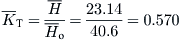
Therefore,

and

From Table 2.5, the recommended average day for the month is July 17 (N = 198). The solar declination is calculated from Eq. (2.5) as:

The sunset hour angle is calculated from Eq. (2.15) as:

The middle point of the hour from 11:00 am to 12:00 pm is 0.5 h from solar noon, or hour angle is −7.5°. Therefore, from Eqs. (2.84b), (2.84c) and (2.84a), we have:



From Eq. (2.83), we have:

Finally,


2.3.8 Total radiation on tilted surfaces
Usually, collectors are not installed horizontally but at an angle to increase the amount of radiation intercepted and reduce reflection and cosine losses. Therefore, system designers need data about solar radiation on such titled surfaces; measured or estimated radiation data, however, are mostly available either for normal incidence or for horizontal surfaces. Therefore, there is a need to convert these data to radiation on tilted surfaces.
The amount of insolation on a terrestrial surface at a given location for a given time depends on the orientation and slope of the surface.
A flat surface absorbs beam (GBt), diffuse (GDt), and ground-reflected (GGt) solar radiation; that is,
 (2.85)
As shown in Figure 2.28, the beam radiation on a tilted surface is:
 (2.86)
and on a horizontal surface,
 (2.87)
GBt = beam radiation on a tilted surface (W/m2).
GB = beam radiation on a horizontal surface (W/m2).
It follows that,
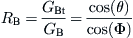 (2.88)
where RB is called the beam radiation tilt factor. The term cos(θ) can be calculated from Eq. (2.86) and cos(Φ) from Eq. (2.87). So the beam radiation component for any surface is:
 (2.89)
In Eq. (2.88), the zenith angle can be calculated from Eq. (2.12) and the incident angle θ can be calculated from Eq. (2.18) or, for the specific case of a south-facing fixed surface, from Eq. (2.20). Therefore, for a fixed surface facing south with tilt angle β, Eq. (2.88) becomes:
 (2.90a)
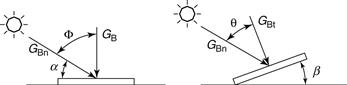
FIGURE 2.28 Beam radiation on horizontal and tilted surfaces.
Equation (2.88) also can be applied to surfaces other than fixed, in which case the appropriate equation for cos(θ), as given in Section 2.2.1, can be used. For example, for a surface rotated continuously about a horizontal east–west axis, from Eq. (2.26a), the ratio of beam radiation on the surface to that on a horizontal surface at any time is given by:
 (2.90b)
EXAMPLE 2.19
Estimate the beam radiation tilt factor for a surface located at 35°N latitude and tilted 45° at 2:00 pm solar time on March 10. If the beam radiation at normal incidence is 900 W/m2, estimate the beam radiation on the tilted surface.
Solution
From Example 2.17, δ = −4.8° and h = 30°. The beam radiation tilt factor is calculated from Eq. (2.90a) as:

Therefore, the beam radiation on the tilted surface is calculated from Eq. (2.89) as:

Isotropic sky model
Many models give the solar radiation on a tilted surface. The first one is the isotropic sky model developed originally by Hottel and Woertz (1942) and refined by Liu and Jordan (1960). According to this model, radiation is calculated as follows.
Diffuse radiation on a horizontal surface,
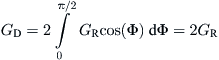 (2.91)
where
GR = diffuse sky radiance (W/m2 rad).
Diffuse radiation on a tilted surface,
 (2.92)
where β is the surface tilt angle as shown in Figure 2.28.
From Eq. (2.91), the second term of Eq. (2.92) becomes GR = GD/2. Therefore, Eq. (2.92) becomes:
 (2.93)
Similarly, the ground-reflected radiation is obtained by ρG(GB + GD), where ρG is ground albedo. Therefore, GGt is obtained as follows.
Ground-reflected radiation,
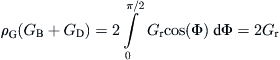 (2.94)
where Gr is the isotropic ground-reflected radiance (W/m2 rad).
Ground-reflected radiation on tilted surfaces,
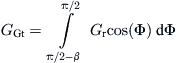 (2.95)
Combining Eqns (2.94) and (2.95) as before,
 (2.96)
Therefore, inserting Eqns (2.93) and (2.96) into Eq. (2.85), we get:
 (2.97)
The total radiation on a horizontal surface, G, is the sum of horizontal beam and diffuse radiation; that is,
 (2.98)
Therefore, Eq. (2.97) can also be written as:
 (2.99)
where R is called the total radiation tilt factor.
Other radiation models
The isotropic sky model is the simplest model that assumes that all diffuse radiation is uniformly distributed over the sky dome and that reflection on the ground is diffuse. A number of other models have been developed by a number of researchers. Three of these models are summarized in this section: the Klucher model, the Hay–Davies model, and the Reindl model. The latter proved to give very good results in the Mediterranean region.
Klucher model
Klucher (1979) found that the isotopic model gives good results for overcast skies but underestimates irradiance under clear and partly overcast conditions, when there is increased intensity near the horizon and in the circumsolar region of the sky. The model developed by Klucher gives the total irradiation on a tilted plane:
 (2.100)
where F′ is a clearness index given by:
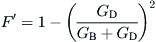 (2.101)
The first of the modifying factors in the sky diffuse component takes into account horizon brightening; the second takes into account the effect of circumsolar radiation. Under overcast skies, the clearness index F′ becomes 0 and the model reduces to the isotropic model.
Hay–Davies model
In the Hay–Davies model, diffuse radiation from the sky is composed of an isotropic and circumsolar component (Hay and Davies, 1980) and horizon brightening is not taken into account. The anisotropy index, A, defined in Eq. (2.102), represents the transmittance through atmosphere for beam radiation:
 (2.102)
The anisotropy index is used to quantify the portion of the diffuse radiation treated as circumsolar, with the remaining portion of diffuse radiation assumed isotropic. The circumsolar component is assumed to be from the sun’s position. The total irradiance is then computed by:
 (2.103)
Reflection from the ground is dealt with as in the isotropic model.
Reindl model
In addition to isotropic diffuse and circumsolar radiation, the Reindl model also accounts for horizon brightening (Reindl et al., 1990a,b) and employs the same definition of the anisotropy index, A, as described in Eq. (2.102). The total irradiance on a tilted surface can then be calculated using:
 (2.104)
Reflection on the ground is again dealt with as in the isotropic model. Due to the additional term in Eq. (2.104), representing horizon brightening, the Reindl model provides slightly higher diffuse irradiances than the Hay–Davies model.
Insolation on tilted surfaces
The amount of insolation on a terrestrial surface at a given location and time depends on the orientation and slope of the surface. In the case of flat-plate collectors installed at a certain fixed angle, system designers need to have data about the solar radiation on the surface of the collector. Most measured data, however, are for either normal incidence or horizontal. Therefore, it is often necessary to convert these data to radiation on tilted surfaces. Based on these data, a reasonable estimation of radiation on tilted surfaces can be made. An empirical method for the estimation of the monthly average daily total radiation incident on a tilted surface was developed by Liu and Jordan (1977). In their correlation, the diffuse to total radiation ratio for a horizontal surface is expressed in terms of the monthly clearness index, , with the following equation:
(2.105a)
Collares-Pereira and Rabl (1979) expressed the same parameter by also considering the sunset hour angle:
 (2.105b)
where
hss = sunset hour angle (degrees).
Erbs et al. (1982) also expressed the monthly average daily diffuse correlations by taking into account the season, as follows
For hss ≤ 81.4° and 0.3 ≤ ≤ 0.8,
 (2.105c)
For hss > 81.4° and 0.3 ≤ ≤ 0.8,
 (2.105d)
With the monthly average daily total radiation and the monthly average daily diffuse radiation known, the monthly average beam radiation on a horizontal surface can be calculated by:
 (2.106)
Like Eq. (2.99), the following equation may be written for the monthly total radiation tilt factor  :
:
 (2.107)
 = monthly average daily total radiation on a tilted surface (MJ/m2 day).
 = monthly mean beam radiation tilt factor.
The term is the ratio of the monthly average beam radiation on a tilted surface to that on a horizontal surface. Actually, this is a complicated function of the atmospheric transmittance, but according to Liu and Jordan (1977), it can be estimated by the ratio of extraterrestrial radiation on the tilted surface to that on a horizontal surface for the month. For surfaces facing directly toward the equator, it is given by:
 (2.108)
where  is sunset hour angle on the tilted surface (degrees), given by:
 (2.109)
It should be noted that, for the Southern Hemisphere, the term (L − β) of Eqs (2.108) and (2.109) changes to (L + β).
For the same days as those shown in Table 2.5, the monthly average terrestrial insolation on a tilted surface for various months for latitudes −60° to +60° and for a slope equal to latitude and latitude plus 10°, which is the usual collector inclination for solar water-heating collectors, is shown in Appendix 3, Figures A3.6 and A3.7, respectively.
EXAMPLE 2.20
For July, estimate the monthly average daily total solar radiation on a surface facing south, tilted 45°, and located at 35°N latitude. The monthly average daily insolation on a horizontal surface is 23.14 MJ/m2 day. Ground reflectance is equal to 0.2.
Solution
\

Here, cos−1 [−tan(35–45) tan(21.2)] = 86°. Therefore,

The factor  is calculated from Eq. (2.108) as:

From Eq. (2.107),

Finally, the average daily total radiation on the tilted surface for July is:

2.3.9 Solar radiation measuring equipment
A number of radiation parameters are needed for the design, sizing, performance evaluation, and research of solar energy applications. These include total solar radiation, beam radiation, diffuse radiation, and sunshine duration. Various types of equipment measure the instantaneous and long-term integrated values of beam, diffuse, and total radiation incident on a surface. This equipment usually employs the thermoelectric and photovoltaic effects to measure the radiation. Detailed description of this equipment is not within the scope of this book; this section is added, however, so the reader might know the types of available equipment. More details of this equipment can easily be found from manufacturers’ catalogues on the Internet.
There are basically two types of solar radiation measuring instruments: the pyranometer (see Figure 2.29) and the pyrheliometer (see Figure 2.30). The former is used to measure total (beam and diffuse) radiation within its hemispherical field of view, whereas the latter is an instrument used for measuring the direct solar irradiance. The pyranometer can also measure the diffuse solar radiation if the sensing element is shaded from the beam radiation (see Figure 2.31). For this purpose a shadow band is mounted with its axis tilted at an angle equal to the latitude of the location plus the declination for the day of measurement. Since the shadow band hides a considerable portion of the sky, the measurements require corrections for that part of diffuse radiation obstructed by the band. Pyrheliometers are used to measure direct solar irradiance, required primarily to predict the performance of concentrating solar collectors. Diffuse radiation is blocked by mounting the sensor element at the bottom of a tube pointing directly at the sun. Therefore, a two-axis sun-tracking system is required to measure the beam radiation.
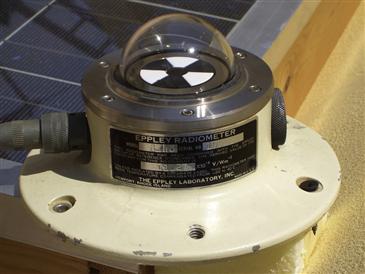
FIGURE 2.29 Photograph of a pyranometer.
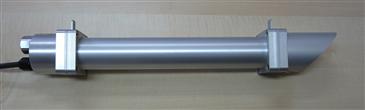
FIGURE 2.30 Photograph of a solar pyrheliometer.
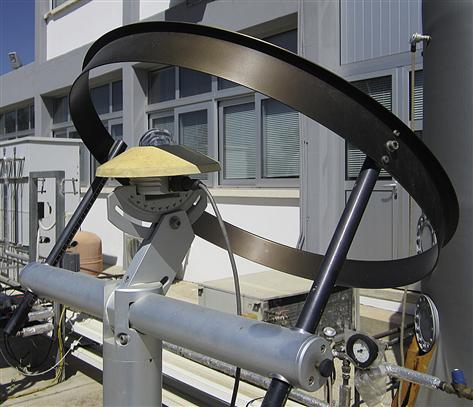
FIGURE 2.31 Photograph of a pyranometer with shading ring for measuring diffuse solar radiation.
Finally, sunshine duration is required to estimate the total solar irradiation. The duration of sunshine is defined as the time during which the sunshine is intense enough to cast a shadow. Also, the duration of sunshine has been defined by the World Meteorological Organization as the time during which the beam solar irradiance exceeds the level of 120 W/m2. Two types of sunshine recorders are used: the focusing type and a type based on the photoelectric effect. The focusing type consists of a solid glass sphere, approximately 10 cm in diameter, mounted concentrically in a section of a spherical bowl whose diameter is such that the sun’s rays can be focused on a special card with time marking, held in place by grooves in the bowl. The record card is burned whenever bright sunshine exists. Thus, the portion of the burned trace provides the duration of sunshine for the day. The sunshine recorder based on the photoelectric effect consists of two photovoltaic cells, with one cell exposed to the beam solar radiation and the other cell shaded from it by a shading ring. The radiation difference between the two cells is a measure of the duration of sunshine.
The International Standards Organization (ISO) published a series of international standards specifying methods and instruments for the measurement of solar radiation. These are
• ISO 9059 (1990). Calibration of field pyrheliometers by comparison to a reference pyrheliometer. This International Standard describes the calibration of field pyrheliometers using reference pyrheliometers and sets out the calibration procedures and the calibration hierarchy for the transfer of the calibration. This International Standard is mainly intended for use by calibration services and test laboratories to enable a uniform quality of accurate calibration factors to be achieved.
• ISO 9060 (1990). Specification and classification of instruments for measuring hemispherical solar and direct solar radiation. This standard establishes a classification and specification of instruments for the measurement of hemispherical solar and direct solar radiation integrated over the spectral range from 0.3 to 3 μm. According to the standard, pyranometers are radiometers designed for measuring the irradiance on a plane receiver surface, which results from the radiant fluxes incident from the hemisphere above, within the required wavelength range. Pyrheliometers are radiometers designed for measuring the irradiance that results from the solar radiant flux from a well-defined solid angle, the axis of which is perpendicular to the plane receiver surface.
• ISO 9846 (1993). Calibration of a pyranometer using a pyrheliometer. This standard also includes specifications for the shade ring used to block the beam radiation, the measurement of diffuse radiation, and support mechanisms of the ring.
• IS0 9847 (1992). Calibration of field pyranometers by comparison to a reference pyranometer. According to the standard, accurate and precise measurements of the irradiance of the global (hemispheric) solar radiation are required in:
1. The determination of the energy available to flat-plate solar collectors.
2. The assessment of irradiance and radiant exposure in the testing of solar- and non-solar-related material technologies.
3. The assessment of the direct versus diffuse solar components for energy budget analysis, for geographic mapping of solar energy, and as an aid in the determination of the concentration of aerosol and particulate pollution and the effects of water vapor.
Although meteorological and resource assessment measurements generally require pyranometers oriented with their axes vertical, applications associated with flat-plate collectors and the study of the solar exposure of related materials require calibrations of instruments tilted at a predetermined non-vertical orientation. Calibrations at fixed tilt angles have applications that seek state-of-the-art accuracy, requiring corrections for cosine, tilt, and azimuth.
Finally, the International Standards Organization published a technical report, “lSO/TR 9901: 1990—Field pyranometers—Recommended practice for use,” the scope of which is self-explanatory.
Leave a Reply