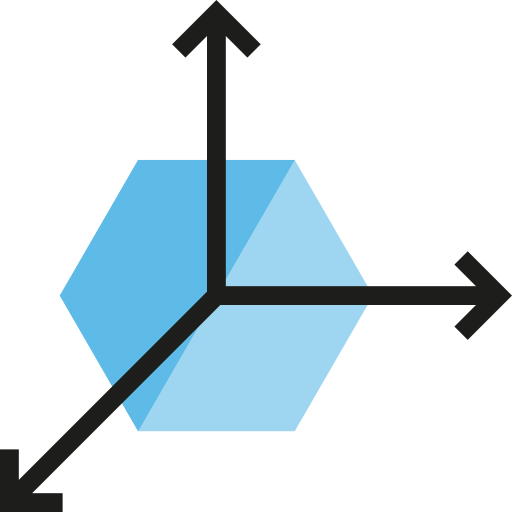
A vector is a physical quantity that has both magnitude and direction. Vectors are represented by arrows, where the length of the arrow represents the magnitude, and the direction of the arrow shows the direction of the vector.
Examples of Vector Quantities:
- Displacement: The straight-line distance between two points in a specific direction (e.g., 10 meters to the east).
- Velocity: The rate of change of displacement in a particular direction (e.g., 5 m/s to the north). It describes both speed and direction.
- Force: A push or pull on an object, with both magnitude and direction (e.g., 10 newtons to the right).
- Acceleration: The rate of change of velocity in a particular direction (e.g., 2 m/s² upward).
- Momentum: The product of an object’s mass and its velocity, with both magnitude and direction.
Properties of Vectors:
- Can be added or subtracted using vector addition rules (head-to-tail method, component method).
- When multiplying or dividing vectors, special rules apply depending on the context (e.g., dot product, cross product).
- Direction matters and changes the outcome of calculations.
Leave a Reply