Author: workhouse123
-
Neural Networks and Deep Learning
As a teen in the 1950s, Geoffrey Hinton wanted to be a professor and to study AI. He came from a family of noted academics (his great-great-grandfather was George Boole). His mom would often say, “Be an academic or be a failure.”10 Even during the first AI winter, Hinton was passionate about AI and was convinced that Rosenblatt’s neural…
-
The Rise and Fall of Expert Systems
Even during the AI winter , there continued to be major innovations. One was backpropagation, which is essential for assigning weights for neural networks. Then there was the development of the recurrent neural network (RNN). This allows for connections to move through the input and output layers. But in the 1980s and 1990s, there also was the…
-
AI Winter
During the early 1970s, the enthusiasm for AI started to wane. It would become known as the “AI winter,” which would last through 1980 or so (the term came from “nuclear winter,” an extinction event where the sun is blocked and temperatures plunge across the world). Even though there were many strides made with AI, they still…
-
Golden Age of AI
From 1956 to 1974, the AI field was one of the hottest spots in the tech world. A major catalyst was the rapid development in computer technologies. They went from being massive systems—based on vacuum tubes—to smaller systems run on integrated circuits that were much quicker and had more storage capacity. The federal government was…
-
The Origin Story
John McCarthy’s interest in computers was spurred in 1948, when he attended a seminar, called “Cerebral Mechanisms in Behavior,” which covered the topic of how machines would eventually be able to think. Some of the participants included the leading pioneers in the field such as John von Neumann, Alan Turing, and Claude Shannon. McCarthy continued to immerse…
-

Cybernetics
While Norbert Wiener created various theories, his most famous one was about cybernetics. It was focused on understanding control and communications with animals, people, and machines—showing the importance of feedback loops. In 1948, Wiener published Cybernetics: Or Control and Communication in the Animal and the Machine. Even though it was a scholarly work—filled with complex equations—the…
-
The Brain Is a…Machine?
In 1943, Warren McCulloch and Walter Pitts met at the University of Chicago, and they became fast friends even though their backgrounds were starkly different as were their ages (McCulloch was 42 and Pitts was 18). McCulloch grew up in a wealthy Eastern Establishment family, having gone to prestigious schools. Pitts, on the other hand,…
-
Alan Turing and the Turing Test
Alan Turing is a towering figure in computer science and AI. He is often called the “father of AI.” In 1936, he wrote a paper called “On Computable Numbers.” In it, he set forth the core concepts of a computer, which became known as the Turing machine. Keep in mind that real computers would not be developed…
-
History Lessons
Monrovia, CA, USA Artificial intelligence would be the ultimate version of Google . The ultimate search engine that would understand everything on the web. It would understand exactly what you wanted, and it would give you the right thing. We’re nowhere near doing that now. However, we can get incrementally closer to that, and that is basically…
-
What is stator and rotor?
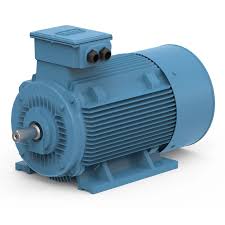
The term, “stator” is derived from the word stationary. The stator then is the stationary part of the AC motor. The rotor is the rotating electrical component. It also consists of a group of electro-magnets arranged around a cylinder, with the poles facing toward the stator poles