Author: workhouse123
-

Capacitors
The three major dielectric types of capacitors are those with various types of film dielectrics used mostly for power factor correction and R/C snubbers, electrolytic types used for filters, and ceramic types in the smaller ratings. The electrolytics have a much higher energy storage for a given volume, but they are not available in voltages above…
-
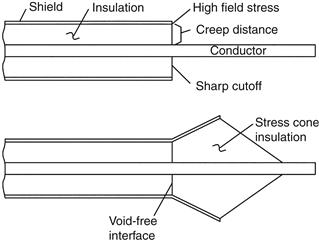
Conductors
Current-carrying conductors range from the small wires of home circuits to massive bus bar sets that may carry several hundred kiloamperes. Copper is the primary conductor, with aluminum often used for bus bars and transformer windings. Conductor cross-sectional areas are designated by American Wire Gauge (AWG) number in the smaller sizes, with a decrease of…
-

Fuses
These protective elements are integral components of power electronics design. They range from the tiny glass cartridge fuses for control circuits to long, medium-voltage types. Each has characteristics that are tailored for the particular applications. Control fuses should be rated for about 125% of the expected load current. Standard types can be used for most…
-
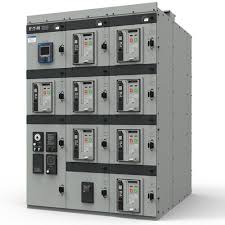
Switchgear
The equipments intended to connect and disconnect power circuits are known collectively as switchgear (please—not switchgears and not switch-gear). Switchgear units range from the small, molded-case circuit breakers in a household panelboard to the huge, air break switches on 750-kV transmission lines. They are generally divided into the four groups of disconnect or isolator switches, load break switches, circuit breakers, and contactors.…
-
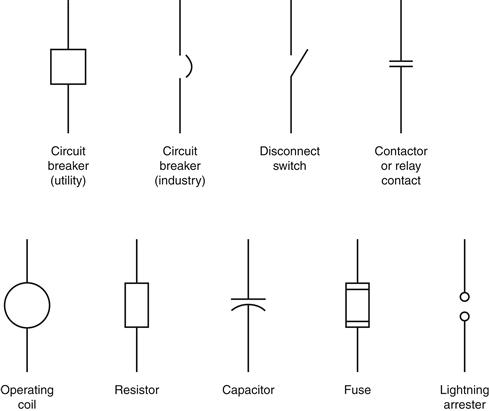
Power Electronics
Keith H. Sueker and Tim Williams Much of the design work in power electronics involves specification of ancillary apparatus in a system. It is essential to a successful design that the engineer knows the general characteristics of these components well enough to permit selection of a suitable device for the intended application. The components in…
-
High Performance Data Interface Standards
This section briefly reviews some of the newer data interface standards that have grown up for high-speed purposes around particular applications and have subsequently become more widely entrenched. 13.4.1 EIA-485 EIA-485 shares many similarities with EIA-422, and is widely used as the basis for in-house and industrial datacom systems. For instance, one variant of the…
-
Classic Data Interface Standards
When you want to connect logic signals from one piece of equipment to another, it is not sufficient to use standard logic devices and make direct gate-to-gate connections, even if they are isolated from the main system. Standard logic is not suited to driving long lines; line terminations are unspecified and noise immunity is low,…
-
Generating Digital Levels From Analog Inputs
The first rule when you want to use a varying analog voltage to generate an on/off digital signal—as distinct from an analog-to-digital conversion—is: always use either a comparator or a Schmitt-trigger gate. Never feed an analog signal straight into an ordinary TTL or CMOS gate input. The reason is that ordinary gates do not have…
-
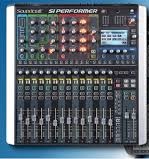
Mixing Analog and Digital
The two main problems which face designers who have to integrate analog and digital circuits on the same printed circuit board (PCB) are: • preventing digital switching noise from contaminating the analog signal, and • interfacing the wide range of analog input voltages to the digital circuit. Generating analog outputs from digital signals is not usually a…
-

Bandpass Filters
Previously we have looked at single low- or high-pass filters, but a common application of filters is where a band of frequencies has to be passed while all other frequencies are stopped. This is called a bandpass filter. Such a filter may be formed from a low- and a high-pass filter in cascade. Generally the low…