Author: workhouse123
-

-
Introduction
Motion refers to the change in the position of an object over time. In physics, motion is described in terms of how an object moves and is typically characterized by quantities such as displacement, velocity, acceleration, and time
-

Prefixes in the SI System
To represent very large or very small quantities, the SI system uses prefixes. These prefixes allow for easier representation of large and small values. Some common prefixes include: Dimensional Analysis Dimensional analysis is a powerful tool used in physics to check the consistency of equations and conversions. It involves comparing the dimensions of physical quantities.…
-
SI Unit System (International System of Units)
The International System of Units (SI) is the modern form of the metric system and is the most widely used system of measurement worldwide. The system is based on a set of base units from which other units are derived. Seven Base SI Units: Other units like joules, newtons, watts, and pascals are derived from…
-
Derived Quantities and Their Units
In addition to the seven fundamental quantities, there are derived quantities that are combinations of the fundamental ones. These include quantities like velocity, acceleration, force, and energy. 1. Velocity (or Speed) 2. Acceleration 3. Force 4. Energy 5. Power 6. Pressure 7. Frequency
-
Fundamental Quantities and Their Units
In physics, there are several fundamental quantities that we measure. For each of these quantities, there is a standard unit used universally. 1. Length (or Distance) 2. Mass 3. Time 4. Temperature 5. Electric Current 6. Amount of Substance (or Quantity of Matter) 7. Luminous Intensity
-
Why Are Measurements Important?
Standardization: Measurements allow for a common understanding of physical quantities, essential for scientific research, engineering, and everyday life Reproducibility: With standardized units, experiments can be repeated anywhere in the world, ensuring consistent results. Communication: Proper units make it easier to share findings across different fields and geographical locations.
-
Introduction
In physics, measurement is the process of quantifying physical quantities such as length, mass, time, temperature, and other properties that describe the world around us. To ensure clarity and consistency, measurements are made using units. Units provide a standard for comparison and ensure that different people, places, and laboratories can communicate results accurately.
-
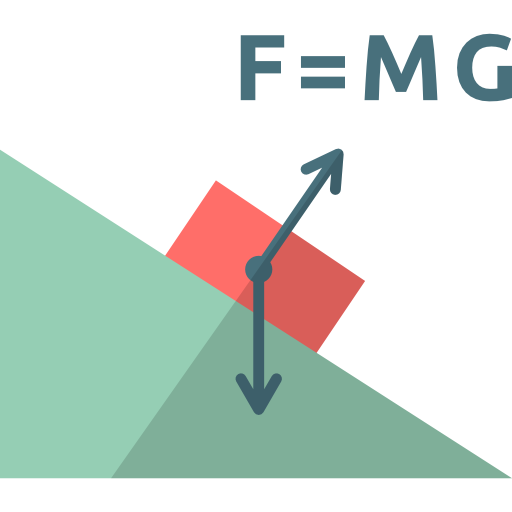
Key Principles in Physics
Conservation Laws: These laws state that certain quantities remain constant in isolated systems. Newton’s Laws of Motion: These three laws explain how objects move and interact under the influence of forces. The Law of Gravity: Any two masses in the universe attract each other with a force proportional to the product of their masses and…
-
Fundamental Concepts in Physics
Some of the core concepts that form the foundation of physics include: