Author: workhouse123
-

Why are properties of building materials important?
Durability: Different materials have different properties, which affect their durability and longevity. By studying the properties of building materials, architects and engineers can select materials that are appropriate for the intended use and can withstand the environmental conditions of the building’s location
-
What is the common property of all materials?
The two most common properties are intermolecular forces and density. Explanation: Anything that has mass and volume and can occupy space is known as matter. The composition of matter shows that it has small particles
-
What are the mechanical properties of materials of construction?
Elasticity, brittleness, plasticity, toughness, durability, ductility, young’s modulus, fatigue limit, viscosity, tensile strength, Poisson’s ratio, shear modulus malleability, compressibility, and bulk modulus are some of the quantities which are used to define the mechanical properties of a material.
-
-
What are the properties of materials and examples?
Material Physical property Iron and steel Hard, strong Plastic (PVC) Low density, strong, resistance to rust Gold, platinum and silver Shiny, unreactive Aluminium Good conductor of heat, low density
-
What are the important properties of materials?
Mechanical Properties: e.g. stiffness, strength, ductility, hardness, toughness, etc. Physical Properties: e.g. density, electrical conductivity, thermal conductivity, etc. Chemical Properties: e.g. corrosion resistance in various environments.
-
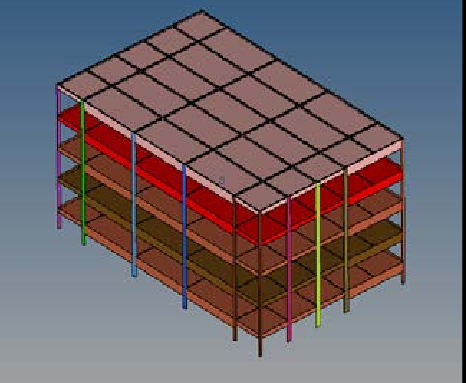
TYPES OF UPPER FLOORS
Upper floors should be strong to take heavy loads, should have sound insulation and fire resistance and also have a good wearing resistance. The upper floors are generally classified based on the materials of construction arrangement of beams and girders or materials used. Commonly used floors are explained below. Timber Floors Timber floors are used…
-
TYPES OF GROUND FLOORS
As the ground floor directly rests on the ground, there is no need for a sub-floor. In order to drain the water outside completely, adequate drainage arrangements have to be made beneath the floor. In normal practice, the space above the ground, up to a height of about 25–30 cm below the plinth level, called…
-
SELECTION OF FLOORS
In order to select a suitable type of floor construction in a building, certain factors have to be considered. Although certain points may be common for ground, upper and basement floors, some distinct different points are to be observed in certain cases. Ground Floors For ground floors, the selection of the type of the wearing…
-
FUNCTIONS OF A FLOOR
A floor consists of a sub-floor and a floor covering. Sub-floor may be a base-course or a sub-grade. This is required to impart strength and stability to support a floor covering and all other super-imposed loads including live loads. Floor covering or paving or simply as flooring is the one constructed over the sub-floor and…