Author: workhouse123
-

Effects of Earthquake on Structures
During an earthquake, ground motions occur in a random fashion, both horizontally and vertically, in all directions, radiating from the epicentre. The ground accelerations cause structures to vibrate and induce inertial forces on them. Hence, structures to be constructed in earthquake-prone areas need to be suitably designed and detailed to ensure stability, strength and serviceability.…
-
Fire-Load
The amount of heat liberated in combustion of any content or part of the building of a floor area is referred to as fire-load. It is represented in kilojoules per square metre (kJ/m2). The fire-load is the ratio of the weight of all combustible materials (by their respective calorific values) to the floor area under…
-
FIRE PROTECTION
When some materials get ignited, the material catches fire and spreads. If there are opening in walls and floors the fire spreads to more area. If there are no openings, the temperature of the structure is increased by fire. In buildings, staircases and lift shaft act as flues for fire and increases the possibility of…
-
DAMP Prevention
Presence of hydroscopic moisture on a surface is called dampness. In general dampness causes unhygienic conditions, affects the health and comfort of inhabitants. Further, it deteriorates the stability of the damped surface. Thus, it is an essential feature in construction to prevent dampness. Sources of Dampness Dampness in a building may be caused due to…
-
ANTI-TERMITE TREATMENT
Termites Termites, popularly known as white ants, are found in groups in tropical and sub-tropical countries. They are very fast in eating wood and other cellulosic materials as food. They also damage non-cellulosic materials like plastics, leather, etc. The term termite-proofing is used to indicate the treatment which is given to a building. This is…
-
INTRODUCTION
Although buildings are constructed based on the space requirement and safety needs, they are also to be protected from natural calamities such as action of termites, dampness, fire, lightening, earthquake, etc. Steps taken during construction itself to protect the buildings from the above calamities the durability and life of the building will be increased. Termites…
-
UNDERPINNING
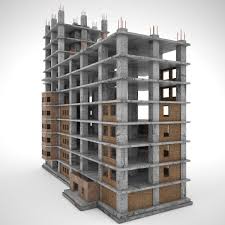
Underpinning is the method of supporting structures while providing new foundations or strengthening the foundation or carrying out repairs and alterations without affecting the stability of the existing structures. Figure 22.12 Dead-shores used for repairs 22.6.1 Uses of Underpinning Underpinning techniques are adopted under the following situations: 22.6.2 Precautionary Measures Before Underpinning The following general measures…
-
SHORING
Shoring is the means of providing support to get stability of a structure temporarily under certain circumstances during construction, repair or alteration. Such a circumstance may arise when Installation of Shoring Following are the points to be kept in view while installing shoring: Types of Shoring Shorings are classified under the following categories: 1. Racking…
-
SCAFFOLDING
In the routine construction work, sometimes it is necessary to have some temporary structure or support to continue the work. When the height of construction exceeds about 1.5 m, temporary structures are needed. Temporary structure is erected close to the work so as to provide a safe working platform for the workers and to provide…
-
DE-SHUTTERING OF FORMWORKS
Under no circumstance the forms are removed until the concrete has hardened sufficiently. Under normal weather conditions, the concrete is left in place as long as possible up to a maximum of 28 days. Figure 22.2 Formwork for square column Figure 22.3 Formwork for beam and slab However, the period to which the concrete should be left…